A Practical Stormwater Maintenance Plan for Homes and Small Properties
Why Stormwater Planning Matters
Stormwater maintenance belongs on every property care calendar because runoff follows the path of least resistance. When gutters overflow, soil washes from a slope, or a drain opening fills with leaves, water may collect near buildings, patios, garages, and walkways instead of moving safely away. A basic plan gives homeowners and small property managers a repeatable way to find and correct those issues.
Understanding how catch basins for drainage collect runoff and trap sediment can make routine inspections more useful. Maintenance is not only about reducing the chance of surface flooding. It also helps protect landscaping, limit erosion, reduce standing water, and keep loose debris from moving farther through the drainage system.
Heavy rain can overwhelm drainage routes when pavement, compacted soil, blocked inlets, or poor grading prevent water from soaking in or flowing away. Coastal and low-lying locations can face additional challenges when high water levels affect stormwater outlets, but routine observation still helps property owners identify when their systems are under strain.
Start With a Property Drainage Walkthrough
Walk the property once during dry weather and again after a normal or heavy rainfall. Start at the roofline, then follow water from gutters and downspouts across the yard, pavement, drain openings, swales, and visible outlets. This simple exercise reveals whether water is being directed away from structures or collecting where it should not.
- Look for low spots near foundations, garages, patios, and walkways.
- Check whether downspouts discharge too close to walls or paved surfaces.
- Watch for washed-out soil, exposed roots, or mulch moving downhill.
- Note cracks, settling pavement, or soft ground near drainage structures.
- Mark puddles that remain after surrounding surfaces have dried.
Build a Seasonal Maintenance Calendar
The best schedule depends on local weather and site conditions, but seasonal tasks create a dependable baseline for many properties.
Spring Tasks
- Clear winter grit, leaves, and sticks from grates and surface drains.
- Check gutters and downspouts for loose sections or visible damage.
- Inspect areas affected by snowmelt, spring storms, or saturated soil.
- Repair small erosion spots before runoff enlarges them.
Summer Tasks
- Observe drainage during thunderstorms and note new pooling areas.
- Trim plants that obstruct inlet openings or swales.
- Check for slow drainage, unpleasant odors, or persistent insects near standing water.
- Keep grass clippings, mulch, and yard waste away from drainage points.
Fall and Winter Tasks
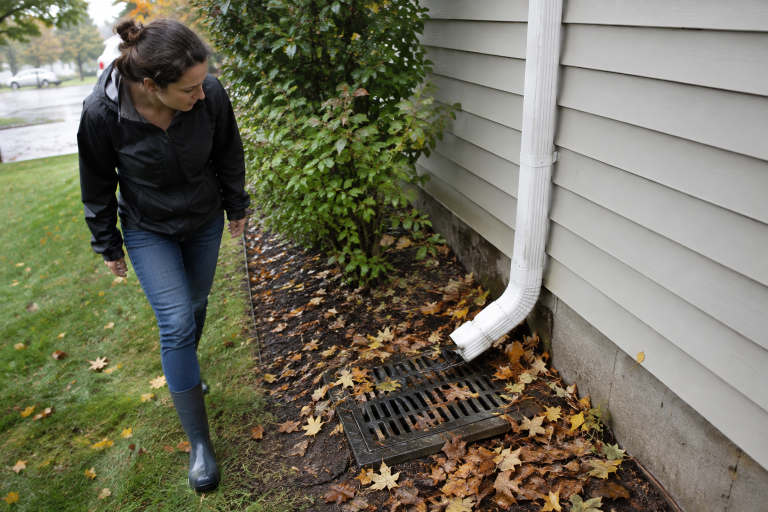
- Remove leaves regularly before they accumulate around grates and gutters.
- Inspect drainage points near mature trees, where roots and leaf litter may affect flow.
- Clean gutters before freezing weather arrives.
- Keep snow piles away from inlet openings and foundation drainage areas.
- Watch for freeze-thaw movement around pavement, basin frames, and drain covers.
Know the Main Warning Signs
One symptom may have a simple explanation, but several together can signal a larger drainage problem. Pay attention when water flows over a grate rather than into it, when drainage is slower than in prior seasons, or when debris returns soon after cleaning. Damp spots in a garage, basement, or crawl space, sinking soil near a drain, persistent odors, and pooling around an inlet also deserve follow-up.
Reduce the Debris Entering the System
Prevention usually takes less effort than repeatedly removing buildup. Sweep soil and leaves from the pavement instead of washing them toward a drain. Keep trash bins closed, store paint, fuel, and oily materials under cover, and stabilize bare soil around landscaping or construction work. Use mulch carefully on slopes, since loose material can be carried away during rainfall.
Storm drains are designed to move runoff, not dispose of wash water, chemicals, or yard waste. The EPA explains that stormwater discharges from municipal sources require pollution-control practices. Keep these materials out of inlets and follow local disposal requirements for collected sediment or suspected contaminated waste.
Set Inspection and Cleaning Triggers
- Inspect each visible drainage opening at least once per season.
- Inspect again after unusually heavy rain, wind, or nearby construction activity.
- Check for sediment, trash, plant growth, standing water, and damaged covers.
- Take notes or photos so changes are easier to recognize.
- Arrange cleaning when the buildup restricts flow or fills available storage space.
- Shorten the inspection interval when the same location repeatedly fills with debris.
Separate Safe DIY Tasks From Higher-Risk Work
Tasks Many Property Owners Can Handle
- Removing surface leaves and trash from an accessible grate.
- Sweeping nearby pavement and moving loose mulch away from an inlet.
- Checking visible downspout connections from a safe position.
- Recording pooling, erosion, and surface damage for follow-up.
Tasks Best Left to Qualified Professionals
- Removing deep sediment from an underground basin or chamber.
- Clearing blocked pipes below ground.
- Investigating suspected collapsed lines, damaged outlets, or unstable pavement.
- Handling sludge that may contain oil, chemicals, or other pollutants.
- Entering any confined space.
See also: Business Acquisition Financing Canada: Funding a Successful Business Purchase
Create a Simple Property Record
Keep a one-page record listing each inlet, drain, downspout, swale, and recurring low spot. Add inspection dates, weather conditions, observed sediment, odors, pooling, photos, repairs, and planned follow-up dates. This record can reveal patterns over time and provide useful background during renovations, insurance discussions, contractor visits, or a future property sale.
A 30-Minute Stormwater Checkup
- Walk the roofline and inspect gutters and downspouts.
- Clear visible debris near drain openings.
- Look for pooling, erosion, cracks, and sinking ground.
- Confirm that water can move away from buildings.
- Photograph problem areas and add follow-up work to the calendar.
Conclusion
A reliable stormwater plan does not need to be complicated. Regular inspections, cleaner surfaces, controlled runoff, and timely repairs can keep small drainage concerns from becoming larger property problems. A seasonal checklist and simple maintenance record give homeowners and small property managers a practical way to protect buildings, landscaping, paved areas, and nearby waterways.