The Complete Guide to Choosing an Air Duct Cleaning Service in Dallas
Maintaining a comfortable and clean home in Dallas, Texas, requires more than regular dusting and vacuuming. Your heating, ventilation, and air conditioning (HVAC) system plays an essential role in maintaining indoor comfort throughout the year. However, dust, pollen, pet dander, and other debris can accumulate inside the ductwork over time, particularly when filters are neglected or renovation work introduces additional contaminants.
Choosing a professional air duct cleaning service in Dallas can help homeowners address significant buildup and maintain their HVAC systems. Understanding the cleaning process, recognizing when service is necessary, and selecting a qualified provider can help you make informed decisions about your home’s maintenance needs.
Why Air Duct Cleaning Matters for Dallas Homeowners
Dallas experiences hot summers, seasonal pollen, outdoor dust, and ongoing residential development. These conditions can influence how homeowners maintain their indoor environments and heating and cooling systems.
Although air filters capture many airborne particles, some debris may settle inside the ductwork and on other HVAC components. Household activities, pets, and construction projects can contribute to this accumulation.
When significant contamination is present, professional air duct cleaning can help remove accumulated debris from appropriate parts of the system. However, not every home requires duct cleaning at regular intervals. An inspection can help determine whether cleaning is necessary based on the system’s condition and the amount of buildup.
What to Expect During a Professional Air Duct Cleaning Appointment
Understanding the professional cleaning process helps you evaluate service providers and know what to expect during an appointment.
1. Initial HVAC System Inspection
A professional appointment should begin with an inspection of accessible ductwork, registers, and relevant HVAC components. Technicians assess visible debris, the condition of the system, and any areas that may require special attention.
If there are signs of moisture damage, suspected microbial growth, or other underlying problems, these concerns should be evaluated before cleaning begins.
A thorough inspection also helps the technician determine the appropriate cleaning methods for your particular duct system.
2. Preparation and Negative-Pressure Setup
Professional air duct cleaning commonly uses specialized vacuum collection equipment to capture loosened debris. Depending on the system and cleaning method, technicians may establish negative pressure to help prevent dust from escaping into occupied areas.
The work area should be prepared appropriately, with suitable precautions taken to protect furniture and surrounding surfaces.
Before the appointment, ask the provider how dust will be contained and what measures will be used to protect your home during the cleaning process.
3. Agitation and Debris Removal
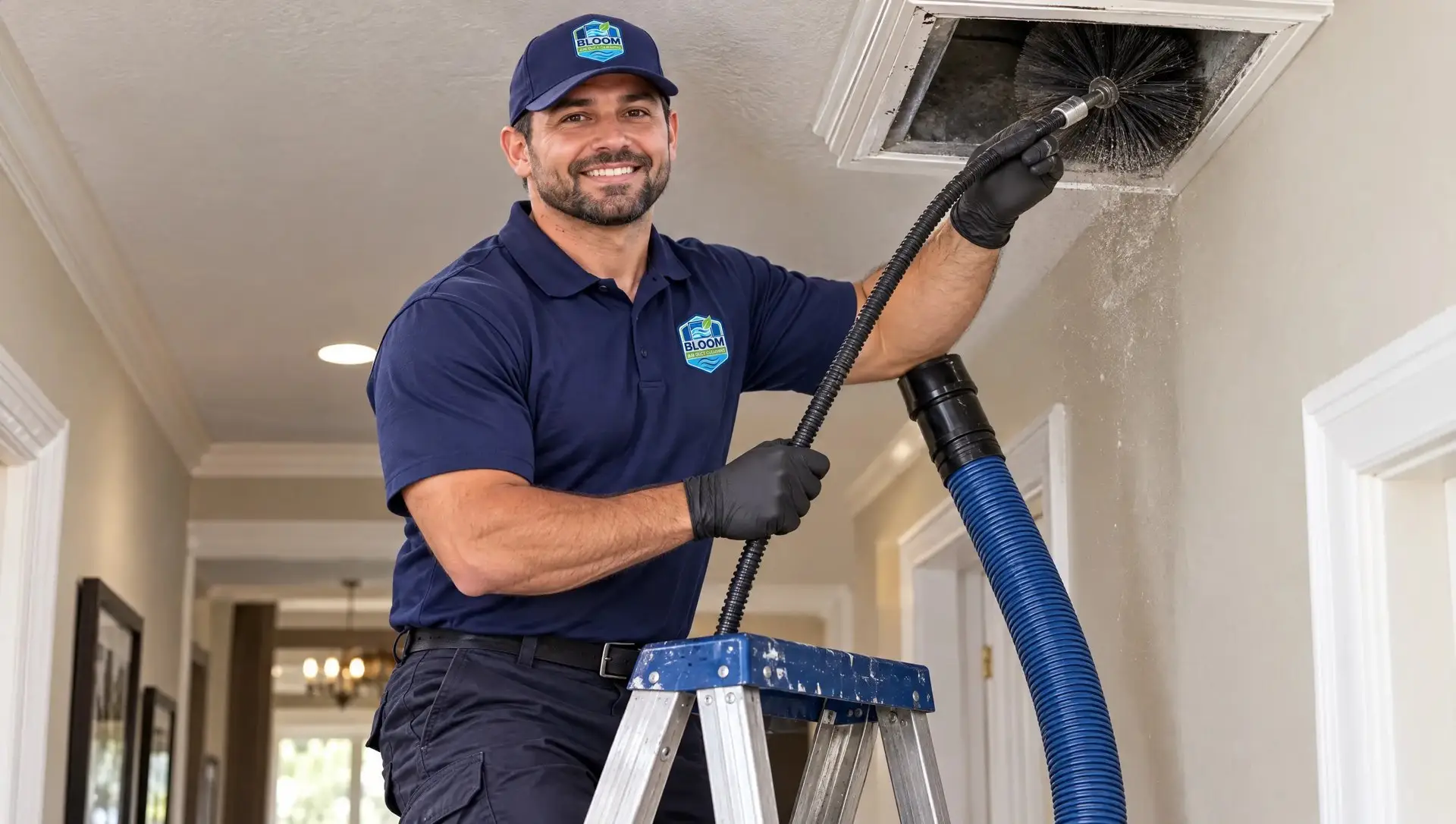
Dust and other particles can collect along the interior surfaces of air ducts. To remove this material, technicians may use suitable brushes, air-driven tools, or other agitation equipment.
The loosened debris is collected using appropriate vacuum equipment. Cleaning methods should be selected according to the duct material, system design, and condition of the buildup.
A reliable technician should explain which areas will be cleaned and how the equipment is suited to your home’s HVAC system.
4. Cleaning Relevant HVAC Components
Air ducts are only one part of a complete heating and cooling system. Depending on the inspection findings and the agreed service, cleaning may also involve accessible registers, grilles, and other appropriate components.
The blower assembly, evaporator coil, and condensate drain pan may require separate inspection or maintenance when relevant. These components should not automatically be included in every duct-cleaning package.
Ask for a written description of the service to confirm which components are included and whether additional maintenance is recommended.
5. Final Inspection and Recommendations
After cleaning, the technician should review the completed work and explain any remaining concerns. Homeowners should receive clear information about the areas addressed and any recommended follow-up maintenance.
Professional communication and transparent service documentation help ensure that you understand what was done and whether further HVAC attention is necessary.
How to Choose a Reliable Air Duct Cleaning Company in Dallas
Not all service providers offer the same level of experience, equipment, or customer support. Before hiring an air duct cleaning company in Dallas, consider these important factors.
Experience and training: Choose a provider with experience in residential HVAC systems and appropriate cleaning techniques.
Industry guidance: Ask whether the company follows recognized industry standards, such as applicable guidance from the National Air Duct Cleaners Association (NADCA).
Transparent pricing: Request a written estimate that explains the scope of work, included components, and any additional charges.
Appropriate equipment: Confirm that the company uses suitable debris collection equipment and dust-containment procedures.
Customer reviews: Review recent customer feedback to assess professionalism, communication, and service quality.
Honest recommendations: Avoid companies that use pressure tactics or promise guaranteed allergy relief, dramatic energy savings, or the complete elimination of indoor pollutants.
Comparing providers carefully can help you select a service that matches your home’s needs without paying for unnecessary treatments.
See also: Business Acquisition Financing Canada: Funding a Successful Business Purchase
Long-Term Benefits of Proper Air Duct Maintenance
Professional cleaning can be useful when substantial debris or contamination is present, but its benefits depend on the condition of the system.
Removing accumulated debris can address certain cleanliness concerns and support an effective HVAC maintenance routine. However, duct cleaning alone does not guarantee lower energy bills or prevent every equipment failure.
Long-term HVAC performance also depends on regular filter replacement, appropriate servicing, proper airflow, duct sealing, insulation, and timely repairs.
For homeowners in Dallas, combining professional inspections with preventive maintenance is a practical way to monitor system condition and address problems before they become more serious.
How Often Should You Schedule Air Duct Cleaning?
There is no universal cleaning schedule suitable for every property. The appropriate frequency depends on factors such as visible contamination, renovation history, household activities, pest problems, and the overall condition of the ductwork.
Instead of booking cleaning automatically every year, arrange an inspection when there is a specific reason to suspect excessive buildup. Regular filter replacement and routine HVAC maintenance should remain priorities between professional cleaning appointments.
Conclusion
Choosing the right air duct cleaning service in Dallas starts with understanding your HVAC system and finding a qualified provider who offers clear recommendations, appropriate equipment, and transparent pricing.
From the initial inspection to debris removal and final review, a professional service should focus on the actual condition of your ductwork rather than unnecessary add-ons or unrealistic promises.
By combining professional cleaning when needed with regular filter changes and routine HVAC maintenance, you can help maintain a cleaner indoor environment and support the long-term care of your home’s heating and cooling system. If you suspect significant buildup or notice persistent odors around your vents, consider arranging an inspection with a qualified Dallas air duct cleaning professional.