Why Manual Soap Dispensers Remain Reliable for High-Traffic Facilities
Commercial facilities need restroom equipment that can handle frequent use while remaining simple to operate and maintain. A properly designed manual soap dispenser offers a practical approach to everyday hand hygiene because it works without batteries or electrical power. With features such as interchangeable pump options, durable construction, large refill capacity, and wall-mounted installation, manual dispensers can serve a wide range of professional environments.
Simplicity That Supports Everyday Operation
One of the strongest advantages of a manual dispenser is its uncomplicated mechanical operation. Users press the dispenser to release the required soap, eliminating the need for sensors, batteries, or power adapters.
This can make manual models particularly useful for facilities that prioritize straightforward maintenance. There are no batteries to replace and no electronic sensor to troubleshoot as part of normal operation. Maintenance teams can instead concentrate on cleaning, checking refill levels, and keeping the dispenser ready for use.
For organizations managing several restrooms, this simple operating model can make daily maintenance routines easier to standardize.
Designed for Commercial Demands
Commercial restrooms can experience continuous use throughout the day. Hotels, airports, offices, schools, hospitals, and shopping facilities all require hygiene equipment capable of handling repeated interactions.
CDWK describes its manual dispensers as products intended for commercial and public environments. The dispensers use ABS construction designed to provide durability and impact resistance, supporting regular use in demanding settings.
Material selection is particularly important in busy restrooms because equipment can be exposed to moisture, cleaning procedures, and frequent contact. A durable outer structure can help maintain both functionality and appearance over time.
Flexible Pump Configurations
Different facilities do not always use the same type of hygiene product. Some applications require conventional liquid soap, while others may use foam or spray solutions.
CDWK’s manual dispenser design supports liquid soap, foam soap, and spray dispensing through interchangeable pump options. This gives customers the ability to select a dispensing configuration according to their particular hygiene program and application.
This flexibility can be useful for distributors and commercial buyers supplying different types of facilities. Rather than relying on one fixed dispensing format, buyers can choose a suitable pump configuration for the intended environment.
Large Capacity Can Reduce Maintenance Work
Refilling dispensers is a routine responsibility for facility-management teams. In high-traffic locations, small containers can require frequent attention, increasing the amount of time employees spend checking and replenishing restroom supplies.
CDWK highlights a large-capacity design intended to reduce refill frequency. A larger reservoir can help facilities maintain soap availability between scheduled maintenance rounds, particularly where daily usage is high.
The transparent refill window provides another practical benefit. Staff can check the remaining soap level without opening the dispenser, making it easier to determine when a refill is actually necessary.
Wall-Mounted Installation for Better Space Management
Restroom space can be limited, particularly in commercial properties where sinks, paper dispensers, hand dryers, waste bins, and other accessories must fit into a carefully planned area.
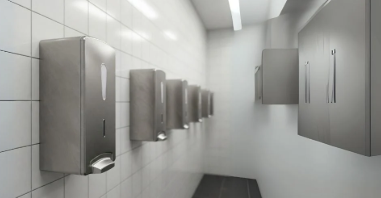
A wall-mounted dispenser uses vertical space rather than occupying valuable countertop area. CDWK specifically highlights wall-mounted installation as a feature that helps keep washing areas organized. The locking structure also provides additional control over access to the dispenser’s internal components.
This combination can be especially useful in public facilities where equipment needs to remain accessible to users while still being managed by maintenance personnel.
Suitable for Multiple Industries
The versatility of manual dispensing equipment allows it to serve different commercial environments. In hotels and hospitality facilities, a dispenser can contribute to a clean and professional restroom arrangement. In healthcare facilities, dependable operation and easy maintenance are important considerations.
Airports and transportation hubs can benefit from durable, wall-mounted equipment because these locations experience significant user traffic. Offices, schools, colleges, shopping malls, and other commercial spaces can also use manual dispensers as part of their regular hand hygiene infrastructure.
The appropriate model should always be selected according to expected traffic, soap type, capacity requirements, installation conditions, and maintenance procedures.
Customization for Business Requirements
Manual dispensers can also be customized for businesses that require a particular appearance or configuration. CDWK provides OEM, ODM, and OBM services, with customization options covering colors, logos, packaging, pump configurations, and product structure.
This can be valuable for distributors, wholesalers, hotel-supply companies, and project customers that want restroom products aligned with a specific brand or market requirement.
Conclusion
Manual soap dispensers continue to provide a dependable solution for commercial hygiene because they combine simple mechanical operation with practical features. Battery-free performance, interchangeable pumps, durable ABS construction, large capacity, refill visibility, wall-mounted installation, and locking functionality can all contribute to easier restroom management. For facilities with demanding daily usage, selecting a dispenser based on capacity, dispensing requirements, installation space, and maintenance needs can support reliable hand hygiene while keeping routine operations straightforward.