Understanding the Selection of Titanium Dioxide Nanoparticles for Industrial Formulations
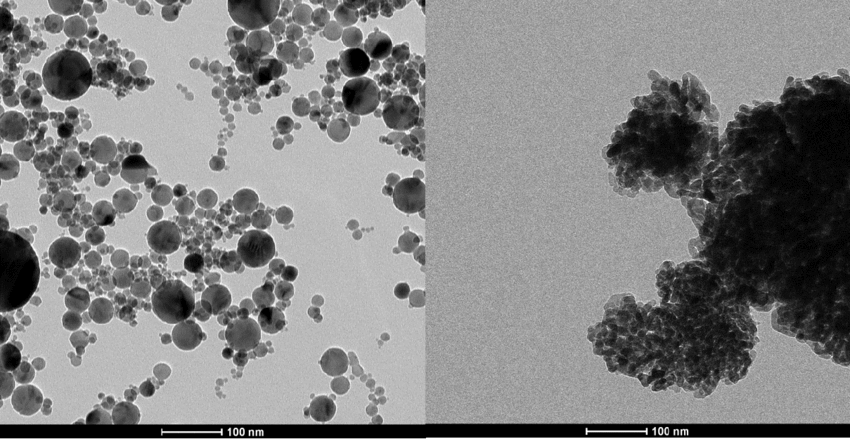
Nanostructured inorganic materials have attracted attention in industrial research because their small dimensions can create distinctive surface and interaction characteristics. Titanium dioxide is one material that can be engineered into fine particulate forms for a variety of applications.
However, choosing a suitable product requires more than looking at particle size. Surface treatment, crystal structure, purity, dispersion, and formulation compatibility all influence how the material behaves.
Why Nanoscale Materials Require Careful Selection
Reducing particle size increases the relative surface area of a material.
This can affect interactions with surrounding ingredients and may change processing behavior.
At the same time, very fine particles can be more susceptible to agglomeration.
Therefore, manufacturers should consider both the potential benefits and practical processing requirements.
Read Also: Business Acquisition Financing Canada: Funding a Successful Business Purchase
Particle-Size Distribution
Particle size is one of the most important specifications to examine.
An average value alone may not provide a complete picture.
A particle-size distribution can help manufacturers understand the range of particle dimensions present in a material.
Consistent distribution can be important when reproducible formulation behavior is required.
Crystal Structure
Titanium dioxide is commonly available in different crystalline structures.
Anatase and rutile have different physical characteristics and may be selected for different applications.
The appropriate structure depends on the desired performance and processing environment.
Surface Chemistry
The surface of fine titanium dioxide particles can be modified to change their interaction with other materials.
Surface treatment may improve compatibility with particular binders, polymers, or solvents.
This makes surface chemistry an important consideration when comparing different grades.
Dispersion Challenges
Nanoparticles can form agglomerates because of strong particle-to-particle interactions.
Effective dispersion is therefore essential in many liquid and polymer systems.
Manufacturers may need to optimize:
- Mixing speed
- Shear
- Addition sequence
- Dispersants
- Solvent compatibility
- Processing time
The exact approach depends on the formulation.
Coating Applications
Fine titanium dioxide materials can be evaluated in coating systems where optical or surface properties are important.
Coating developers should examine dispersion, viscosity, stability, appearance, and compatibility with the binder.
Outdoor formulations may also require testing under representative environmental conditions.
Polymer Applications
In polymers, fine particles must be distributed evenly throughout the matrix.
Compounding conditions can influence dispersion and final properties.
Temperature, residence time, shear, polymer type, and additive selection should all be considered during development.
Ink Formulations
Ink systems require careful control of particle distribution and rheology.
Fine titanium dioxide can be evaluated when its optical or functional characteristics match the needs of the formulation.
Testing should cover viscosity, stability, dispersion, and compatibility with the intended printing process.
Quality and Purity
Purity is particularly important when developing specialized formulations.
Manufacturers should review supplier documentation and verify relevant specifications through appropriate incoming quality checks.
Batch-to-batch consistency can be just as important as the initial specification.
Application-Specific Testing
No material should be selected solely because it has a particular particle size or technical label.
The complete formulation determines actual performance.
Engineers should compare candidate materials using the same formulation and processing conditions.
When exploring tio2 nanoparticles hifull as part of an industrial material search, technical specifications should be considered alongside laboratory testing and application requirements.
Handling and Storage
Fine particulate materials should be handled using procedures appropriate to the workplace and the supplier’s safety documentation.
Containers should be kept properly closed when not in use, and storage conditions should follow technical recommendations.
Dust-management practices may be appropriate depending on the manufacturing process.
Scaling Up
A material that performs well at laboratory scale may behave differently during commercial production.
Industrial equipment can create different shear rates, mixing patterns, temperatures, and residence times.
Pilot testing can help manufacturers establish suitable scale-up conditions.
Frequently Asked Questions
1. What should be considered when selecting titanium dioxide nanoparticles?
Particle size, distribution, crystal structure, purity, surface treatment, dispersion behavior, and formulation compatibility are important factors.
2. Why is surface treatment relevant?
It can influence particle interaction with polymers, binders, solvents, and other ingredients.
3. Can laboratory results be directly transferred to production?
Not always. Differences in equipment and processing conditions can affect dispersion and formulation behavior, so pilot-scale testing can be useful.
Conclusion
Selecting a fine titanium dioxide material requires a complete understanding of the intended application. Particle size is important, but it should be considered together with crystal structure, surface chemistry, purity, dispersion, and processing requirements.
Through controlled testing and careful supplier evaluation, manufacturers can identify materials that fit their formulation and production objectives more effectively.