Why Food Processing Facilities Need High-Speed Cleanroom Doors
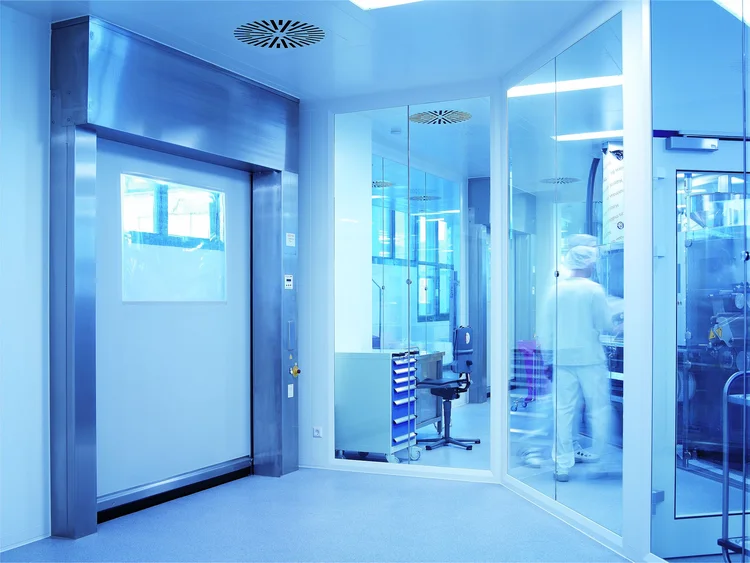
In high-traffic areas, personnel, equipment, carts, forklifts, and food processing materials are constantly on the move and need to pass through designated openings and controlled zones without wasting time. A fast pace reduces exposure to temperature and pressure fluctuations, maintaining the environmental control regulations necessary in the pharmaceutical industry.
Personnel can keep moving fast and continue with their jobs uninterrupted, eliminating small delays and making a meaningful difference in production and overall operational efficiency of the unit. If the cleanroom door stays open, the chances of air exchange increase. Moreover, the movement of contaminants and airborne particles increases, depending on the pressure differentials between adjoining areas.
The high-speed cleanroom door performance
Food production is always on the move with raw materials, ingredients, personnel, forklifts, carts, packaging materials, and finished foodstuffs that have to travel past the same access points many times in a day.
The high-speed door, when strategically installed, has a purpose to deliver:
- Separation between different zones
- Maintain pressure differentials
- Maintain greater temperature stability
- Reduce air exchange
- Improve traffic flow
- Reduce exposure to dust and airborne contaminants
- Maintain hygienic production environments
- Efficient movement of equipment, materials and personnel
See also: The Impact of Artificial Intelligence on Everyday Life
Food Processing Facilities Need High-Speed Cleanroom Doors
In a food processing facility, there is constant activity all around. Arrival of raw materials, rapid movement of equipment between zones, employees passing through controlled areas, and finished products being taken towards packaging and storage occur rapidly throughout the day.
With loads of movement happening during the daytime, it’s a challenge to maintain the high standards and freshness of the food products. The doors are opened and closed repeatedly, and the access points end up as a vulnerable point that can compromise sanitation at the facility.
Conventional doors v/s high speed cleanroom doors
Conventional doors are adequate until they are opened and closed hundreds of times during a normal operational working day. Each opening and closing cycle leads to:
- Pressure fluctuation,
- Air exchange,
- Airborne contamination,
- Energy loss
- Workflow interruptions
- Migration of pollutants banned from controlled spaces
A conventional door with slow cycles fails to seal properly. It remains open for longer periods of time, permitting dust, air, moisture, airborne contaminants, and pests to enter the environmentally controlled areas. High-speed cleanroom doors are well-designed access systems crafted for environments that demand strict control over:
- Pressure levels
- Air quality
- Cleanliness and sanitation
- Temperature
Modern food processing units rely on high-speed cleanroom doors to prevent contamination and maintain a clean, well-balanced, temperature- and pressure-controlled environment.
High-speed doors provide controlled access
Food processing facilities have to operate under strict hygiene requirements and maintain the high sanitation standards required for this industry. A door separating zones provides access and movement and also preserves the environmental conditions on either side. The fast speed of the opening and closing of doors:
- Does not allow exposure
- Limits unnecessary exchange of air
- Does not allow transport of dust, airborne particles, and other airborne contaminants between the food processing areas.
- The faster the cycle, the fewer chances of disruption in the controlled environment.
Layers of control in food processing
A quick cycle door helps maintain production efficiency and strict environmental conditions inside the facility. Food safety is complicated and needs layers of control such as:
- Environmental monitoring
- Sanitation procedure
- Controlled material movement
- Equipment design
- Employee hygiene
A slow door ends up as a bottleneck, and the employees and equipment are held up. They have to wait because of constant interruptions. Moreover, the internal environment is compromised because people often hold the door open for convenience.
High-speed doors for food processing encourage smoother traffic flow and maintain environmental control with their frequent cycling. The rapid operation keeps the access points open for less time while taking care of the needs of a busy production floor.
The high-speed cleanroom door design and hygiene
The facility is constantly facing hygiene drives with washdowns and sanitation chemicals. Thus, there is constant exposure to moisture and the moving production environment, which can be taxing on the door systems. Food processing doors need to adjust to the demanding cleaning routines because cleanliness and sanitation for food products is of imperative importance.
Faster access with environmental separation
At a food processing facility, the forklifts are constantly moving, and the people are rushing around completing chores between packaging and processing areas. High-speed cleanroom doors combine rapid admittance with environmental separation at the same time.
Helping food processing facilities work smarter
Moisture and dirt can disturb the integrity of the food processing facility. The hygiene program of the unit can be disturbed and lead to serious maintenance challenges. There can be dirt accumulation, and for this, the high-speed cleanroom doors need careful design to uphold the sanitization standards:
- Specifically selected seals,
- Cleanable, smooth surfaces,
- Other construction materials that is ideal for hygienic environments.
Conclusion
High-speed cleanroom doors are a part of the “cleanliness” strategy and provide faster entry and exit to control movement, protect the integrity of the food processing unit, and maintain environmental separation. Every passage counts and the high-speed doors work together with the food processing facilities. Newport Company provides faster industrial entrance solutions and takes over the design, installation, and commissioning support of high-speed doors.