Solving Your Blue-Collar Hiring Nightmare by Completely Outsourcing the Warehouse
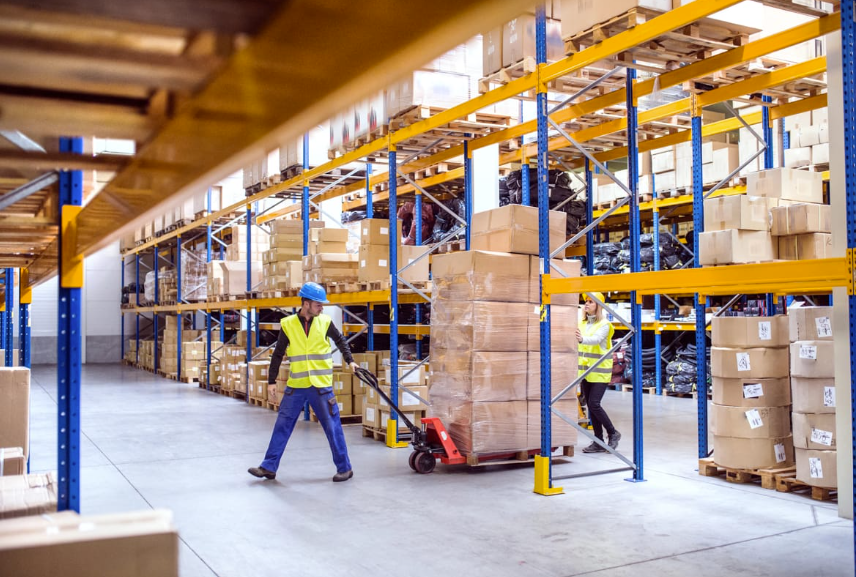
Shifting from a fixed in-house labor model to a scalable third-party logistics (3PL) partnership solves your blue-collar hiring nightmare by completely outsourcing the warehouse. Today, roughly 500,000 warehouse jobs sit unfilled in the US, driving massive operational shifts across the supply chain. Finding and retaining certified forklift drivers, pick-and-pack crews, and commercial drivers now consumes hours of management time every week. An integrated approach to warehousing, co-packing, and transportation eliminates these daily HR headaches.
Why Is the Warehouse Labor Shortage Persisting?
The warehouse labor shortage persists because adding internal headcount is no longer a sustainable strategy for scaling capacity. The constant cycle of recruiting, vetting, and training new staff drains internal resources and forces operations teams to spend valuable time managing turnover rather than optimizing throughput.
Managing a private warehouse means functioning as a full-time staffing agency. Operations directors and supply chain managers spend their days interviewing candidates who never show up for the first shift. When a certified forklift operator quits, the entire outbound shipping schedule stalls. This constant friction makes it impossible to maintain consistent fulfillment speeds or plan for long-term expansion.
Instead of battling high turnover and seasonal hiring crunches internally, supply chain leaders are transferring operational execution to established third-party facilities. Utilizing reliable 3PL logistics in Toronto consolidates inventory management, GFSI- and SQF-certified warehousing, retail co-packing, and dedicated truckload or LTL freight into a single scalable framework. Rather than scrambling to recruit temporary floor staff during peak volume periods, shippers tap into trained warehouse personnel, established safety compliance protocols, and company-owned fleet capacity—keeping outbound fulfillment schedules intact even as regional labor markets tighten.
See also: RegTech AML: Modernising Financial Crime Compliance
The Hidden Costs of Temporary Labor During Peak Seasons
Relying on temporary labor creates volatile payroll costs, administrative friction, and severe inefficiencies during seasonal peaks. Temporary workers often lack the specific training and loyalty of a permanent team, leading to increased order errors and subsequent shipping delays.
During the holiday rush, operations managers panic and hire dozens of short-term workers to plug staffing gaps. Managing these peak-season hiring sprees requires immense administrative effort, from onboarding paperwork to basic safety training. After the holiday demand subsides, you face the equally disruptive process of post-holiday layoffs.
These stop-gap measures degrade your operational quality. Temporary associates do not understand your specific inventory management systems or handling protocols. This unfamiliarity naturally increases damage rates and mispicks. Despite these glaring issues, reliance on temporary, peak-season labor climbed to 16.6% of the workforce, simply because operators struggle to build a stable permanent core.
The Impact of Missing Specialized Roles
The shortage of highly specialized logistics roles severely damages supply chain efficiency by causing fulfillment bottlenecks and compromised facility safety. The hardest positions to fill are those requiring specific technical certifications, such as commercial truck drivers and forklift operators.
General warehouse associates are difficult to find, but specialized roles present a much larger challenge. Certified forklift operators require continuous training, safety evaluations, and competitive compensation. Without them, pallets sit unmoving on the receiving dock, and inventory counts become dangerously inaccurate.
The transportation side faces an even steeper uphill battle. According to the Bureau of Labor Statistics, U.S. employers reported 316,000 unfilled openings in transportation, warehousing, and utilities as of July 2026. Missing these critical roles leads directly to supply chain bottlenecks and missed delivery schedules. When you cannot move product off your dock, your retail relationships suffer.
How Completely Outsourcing to a 3PL Solves the Hiring Nightmare
Completely outsourcing warehouse operations solves hiring struggles by handing over all storage, material handling, and management to a dedicated provider. This model converts massive fixed overhead costs into scalable, variable costs that align directly with actual market demand.
Completely outsourcing warehouse operations is the practice of contracting a specialized third party to manage your entire physical supply chain infrastructure. When you make this shift, you no longer pay for an empty building or idle workers during a slow sales month. You only pay for the storage space you use and the labor required to move your specific order volume.
A 3PL’s facilities arrive fully staffed. Their teams come equipped with trained, certified personnel who possess deep experience in modern Warehouse Management Systems (WMS) and specialized handling protocols.
| Operational Burden | In-House Warehouse Model | Outsourced 3PL Model |
|---|---|---|
| Labor Costs | Fixed overhead, regardless of volume. | Variable expense based on units shipped. |
| Seasonal Peaks | Requires expensive temporary hiring sprees. | Handled elastically by shared 3PL labor. |
| Specialized Roles | Client recruits and trains CDLs/Forklift drivers. | 3PL provides certified, ready-to-work staff. |
| Facility Compliance | Client builds and funds safety programs. | 3PL maintains existing regulatory certifications. |
Eliminating Labor Burdens with Integrated Warehousing and Co-Packing
Outsourcing removes the need to hire and manage general warehouse associates by transferring these tasks to a partner’s established workforce. Handing over storage and value-added co-packing eliminates internal hiring headaches for assembly and order fulfillment crews.
Running an in-house operation requires the constant management of pick-and-pack crews, assembly line workers, and inventory specialists. If your product requires kitting, custom assembly, or retail-ready prep, your labor needs double. You must train these workers to meet exact presentation standards, and you lose that investment the moment an employee leaves.
A 3PL inherently provides advanced systems for inventory tracking and fulfillment accuracy, operated by their own stable workforce. They manage the daily shift schedules, handle the payroll taxes, and cover the sick days. You get finished, retail-ready products shipped on time, without ever having to post a job listing for a co-packer.
Overcoming the Commercial Driver Shortage with Dedicated Fleets
A turnkey transportation program solves the volatile challenge of recruiting and retaining commercial drivers. Dedicated fleets provide the trucks, maintenance, and professional drivers while operating seamlessly as your private transportation network, removing compliance and retention overhead entirely.
Hiring, licensing, and retaining CDL drivers is one of the most difficult and expensive segments of blue-collar logistics recruiting. Drivers demand high salaries, specific route schedules, and well-maintained equipment. Managing this internally distracts your management team from your core product offerings.
Dedicated fleets are fully outsourced turnkey transportation programs. The 3PL supplies the trucks, coordinates the maintenance, and employs the professional drivers. The trucks can even bear your company logo. This allows you to maintain the appearance and reliability of a private fleet without dealing with Department of Transportation compliance or driver retention issues.
Scaling for Seasonal Peaks Without the Hiring Squeeze
An outsourced logistics model provides elastic scalability during busy seasons without the need for temporary labor. A logistics partner’s established infrastructure and shared-labor pools allow businesses to scale operational capacity up or down instantly based on cyclical demand.
A 3PL operates multiple facilities and supports dozens of clients with overlapping peak seasons. They use shared-labor models, moving highly trained permanent staff between accounts as volume dictates. When your Black Friday orders spike, the 3PL assigns more trained associates to your fulfillment lines.
This flexibility completely bypasses the traditional seasonal hiring scramble. You avoid the risks associated with untrained temporary workers, such as increased workplace accidents and high error rates. When your busy season ends, your labor costs scale back down immediately. You never have to lay off a warehouse worker again.
Managing Compliance, Safety, and Certifications Through Outsourcing
Constant labor turnover inevitably leads to safety risks, compliance gaps, and audit failures in regulated industries. Top-tier logistics providers solve this by maintaining rigorous health, safety, and operational standards that take internal teams years to establish and refine.
Training new employees on complex safety protocols takes time. When those employees leave after three months, your compliance standards slip. In highly regulated sectors like Food and Beverage or Health and Beauty, a single compliance gap can result in product recalls, heavy fines, or lost retail contracts.
Established 3PLs already possess strict high-standard facility accreditations. When evaluating a partner, look for active GFSI, SQF, and HACCP compliance. These certifications prove the provider has the training programs and sanitation protocols in place to handle sensitive goods. Relying on an accredited partner mitigates your regulatory risks from day one.
Conclusion
Overcoming the blue-collar hiring nightmare requires fundamentally changing how you manage your supply chain, rather than just recruiting harder. Adding internal headcount is no longer a viable way to support long-term business growth.
Completely outsourcing to a 3PL eliminates the daily HR burdens of staffing, commercial driver retention, and compliance management. By shifting from a fixed-cost private facility to an elastic shared-labor model, you protect your bottom line from volatile hiring expenses. Stop wasting time on endless recruitment cycles and start evaluating your true internal logistics costs by booking a free consultation with an experienced logistics provider today.