Why Custom Cut Plywood Is the Secret to Faster, Cleaner Joinery Projects
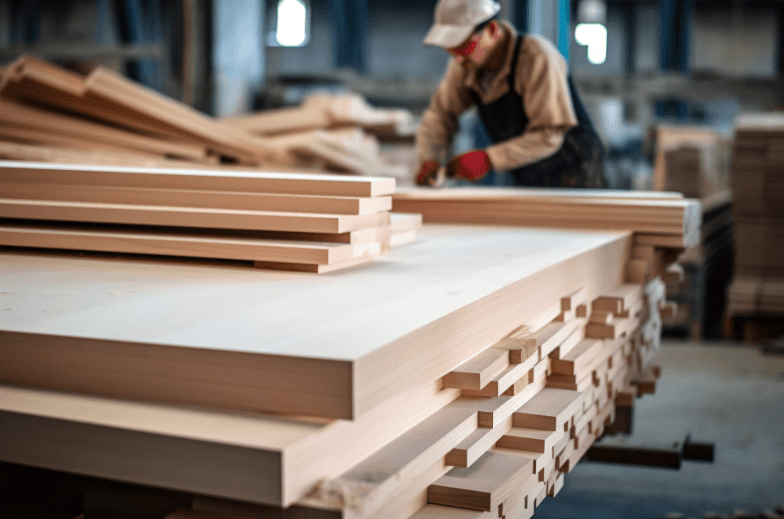
Every joinery project has a waste management problem hiding inside it. Standard sheet sizes are dimensioned for efficient manufacturing and transport, not for the specific components that make up a kitchen, a wall unit, a retail fixture, or a built-in wardrobe. The gap between the standard sheet size and the actual component dimensions is the waste that accumulates in off-cuts, the measurement time that extends the job, and the handling effort that slows production. Custom cut plywood addresses this gap directly, and the efficiency gains it delivers across a joinery project are more significant than most workshops calculate until they have experienced the difference.
The Time Cost of Sheet Handling and Cutting
Full-format plywood sheets, typically 2400 by 1200 millimetres, require specific handling equipment or multiple people to move safely. In a workshop environment where space is limited and jobs are running simultaneously, the handling requirement for full-format sheets creates a consistent overhead that is easy to underestimate because it is distributed across many small moments throughout a job rather than concentrated in a single visible cost.
Custom cut plywood supplied already cut to the specific component dimensions required for a job eliminates this handling overhead. Components arrive ready to machine, edge, and assemble without a primary cutting operation, and the pieces are sized to the job rather than to the sheet format. In a typical kitchen cabinet job, eliminating the primary cutting operation saves a meaningful proportion of the total production time, and the benefit compounds across larger projects.
Accuracy and Consistency at Scale
A panel saw operated by a skilled machinist on a well-maintained machine produces accurate cuts, but the accuracy of hand-fed cutting operations degrades over the course of a long production run as fatigue accumulates, settings drift, and the material being cut varies slightly. For joinery components that need to fit precisely within a designed assembly, this accuracy degradation creates fitting problems that need to be resolved on site, which is the most expensive and least controllable place in the production process to manage variation.
Custom cut panels produced on CNC cutting equipment maintain dimensional accuracy across large production runs without the fatigue-related variation that affects manual operations. The structural plywood components for a complex project, all cut to the same specifications, arrive with consistent dimensions that allow assembly to proceed at the designed tolerances rather than requiring site adjustment.
See also: AI Receptionist Are Changing How Businesses Handle Calls
Optimised Material Usage
A specialist panel cutting operation with optimisation software can nest components from multiple jobs across sheet material more efficiently than a single workshop cutting one job at a time. The optimisation reduces the waste inherent in cutting specific components from standard sheet sizes by identifying the cutting layout across multiple sheets that minimises off-cut material.
For workshops that are purchasing material and cutting it themselves, material optimisation is typically done manually or with basic spreadsheet tools that do not capture the full efficiency available through proper nesting software. The material saving from optimised nesting, while variable by job, consistently contributes to a lower per-project material cost that improves margin on competitive jobs.