Springdale Home Electrical Safety Guide for Storms, Outages, and Older Wiring
Springdale homeowners face electrical safety concerns that can change quickly when thunderstorms, high winds, ice, falling branches, or power outages affect Northwest Arkansas. A little preparation can reduce the chance of equipment damage, electrical fires, and unsafe decisions when the lights go out.
For issues involving wiring, panels, damaged outlets, or storm-related repairs, electrician Springdale, AR services from NWA C&S Electric can provide a practical next step. The locally operated company handles residential and commercial electrical repairs, installations, panel upgrades, lighting, smart-home projects, and troubleshooting for Springdale, as well as nearby Fayetteville, Rogers, Bentonville, and Bella Vista.
Why Springdale Homes Face Distinct Electrical Risks
Severe weather can interrupt utility service, send damaging surges through connected devices, and expose exterior electrical equipment to water. Wind can pull down branches near service lines, while lightning can affect electronics even when the home does not show obvious structural damage. Newer homes may have modern panels and outlets, but overloaded circuits and crowded power strips can still cause trouble. Older homes may also have outdated wiring methods, limited circuits, poor grounding, or repairs completed long before current household electrical demands.
For example, a homeowner may lose power during a storm, then find that several outlets no longer work after service returns. That could be a tripped protective device, a damaged circuit, or an issue at the service equipment. It is safer to observe the problem and arrange an inspection than to keep resetting breakers or dismantling outlets.
What to Check Before Severe Weather
A short preparation routine before severe weather can make an outage less stressful and help prevent avoidable electrical damage.
- Look for loose, cracked, or damaged outdoor lights, covers, cords, and fixtures.
- Keep extension cords and power strips away from windows, exterior doors, and damp locations.
- Unplug sensitive electronics when severe lightning is approaching, if it is safe to do so.
- Test smoke alarms and carbon monoxide alarms according to the manufacturer’s instructions.
- Keep the electrical panel clear, dry, labeled, and easy for adults to reach.
- Make sure responsible household members know the location of the main shutoff.
Homeowners should not open an electrical panel, touch damaged service wiring, or attempt repairs without appropriate training and equipment.
Electrical Warning Signs in Older Homes
Age alone does not make a home unsafe, but repeated symptoms can point to a larger problem. Pay attention to frequent breaker trips or blown fuses, warm or loose outlets, buzzing sounds, discoloration, burning odors, scorch marks, and lights that flicker when appliances start. Two-prong outlets in rooms that need grounded equipment, extension cords used as permanent wiring, and a panel that feels warm or shows rust also deserve professional attention.
A replacement outlet or breaker may solve a specific defect, but recurring issues should not be treated as unrelated annoyances. A larger review can identify undersized circuits, loose connections, moisture intrusion, or equipment that no longer matches the home’s electrical load.
How to Stay Safe During a Power Outage
During an outage, stay well away from downed lines and anything touching them, including fences, trees, vehicles, puddles, and standing water. Use flashlights instead of candles whenever possible, turn off major appliances so they do not all restart at once, and keep children away from damaged outdoor equipment. Limit refrigerator and freezer openings to help preserve food temperature.
Families can use the Arkansas electrical safety toolkit to reinforce a simple rule for children: never approach a downed line, and tell an adult or emergency responder right away. Report hazardous lines to the utility provider or emergency services when there is an immediate danger.
Generator and Portable Power Safety
Portable generators are useful during outages, but incorrect use can create life-threatening carbon monoxide and shock risks. Operate a generator outdoors, well away from doors, windows, vents, and attached garages. Never connect one directly to a household outlet, because backfeeding can endanger utility workers and damage equipment. A properly installed transfer switch is the appropriate option for connecting selected home circuits to backup power.
Choose Priorities Before an Outage
Size a generator around the appliances and circuits your household truly needs, such as a refrigerator, medical equipment, sump pump, essential heating or cooling equipment, lights, and internet equipment. Use heavy-duty cords rated for the load, allow the generator to cool before refueling, and keep working carbon monoxide alarms inside the home. The generator safety guidance from CDC also stresses placing generators outside and more than 20 feet from doors, windows, and vents.
See also: Selling Your Home in New Britain, CT: A Comprehensive Guide for Homeowners
Post-Storm Electrical Checks
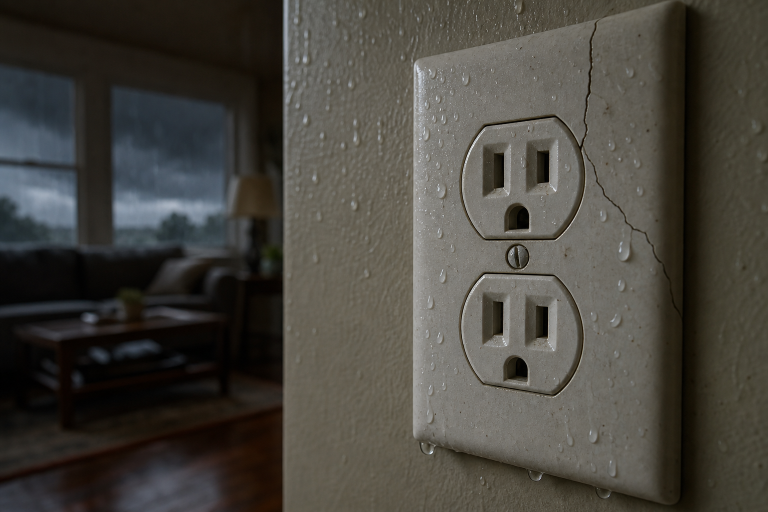
After a storm, inspect only what you can safely observe. Look for damaged service wires, leaning utility equipment, broken exterior fixtures, water near outlets or appliances, sparks, smoke, buzzing, and unusual odors. Do not repeatedly reset a breaker that trips again, and do not use equipment that was submerged or significantly exposed to water until it has been inspected. Photograph visible storm damage before cleanup, in case insurance documentation may be needed.
Power can return in stages, but partial power should not be ignored. If only part of the home has electricity, lights are unusually dim or bright, or equipment behaves erratically, avoid using major appliances until the cause is checked.
When to Call a Licensed Electrician
Professional help is appropriate for repeated breaker trips, smoke or burning smells, water near electrical components, storm-damaged wiring, panel upgrades, rewiring, dedicated appliance circuits, new lighting, ceiling fans, surge protection, generator connections, and smart-home installations. Electrical work may involve licensing, inspections, and code requirements, especially when service equipment or new circuits are involved.
A Simple Springdale Home Safety Checklist
- Panel: Clear, dry, labeled, and free from visible damage.
- Outlets: No heat, looseness, discoloration, buzzing, or scorch marks.
- Lights: No unexplained flickering or repeated bulb failures.
- Outdoor areas: No damaged fixtures, cords, or exposed wiring.
- Alarms: Smoke and carbon monoxide alarms tested and maintained.
- Storm plan: Flashlights, batteries, chargers, and emergency contacts ready.
- Generator: Stored safely, operated outdoors, and never connected through a wall outlet.
- Professional review: Scheduled when warning signs continue or storm damage is present.
Conclusion
Springdale homeowners do not need to wait for an emergency to improve electrical safety. A few checks before storm season, careful choices during an outage, and timely professional help after damage can prevent a smaller concern from becoming a serious hazard. Notice warning signs early, avoid damaged equipment, and treat wiring, panels, generators, and service connections with the caution they require.