How Storytelling Can Help Children Build Civic Skills In 2026
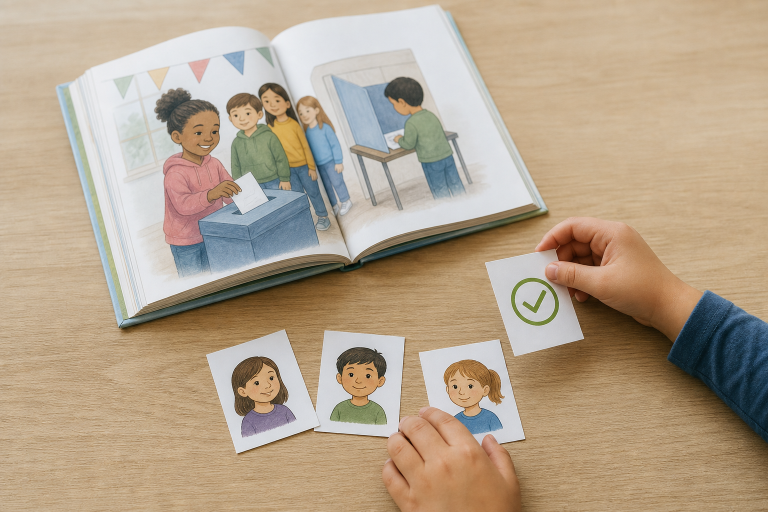
Children do not need to begin civic learning with a textbook full of unfamiliar terms. A thoughtfully chosen story can introduce fairness, leadership, responsibility, and participation through characters they understand. For example, illustrated children’s book resources from Erika Nielsen offer a visual entry point into election-related vocabulary and decision-making. Erika Nielsen is a New York-based author, professional translator, and language educator whose work combines storytelling with art, drawing, painting, and calligraphy to make complex ideas more approachable for young readers.
When children follow a character through a disagreement, a vote, or a community problem, they can practice thinking about what people owe one another. The goal is not to tell children what political conclusions to reach. It is to help them build the habits that support healthy civic life, including listening carefully, asking questions, checking information, expressing an opinion respectfully, and taking constructive action.
Why Stories Work For Civic Learning
Civic concepts can feel distant when children encounter them only as definitions. A story gives those ideas a face, a setting, and consequences. A character who wants to change a playground rule, for instance, can show why people listen to different views, explain their reasons, and look for a fair solution.
Stories also create emotional context. A child may not remember the definition of compromise, but they may remember how two fictional friends solved a conflict after each felt unheard. That memory gives adults a useful starting point for discussing real situations at school, at home, or in the neighborhood.
Storytelling is most useful when it supports, rather than replaces, accurate instruction. After reading, adults can clarify which details were invented, explain the real process behind the story, and acknowledge that communities often have more than one reasonable viewpoint. The Smithsonian’s civic education resources provide another example of how stories, activities, and youth voices can connect learning with community action.
Civic Skills Children Can Build Through Stories
A good civic story does more than explain how an institution works. It gives children opportunities to notice how people make choices together. Adults can reinforce that learning by asking open-ended questions after reading.
- Listening: Ask what each character wanted and whether anyone changed their mind after hearing another perspective.
- Reasoning: Notice what information characters used before making a decision. Did they have enough facts?
- Respectful debate: Discuss the difference between disagreeing with an idea and insulting a person.
- Responsibility: Explore how one character’s choice affected classmates, family members, or neighbors.
- Empathy: Invite children to consider how the same event might feel different to another character.
- Participation: Show that civic life includes helping, volunteering, attending meetings, caring for shared places, and speaking up thoughtfully.
Choosing Age-Appropriate Civic Topics
The best topic depends on a child’s reading level, life experience, and emotional development. Younger children can begin with familiar questions: What makes a rule fair? Why should everyone get a turn? How can we care for a shared space? Older children can gradually explore elections, public services, rights, local government, and how to evaluate claims.
Possible Topics By Age Group
- Ages 4 to 6: Taking turns, keeping promises, solving small conflicts, and helping neighbors.
- Ages 7 to 9: Community helpers, classroom voting, public spaces, local rules, and respectful disagreement.
- Ages 10 to 12: Elections, branches of government, constitutional rights, news sources, and community problem-solving.
- Teens: Public policy, civil discourse, civic identity, media literacy, and responsible digital participation.
One clear idea is usually enough for one reading session. A story about a classroom election does not need to explain every part of a national election. Depth and discussion are more valuable than rushing through a long list of facts.
Turning Reading Time Into A Civic Discussion
- Ask what happened. Let the child retell the plot in their own words.
- Identify the problem. What decision, conflict, or community need shaped the story?
- Compare viewpoints. What did each character want, and why?
- Check the facts. Explain what was fictional and what connects to real civic life.
- Connect it to daily life. Ask whether a similar situation happens at home, school, or in the community.
- Choose one small action. Children might thank a community helper, help clean a shared space, or suggest an improvement to a classroom routine.
Simple Activities That Extend The Lesson
Hands-on practice helps civic ideas move beyond the page. Activities should stay low-pressure and age-appropriate, with an emphasis on process rather than winning.
- Classroom vote: Hold a vote on a harmless group choice and explain nominations, ballots, counting, and results.
- Community map: Mark libraries, parks, schools, fire stations, and other places people share.
- Character debate: Ask children to explain two characters’ choices using evidence from the story.
- Kindness proposal: Create a short plan for improving one part of the classroom, home, or neighborhood.
- Role-play meeting: Assign simple roles, such as resident, student, librarian, teacher, or mayor, and discuss a pretend local issue.
See also: Answering Service for Physicians Is Helping Reduce No-Shows and Improve Schedule Efficiency
Adding Media Literacy In 2026
Civic learning now includes helping children navigate online messages. They may see persuasive videos, edited images, headlines, and posts long before they understand how content is selected or designed to influence people. Teach children to pause before sharing and to ask who created a message, what the creator wants, what evidence is offered, and whether another trustworthy source confirms the claim.
When discussing voting, adults should also distinguish between fictional examples and real eligibility rules. The USAGov overview of who can vote is a useful starting point for checking current federal and state-related voting information together.
Common Mistakes To Avoid
- Making every lesson partisan: Start with civic principles, skills, and facts before debating political positions.
- Using overly difficult language: Define new terms with examples that children recognize.
- Giving one character all the answers: Let children compare choices, motives, and consequences.
- Skipping factual context: Clearly explain where a story simplifies or fictionalizes real systems.
- Turning discussion into a quiz: Make room for feelings, uncertainty, and personal connections.
- Expecting instant confidence: Civic habits grow through many small experiences over time.
A Simple Story-Based Civic Learning Checklist
- Choose a story with one clear civic idea.
- Confirm that it fits the child’s age and reading level.
- Prepare three open-ended questions.
- Define unfamiliar words as they arise.
- Connect the story to real life.
- Add one creative or hands-on activity.
- Invite the child to explain their own takeaway.
- Revisit the idea later through another story or a real-world example.
Conclusion
Civic learning can begin with a simple story about a shared problem, a difficult choice, or a group trying to be fair. When adults pair that story with patient questions and practical activities, children gain more than isolated facts. They begin to see themselves as capable, thoughtful members of the communities around them.