Sign Printing Trends London Businesses Are Adopting in 2026
Signage has always been the most public expression of a business. It is the first thing a customer sees, the last thing they remember, and the one element of brand communication that cannot be switched off. In 2026, the expectations surrounding it have shifted considerably. London businesses are approaching sign printing with more strategic intent than before not simply asking for a sign to be made, but making deliberate decisions about material, format, finish, and longevity. This piece covers the trends defining how that is playing out across the capital.
Why Signage Strategy Has Moved Up the Priority List
For a long time, signage was treated as a one-time purchase, commission it, install it, forget about it. Both monetarily and in terms of brand impression, that strategy has grown more expensive. Signs age. Materials fade. Businesses evolve. A sign that represented a brand accurately three years ago may now be actively working against it.
The shift happening across London is one of intention. Businesses are thinking about signage the way they think about other brand assets, with a view to consistency, longevity, and the impression it creates at close range.
- Brand alignment: Signs are being commissioned as part of wider brand refresh projects, not as standalone purchases
- Material intelligence: Decisions are being made based on environment, lifespan, and viewing distance rather than cost alone
- Replacement planning: Forward-thinking businesses are building sign refresh cycles into their budgets rather than reacting when deterioration becomes obvious
Trend 1: Premium Finishes Are Becoming the Standard
Flat vinyl lettering on a plain background used to be acceptable for most retail and commercial applications. In 2026, that baseline has moved. Businesses across London are adopting finishes that would previously have been reserved for flagship locations.
What This Looks Like in Practice
- Brushed metal effect finishes on exterior fascia signs
- Gloss and matte contrasting panels within the same sign
- Raised lettering and dimensional elements replacing flat print
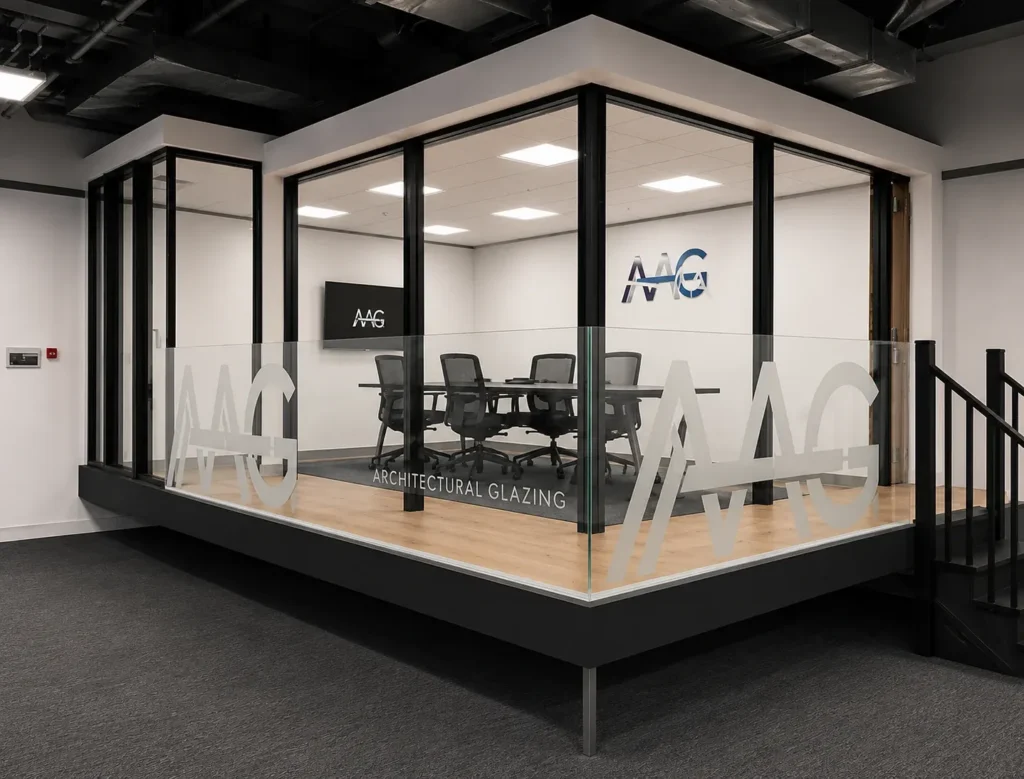
- Frosted and gradient window graphics replacing solid vinyl
The driver is not aesthetics alone. Premium finishes communicate permanence and investment to a customer who is making a split-second judgement about whether a business is worth entering. Sign printing that looks considered signals a business that takes detail seriously.
Trend 2: Material Selection Is Being Taken More Seriously
One of the clearest shifts in how London businesses are approaching sign printing is the move away from defaulting to the cheapest available material. The conversation has matured.
| Material | Best application | Why businesses are choosing it |
| Aluminium composite | Exterior fascia and long-term installs | Weatherproof, rigid, professional finish |
| Foamex | Interior display and short-term use | Lightweight, cost-effective, sharp print |
| Acrylic | Premium interior signage | Depth, clarity, high-end appearance |
| Correx | Temporary outdoor and site signage | Affordable, lightweight, replaceable |
| Dibond | High-traffic exterior installs | Durable, flat, excellent colour retention |
Businesses are asking better questions before committing, understanding that the right material for a window graphic is not the right material for an exterior fascia, and that a sign expected to last five years requires a different specification to one planned for a six-month campaign.
Trend 3: Consistency Across Multiple Touchpoints
Multi-site businesses and those with both physical and digital brand presence are increasingly focused on visual consistency across every sign printing application. A customer who visits two locations of the same business and finds noticeably different signage, different shades, different finishes, different proportions, registers the inconsistency even if they cannot articulate why.
What Consistent Sign Printing Requires
- Centralised artwork management so that the same files go to production regardless of location
- Colour profiling that accounts for how different materials and finishes absorb ink differently
- A single trusted production partner rather than multiple local suppliers applying their own interpretation
For growing businesses, this is becoming a genuine operational concern rather than an aesthetic preference. Brand consistency at the physical level requires the same discipline as brand consistency at the digital level.
Trend 4: Longevity Is Being Factored Into the Brief
There is a growing awareness among London businesses that cheap sign printing is rarely cheap in practice. A sign that fades within eighteen months, peels at the edges, or warps under temperature variation costs more over time than a properly specified alternative installed correctly in the first place.
The trend is toward briefing sign printing with a lifespan expectation built in from the start:
- Interior signs expected to last three to five years are being specified in acrylic or aluminium rather than foamex
- Exterior signs in high-UV or high-moisture environments are being produced on materials with appropriate weatherproofing ratings
- Window graphics are being produced in cast vinyl rather than calendered vinyl for installations expected to last beyond eighteen months
This shift requires businesses to have an honest conversation with their provider about expected lifespan before production begins, and it requires providers who are capable of having that conversation rather than simply fulfilling the order as specified.
See also: AI Receptionist Are Changing How Businesses Handle Calls
The Businesses Getting It Right Are Asking Better Questions
The common thread across every trend outlined here is intent. London businesses that are getting the most from their sign printing investment in 2026 are not simply ordering signs, they are briefing outcomes. They know where the sign will be, how long it needs to last, who will be reading it and from what distance, and what impression it needs to create. That clarity produces better briefs, which produce better signs, which produce better returns on the investment. Sign Company London works with businesses across the capital that have reached that level of intentionality, delivering sign printing that is specified correctly from the start and produced to the standard the brief demands.
Author Bio: Nimesh Kerai
Nimesh Kerai serves as the Printing Head at the Sign Company in London. Utilising his technical aptitude and the trait of keeping up with the latest technological advancements, he has been able to deliver top-notch quality prints and signage to sou customers consistently. This has cemented the Sign Company as one of the most sought-after signage companies in London. He consistently shares his insights with the masses by means of useful and intriguing blogs.