Power Transistors 101: Switching, Amplification, and Power Management
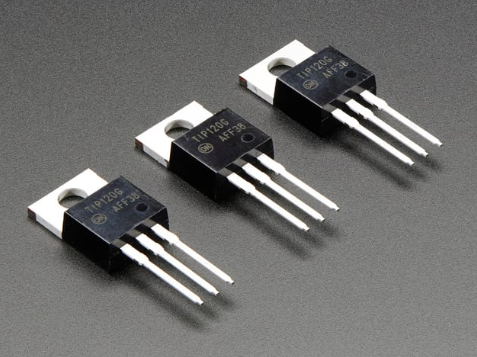
A power transistor is a semiconductor device used to control, switch, or amplify electrical current within a circuit, making it one of the most fundamental building blocks in power management and electronic switching applications. From industrial equipment to consumer electronics, transistors regulate how current flows through a system, enabling everything from simple on/off switching to precise power regulation.
This guide covers what power transistors do, how they’re used in switching and amplification, and what factors matter when selecting one for an application.
What Does a Power Transistor Actually Do?
At its core, a transistor acts as an electronically controlled switch or amplifier. A small input signal — voltage or current — controls a much larger output current, allowing the transistor to either switch a circuit on and off or amplify a signal’s strength. This basic function underlies an enormous range of applications, from simple power regulation circuits to complex motor control systems.
Power transistors specifically are designed to handle higher voltage and current loads than standard signal transistors, making them suitable for applications where meaningful amounts of electrical power need to be controlled or converted, rather than just small signal-level currents.
See also: The Impact of Artificial Intelligence on Everyday Life
The Two Core Functions: Switching and Amplification
Switching
In switching applications, a transistor is used to turn current flow on or off rapidly and repeatedly, often at high frequencies. This is fundamental to how modern power supplies, motor drives, and digital circuits manage power delivery efficiently. Fast, precise switching reduces energy loss compared to older, less efficient methods of power regulation, which is part of why transistor-based switching has become the standard approach across most modern electronic power systems.
Amplification
In amplification applications, a transistor increases the strength of an electrical signal without significantly distorting its shape. This function is essential in audio equipment, signal processing circuits, and any application where a weak input signal needs to be strengthened to a usable level before being passed further through a system.
Many industrial and power management applications use transistors primarily for switching, while amplification tends to be more common in signal-processing and communication-related circuits.
Common Applications of Power Transistors
Power transistors appear across a wide range of industrial and electronic systems:
- Power supply regulation – managing voltage and current delivery to maintain stable output
- Motor control circuits – controlling current flow to regulate motor speed and torque
- Industrial automation equipment – supporting switching functions within control systems
- Signal amplification circuits – strengthening signals in audio and communication equipment
- General power management – regulating current flow across countless electronic devices and systems
Because these applications vary widely in voltage, current, and switching speed requirements, transistor selection needs to be matched carefully to the specific demands of each use case.
What to Look for in a Power Transistor
Voltage and current ratings. The transistor must be rated to safely handle the maximum voltage and current expected in the application, including margin for transient spikes.
Switching speed. Applications requiring high-frequency switching need transistors specifically rated for fast response times to avoid excessive heat generation and energy loss.
Thermal management. Power transistors generate heat during operation, particularly under continuous load, making thermal tolerance and heat dissipation capability an important consideration, especially in industrial environments.
Application fit. Not all transistors are optimized the same way — some are better suited to switching applications, while others are designed more specifically for amplification, so matching the transistor type to its intended function matters.
For buyers evaluating specific components, reviewing available Goodark transistor products provides insight into how transistor specifications and application use cases are typically categorized, helping narrow down suitable options based on defined voltage, current, and switching requirements.
Choosing a Reliable Source for Power Transistors
Component quality matters significantly in transistor selection, since inconsistent manufacturing can lead to unpredictable performance or premature failure — particularly problematic in industrial applications where reliability directly affects equipment uptime. Working with an established power semiconductor manufacturer that maintains consistent quality control across its product range helps reduce this risk, especially for buyers sourcing multiple component types — diodes, rectifiers, transistors, and IGBTs — for a single system design.
Beyond manufacturing consistency, reliable suppliers typically provide clear documentation and specifications that make it easier to verify a transistor’s suitability for a specific application before committing to a full production order.
Transistors in the Broader Power Semiconductor Ecosystem
Transistors rarely operate in isolation within a system. In many industrial power designs, transistors work alongside diodes, rectifiers, and IGBTs to manage different stages of power conversion and control — rectifiers converting AC to DC, transistors handling switching or amplification, and IGBTs managing higher-power switching requirements where needed. Understanding this broader system context helps clarify why transistor selection should account for compatibility with other components in the same design, not just its standalone specifications.
Final Thoughts
Power transistors serve as fundamental building blocks for switching and amplification across countless industrial and electronic applications. Selecting the right transistor requires matching voltage, current, switching speed, and thermal requirements to the specific application, while sourcing from a manufacturer with consistent quality standards helps ensure reliable long-term performance. Understanding both the technical fundamentals and the broader system context leads to better component selection than evaluating transistors in isolation.
FAQs
What is the main function of a power transistor? A power transistor controls, switches, or amplifies electrical current within a circuit, enabling applications ranging from power regulation to signal amplification.
What’s the difference between switching and amplification in transistors? Switching involves rapidly turning current flow on and off, commonly used in power supplies and motor control, while amplification increases signal strength without distorting its shape, common in audio and communication circuits.
What factors matter most when selecting a power transistor? Key factors include voltage and current ratings, switching speed, thermal management capability, and whether the transistor is optimized for switching or amplification applications.
Why does manufacturer quality matter for transistor sourcing? Inconsistent manufacturing can lead to unpredictable performance or premature failure, which is particularly risky in industrial applications where equipment reliability directly affects uptime and safety.
Do transistors work alongside other power semiconductor components? Yes. In many industrial systems, transistors work together with diodes, rectifiers, and IGBTs, each handling different stages of power conversion, control, and switching within the same design.