7 Pickleball Court Maintenance Tips for Maine’s Harsh Winters
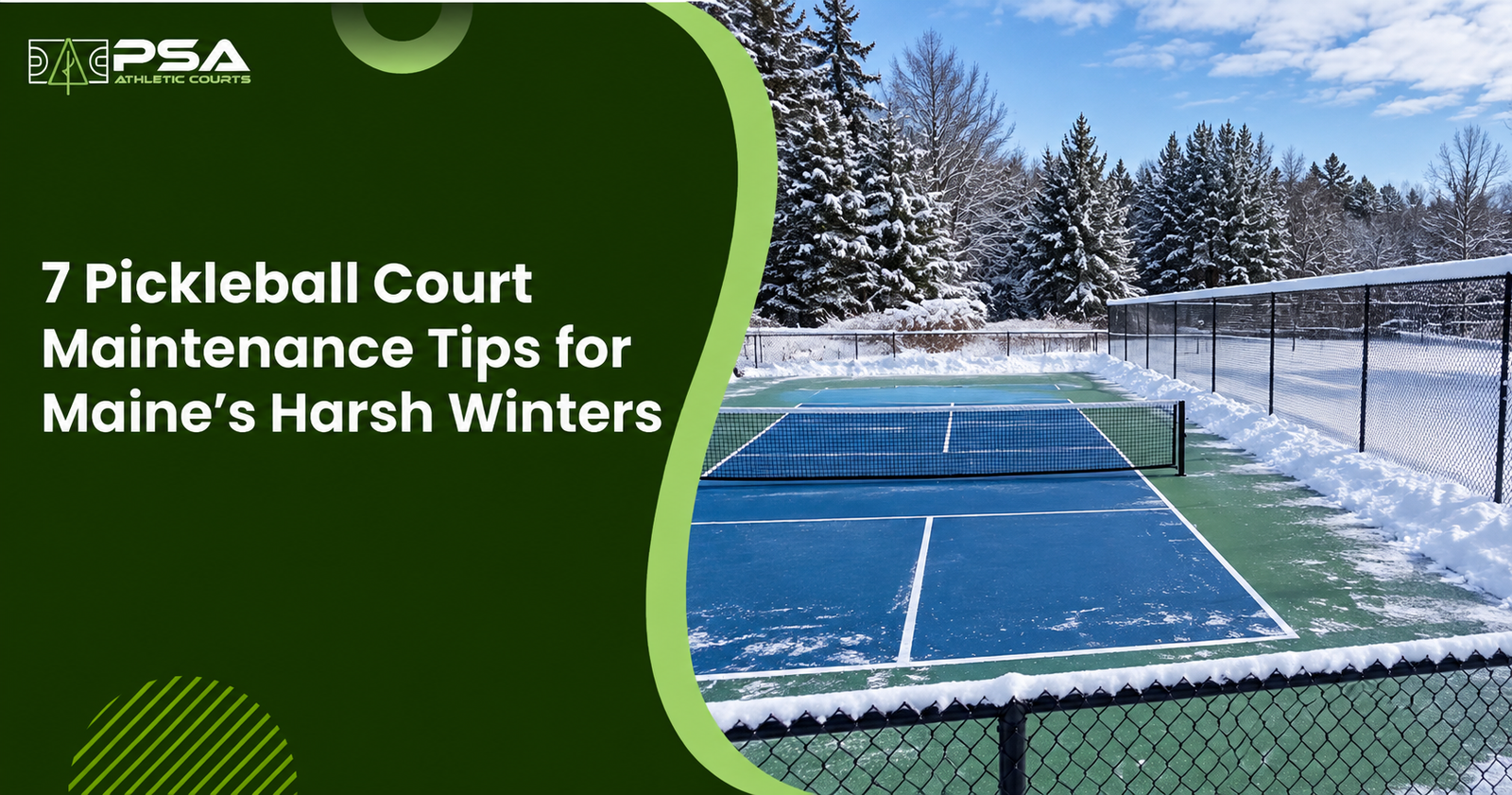
Maine’s freezing temperatures, snow, ice, and frequent freeze-thaw cycles can be tough on outdoor pickleball courts. Without proper care, moisture can penetrate small cracks, expand during freezing temperatures, and cause surface damage. A proactive pickleball court maintenance plan can help protect your investment and extend the life of your court.
Whether you manage a community court, school facility, recreation center, or residential court, these winter maintenance tips can help keep your pickleball court surface in better condition through Maine’s challenging weather.
1. Inspect the Court Before Winter
A detailed inspection before temperatures drop can help identify small problems before they become expensive repairs.
Look for:
- Small cracks or surface splits
- Low areas where water collects
- Peeling or worn coatings
- Damaged fencing and posts
- Drainage problems
- Areas with visible surface deterioration
Addressing these issues early is an important part of effective pickleball court maintenance.
2. Repair Cracks Before Freezing Temperatures
Water that enters cracks can freeze and expand, potentially making existing damage worse. Even minor cracks should be evaluated before winter arrives.
Professional crack repair can help prevent moisture from penetrating deeper into the court structure. If cracks are widespread or the surface has significant wear, it may be time to consider pickleball court resurfacing.
3. Keep the Court Clean and Free of Debris
Leaves, branches, dirt, and other debris can trap moisture against the surface. Over time, this can contribute to staining, surface deterioration, and drainage issues.
Before winter and throughout the colder months:
- Remove leaves and organic debris regularly.
- Keep drainage areas clear.
- Avoid using harsh chemicals on the court.
- Remove standing water whenever practical.
Routine cleaning is a simple but valuable part of maintaining a durable pickleball court surface.
4. Avoid Using Rock Salt or Harsh De-Icing Products
Traditional rock salt and certain chemical de-icers may negatively affect court coatings and surrounding materials. Instead of applying potentially damaging products, follow the recommendations provided by your court surface manufacturer or contractor.
Never use metal shovels or sharp equipment that could scratch or gouge the playing surface.
5. Manage Snow Carefully
Snow should be removed carefully when necessary. Heavy snow accumulation can place additional stress on surrounding structures, while aggressive removal techniques can damage the court coating.
Use equipment specifically recommended for sports surfaces, and avoid dragging sharp-edged tools across the pickleball court surfacing.
6. Check Drainage and Water Flow
Proper drainage is critical in Maine because repeated freezing and thawing can turn minor drainage problems into larger surface issues.
Inspect:
- Court slopes
- Drains and catch basins
- Edges of the playing area
- Areas where water consistently pools
Good drainage helps reduce prolonged moisture exposure and supports the long-term performance of your pickleball court surfacing.
See also: How to Test-Drive a Truck or Car in Dallas, Austin, and Houston, Texas
7. Plan Resurfacing After Winter
Winter can reveal damage that was not obvious during the playing season. Once temperatures become suitable for outdoor court work, inspect the surface again.
Signs that you may need pickleball court resurfacing include:
- Multiple cracks
- Faded or worn court coatings
- Uneven playing areas
- Peeling or flaking surface material
- Persistent water-related damage
- Reduced traction
Resurfacing can restore the appearance, playability, and protection of an aging court.
Protect Your Pickleball Court Through Maine Winters
Proper pickleball court maintenance is especially important in Maine, where snow, freezing temperatures, and freeze-thaw cycles can accelerate surface deterioration. Regular inspections, proper cleaning, crack repairs, drainage management, and timely pickleball court resurfacing can help extend the usable life of your court.
By preparing your court before winter and inspecting it again in spring, you can identify problems early and keep your pickleball court surface ready for another season of play.