Modern Kitchen Cabinets: Styles and Materials
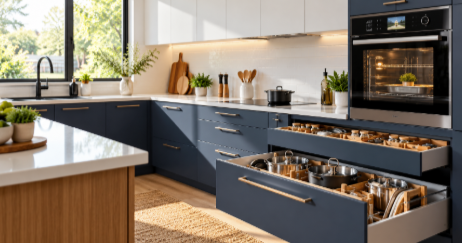
Your cabinets shape how a kitchen looks and works every single day. Choose well and your kitchen stays tidy, efficient, and stylish for years. Choose poorly and you will be fighting jammed drawers and peeling edges within a few seasons. Whether you are planning a full kitchen makeover or a simple refresh, this guide covers the main modern cabinet styles, the best materials, practical cabinet organization ideas, and how to plan for kitchen smart appliances.
Popular Modern Cabinet Styles
Flat-panel (slab) cabinets. The defining look of modern design. Doors are smooth and flat, with no raised edges or decorative profiles. They are easy to wipe clean and pair well with minimalist hardware or handleless designs.
Shaker cabinets. A five-piece door with a simple recessed center panel. Shaker is the safe, timeless choice. It suits both modern and transitional kitchens and rarely feels dated.
Handleless and push-to-open cabinets. Doors open with a gentle press or through a recessed finger groove. The result is a clean, uninterrupted surface, though the mechanisms add to the cost.
Open shelving combined with closed cabinets. Mixing a few open shelves with closed storage adds personality and breaks up heavy runs of cabinetry. Keep open shelves for items you actually like looking at.
Two-tone cabinets. Darker lower cabinets with lighter uppers (or an island in a contrasting color) add depth without overwhelming a small room.
Choosing the Right Material
Solid wood. Durable, repairable, and long-lasting, but it is the most expensive option and can warp in very humid conditions. Oak, maple, and walnut are common.
Plywood. Strong, stable, and moisture-resistant when well made. Many professionals prefer plywood boxes for their holding power and longevity, especially in humid climates.
MDF (medium-density fiberboard). Smooth and ideal for painted finishes, since it has no grain to show through. It is affordable but swells if water reaches it, so quality sealing matters.
Particleboard with laminate or melamine. The budget choice. Modern versions look good and clean easily, but they are the least tolerant of moisture and heavy loads.
Thermofoil and acrylic. Smooth, glossy surfaces popular in contemporary kitchens. They resist stains but can peel or discolor near heat sources if poorly installed.
Stainless steel. Hygienic and heat-proof with a professional look, though it shows fingerprints and costs more.
See also: Short-Form Video Marketing for Business Growth
Cabinet Organization Ideas That Actually Work
Beautiful cabinets only deliver value if they are organized well. These cabinet organization ideas make a real difference:
- Deep drawers instead of lower doors. Pots, pans, and heavy appliances are far easier to reach when they pull out toward you.
- Pull-out pantry units. Narrow slide-out racks turn a thin gap beside the fridge into usable storage.
- Vertical dividers. Store baking trays, cutting boards, and lids upright so you can grab one without unstacking the rest.
- Corner solutions. Blind corners waste space. Swing-out or carousel systems bring the contents to you.
- Drawer inserts. Cutlery trays, spice organizers, and adjustable dividers stop drawers from becoming chaos.
- Door-mounted racks. The inside of a cabinet door is free space for spices, foil, or cleaning supplies.
- Zone planning. Store items where you use them: pots near the stove, plates near the dishwasher, baking supplies near the prep area.
Planning Cabinets for Kitchen Smart Appliances
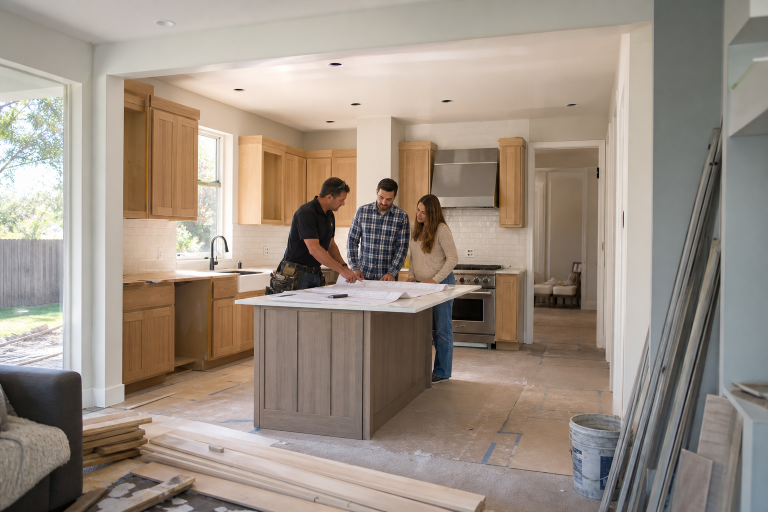
A kitchen makeover is the best time to plan for kitchen smart appliances, because your cabinets need to be built around them. Smart ovens, induction cooktops, and connected refrigerators need the right cutout sizes, ventilation gaps, and nearby power outlets. Tall cabinets work well for built-in ovens and microwaves at eye level, which is safer and easier than bending down.
Leave room for a charging drawer, a small shelf for a smart speaker, or a spot for a tablet that shows recipes and timers while you cook. Hide outlets inside drawers and cabinet interiors so cords stay out of sight. Then arrange everything in zones: heavy appliances near the counter, cookware near the stove, and everyday dishes near the dishwasher. When storage follows the way you actually cook, the whole kitchen runs more smoothly.
Final Tips Before You Buy
- Measure carefully and plan your layout before choosing a style.
- Spend more on hinges and drawer slides than you think you need. They take the most wear.
- Match the material to your climate and kitchen use, especially around the sink and stove.
- Request samples and view them in your own kitchen lighting.
- Visit a showroom to test drawers, hinges, and finishes in person.
A kitchen makeover is an investment in both appearance and daily convenience. By choosing the right style and material, planning storage around real habits, and making room for kitchen smart appliances, you can build a kitchen that looks great and works hard for years to come.