Closed Cup Flash Point Tester – Understanding Safe and Accurate Flammability Testing
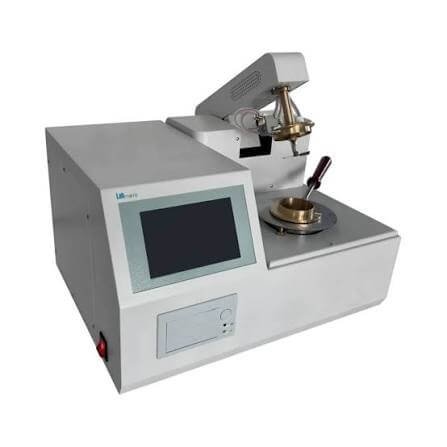
Determining the flash point of a liquid is an important part of evaluating its flammability characteristics. A closed cup flash point tester helps laboratories identify the lowest temperature at which a liquid produces sufficient vapor to ignite momentarily under specified testing conditions.
This information supports material classification, handling procedures, storage decisions, and quality assessments across industries that work with combustible and flammable liquids.
What Is Flash Point?
Flash point is the lowest temperature, corrected as required by the applicable test method, at which a liquid releases enough vapor to produce a momentary ignition when exposed to a specified ignition source.
It is not the same as the temperature at which a material burns continuously.
Flash point also differs from autoignition temperature, which describes ignition without an external ignition source.
Why Closed Cup Testing Is Important
Closed cup methods use a covered sample container to limit vapor exchange with the surrounding atmosphere.
This arrangement produces testing conditions that differ from open cup methods.
Consequently, flash point values obtained using different procedures should not automatically be treated as interchangeable.
Working Principle of a Closed Cup Flash Point Tester
A closed cup flash point tester heats a prepared liquid sample under controlled conditions.
At specified temperature intervals, an ignition source is introduced into the vapor space according to the selected test method.
The operator or detection system determines when a flash occurs.
Sample Heating
The heating rate must follow the applicable procedure because excessive or inconsistent heating can affect the result.
Vapor Formation
As the temperature rises, the liquid releases increasing amounts of vapor.
The concentration of vapor above the liquid depends on the material’s properties and testing conditions.
Flash Detection
The flash point is recorded when the specified ignition event occurs.
The result should be reported with the test method and any required corrections.
Common Applications in Industrial Laboratories
A closed cup flash point tester is useful wherever liquid flammability characteristics require evaluation.
Petroleum Product Testing
Laboratories assess selected fuels, lubricants, and petroleum-derived materials to support quality and safety decisions.
Chemical Processing
Flash point measurements contribute to the evaluation of solvents and other industrial liquids.
Material Classification
Testing information may support classification under applicable transport, storage, and safety regulations.
Quality Assurance
Unexpected changes in flash point can indicate differences in composition or possible contamination.
However, additional analytical testing may be necessary to establish the cause.
Factors That Influence Flash Point Measurements
Reliable testing requires attention to several important variables.
Sample composition, contamination, heating rate, atmospheric pressure, and test apparatus condition can affect the reported result.
A closed cup flash point tester must be operated within the requirements of the selected method.
Sample Preparation
Samples should be collected and handled carefully to minimize evaporation of volatile components.
Improper storage or excessive handling may change the composition before testing begins.
Temperature Measurement
Accurate temperature measurement is essential because the reported flash point depends directly on the observed temperature.
Temperature sensors should be verified according to laboratory procedures.
Testing Environment
Ventilation, equipment placement, and environmental conditions should be appropriate for the method and the hazards involved.
Safety Considerations During Testing
Flash point testing involves heating potentially flammable materials near an ignition source.
Operators should follow established safety procedures, use suitable protective equipment, and ensure that emergency controls are available.
Testing should never proceed with damaged apparatus or unsuitable sample containers.
Maintaining Testing Reliability
Regular maintenance supports consistent instrument performance.
Laboratories should inspect heating components, ignition mechanisms, temperature measurement systems, and sample cups.
Cleaning between tests helps prevent contamination.
Performance verification using appropriate reference materials can provide additional confidence in measurement quality.
See also: Property Protection: Why Exterior Home Upkeep Matters Most
Conclusion
A closed cup flash point tester plays an important role in evaluating liquid flammability under controlled laboratory conditions. Proper sample handling, standardized procedures, instrument verification, and safe operating practices help laboratories obtain dependable results for quality assessment and material safety decisions.