How to Choose the Right Water Heater in Kaysville, Utah
Why Water Heater Choice Matters in Kaysville
A water heater is easy to overlook until the shower turns cold or a tank begins leaking. For homeowners considering water heater installation in Kaysville Utah, the best choice is not always the largest unit or the least expensive replacement. It is the system that fits the household’s routines, the home’s utility connections, and the installation area.
Kaysville homes experience cold winters, and incoming water is colder for much of the year than in warmer climates. That means a water heater may need to work harder to raise water to a comfortable temperature. A properly sized system helps families maintain a dependable supply of hot water for morning showers, laundry, dishwashing, and evening routines.
Water heating is a meaningful part of a home’s overall energy use, so efficiency deserves attention alongside purchase price. The U.S. Department of Energy’s water heating guidance explains that efficiency ratings for residential units are measured using the Uniform Energy Factor, commonly called UEF. A higher UEF generally indicates a more efficient unit within the same equipment category.
Compare the Main Water Heater Types
Each major water heater type has strengths and limitations. The comparison below can make the first stage of selection easier.
| Type | Best Fit | Main Benefit | Important Consideration |
| Storage tank | Most replacement projects | Familiar, straightforward operation | Limited stored supply and standby heat loss |
| Tankless | Homes needing space savings | Heats water on demand | May require gas, venting, or electrical upgrades |
| Heat pump or hybrid | Homes with suitable utility-room space | Lower electric energy use | Needs airflow, drainage, and adequate space |
Traditional Storage Tank Water Heaters
Storage tank systems hold a supply of heated water until it is needed. Gas and electric models are widely available, and replacing a similar existing unit is often less complicated than switching technologies. Tank capacity matters, but a household should also consider the recovery rate and first-hour rating, which indicate how much hot water the system can provide during peak periods.
Tankless Water Heaters
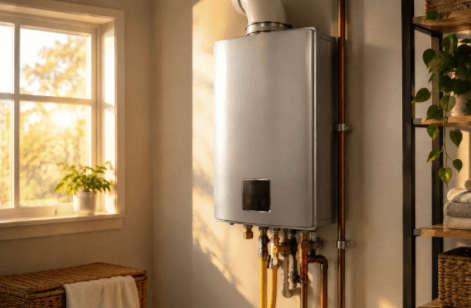
Tankless units heat water as it flows through the equipment instead of storing a full tank. They can free up floor space and provide continuous hot water when correctly sized. However, simultaneous demand matters. A unit that handles one shower well may struggle if another shower, dishwasher, and washing machine run at the same time.
Heat Pump and Hybrid Water Heaters
Heat pump water heaters use electricity to move heat from surrounding air into stored water. They can reduce electricity use compared with standard electric resistance models, but they require an appropriate location. The installation area should provide sufficient airflow and clearance, and a means to handle condensation.
Calculate Your Household’s Hot-Water Demand
Household size provides a starting point, but daily behavior is often more important. Two residents who shower at different times may need less peak capacity than a family whose morning routine includes back-to-back showers, laundry, and dishwashing.
- List the fixtures and appliances that use hot water.
- Identify the busiest hour of a typical weekday or weekend.
- Estimate which activities overlap during that period.
- Compare the expected demand with first-hour rating or tankless flow capacity.
- Confirm the final size with a qualified installer.
For storage tanks, first-hour rating is often more useful than the number of gallons printed on the label. A unit’s burner or heating elements, recovery performance, and household habits all affect its ability to keep up.
See also: Online Business Loan Edmonton: A Convenient Way to Explore Business Financing
Consider Energy Use and Operating Costs
Purchase price is only one part of the financial decision. A lower-priced water heater may cost more to operate over its service life, while a more efficient model may justify a higher initial investment in the right home. Compare UEF, estimated annual energy use, utility rates, warranty coverage, expected maintenance, and installation costs before making a final decision.
Reducing hot-water waste can also support lower operating costs. Simple habits such as repairing hot-water leaks and using WaterSense-labeled fixtures can reduce the amount of heated water a household sends down the drain.
Check Installation Requirements
Changing from one water heater type to another may involve much more than removing the old unit. Before ordering equipment, review the existing gas line, electrical panel capacity, venting route, drain access, equipment clearances, and local permit requirements.
A tankless gas model may need a larger gas supply line or new venting. An electric tankless unit can require substantial electrical capacity. A heat pump model needs space around it and a condensate drain. Addressing these issues before delivery helps prevent surprise costs and project delays.
Plan for Maintenance and Service Life
Regular care supports reliable operation and can help identify developing problems early. Follow the manufacturer’s instructions for the specific model, and have gas controls, electrical connections, venting, and safety components inspected when appropriate.
- Watch for moisture, corrosion, or rust-colored water.
- Pay attention to popping sounds, slow recovery, or inconsistent water temperature.
- Keep the area around the heater accessible and free of stored items.
- Follow recommended flushing and inspection guidance.
- Address pressure-relief valve concerns or visible leaks promptly.
Avoid Common Buying Mistakes
Choosing by Tank Size Alone
A larger tank is not automatically a better fit. Peak demand, first-hour rating, and recovery speed can matter more than capacity alone.
Ignoring Installation Costs
New wiring, gas piping, venting, drainage, or code-related updates can affect the total project cost. Request an estimate that accounts for the complete installation.
Waiting for an Emergency
A leaking or failed water heater can force a rushed choice. Planning while the existing system still works gives homeowners time to compare models and evaluate practical upgrades.
Questions to Ask Before Buying
- What is our busiest hour for hot-water use?
- What first-hour rating or flow rate does our household need?
- Can the existing gas, electrical, and venting systems support this model?
- What installation upgrades are required?
- What are the likely operating and maintenance costs?
- What parts and labor are covered by the warranty?
- Would repairing the current unit be reasonable, or is replacement the better long-term choice?
Final Thoughts
The best water heater for a Kaysville home balances dependable comfort, efficient operation, available space, and realistic installation costs. Reviewing household routines before choosing a model can prevent both cold showers and overspending. With the right sizing, proper installation, and routine care, a new water heater can serve the home reliably through Kaysville’s changing seasons.