Proof Before Purchase: Building Beauty Claims Consumers Can Trust
Beauty shoppers have learned to look past vague promises. Words such as “transformative,” “instant,” and “clinically proven” can attract attention, but they do not help someone understand what a product will actually do in their own routine. The strongest claims replace hype with useful detail, including who experienced the result, what they noticed, and how long it took.
That is where cosmetic testing can provide a more reliable foundation. The Benchmarking Company is a consumer research firm specializing in beauty and personal care product testing, including consumer perception studies and in-home use testing for categories such as skincare, color cosmetics, hair care, fragrance, devices, and men’s grooming. Its work focuses on collecting structured feedback from relevant buyers so brands can connect product experiences to supportable marketing language.
Why Beauty Claims Need More Than Clever Copy
A product description explains what an item is. A consumer perception claim reports what participants said or felt after using it. An objective performance claim relies on measurable outcomes from methods such as instrumental testing, laboratory analysis, or clinical evaluation. These are different types of statements, and they should not be treated as interchangeable.
For example, “a lightweight gel moisturizer” is a description. “Nine out of ten users said it felt lightweight” is a consumer perception claim. “Skin hydration increased by a measured amount” is an objective performance claim that requires an appropriate measurement method. Keeping those distinctions clear helps shoppers compare products and helps teams avoid making a larger promise than their evidence supports.
See also: The Impact of Artificial Intelligence on Everyday Life
What Makes a Beauty Claim Useful?
A useful claim answers a question a shopper already has. It should be easy to understand, tied to a real product experience, and close to the result the study actually produced.
- Specific: It identifies the benefit, such as easier blending, less sticky feel, or softer-looking hair.
- Measurable: It uses an outcome that participants or instruments can assess.
- Relevant: It addresses a meaningful concern for the intended buyer.
- Time-based: Indicates whether the result was based on a single use, 7 days, or a longer trial.
- Qualified: It reflects the tested population and allows for individual variation where needed.
Consumer Feedback and Clinical Evidence Are Not the Same
Consumer studies are particularly valuable for understanding how a product fits into everyday life. They can reveal whether a moisturizer feels hydrating, whether mascara wears comfortably, whether a styling tool is easy to hold, or whether a fragrance feels appropriate for a certain occasion. They also capture sensory details and purchase interest that an instrument cannot measure.
Clinical and instrumental methods answer other questions. They may be better suited to measuring a defined skin attribute, documenting visible changes under controlled conditions, or assessing performance that should not depend solely on personal opinion. The method must match the promise. Satisfaction with a serum does not independently prove a biological change, just as a measurement alone may not explain whether users enjoy applying the product.
How In-Home Product Testing Reflects Real Use
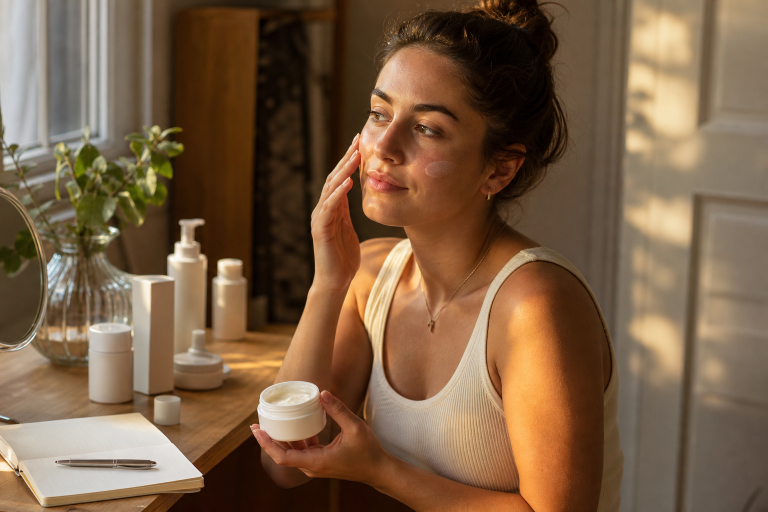
An in-home use test puts a product into the routines where it will actually be used. Participants receive consistent instructions, use the product for a realistic period, complete check-ins, and provide final feedback. This approach can reveal whether directions are clear, whether the texture fits a user’s routine, and whether the results are noticeable enough to matter.
- Define the product question and intended buyer.
- Select participants who reflect that audience.
- Provide the same usage instructions to every participant.
- Collect feedback at meaningful intervals, not only at the end.
- Review patterns across the group rather than relying on one memorable comment.
- Translate supported findings into carefully limited claim language.
Choosing the Right Test Group
A broad sample is not automatically the best sample. A leave-in conditioner for textured hair, for example, needs feedback from people who use products in that category and have relevant hair goals. Depending on the product, screening may consider age, skin or hair concerns, current product habits, gender, shopping behavior, sensitivity needs, and price expectations.
Match the Study Design to the Decision
- A small pilot can uncover early issues with scent, instructions, or texture.
- A larger panel may offer stronger support for a well-defined consumer claim.
- A blinded test can reduce the influence of brand recognition or packaging.
- A branded test can assess the complete experience, including presentation and expectations.
- A comparison test can help distinguish a new formula from an earlier version or alternative option.
Questions to Ask Before Testing
Good research begins before the first product is shipped. Teams should decide what they need to learn, rather than asking a long list of disconnected questions after the fact.
- What single product question matters most?
- Which potential claim would be most helpful to a buyer?
- Is the formula ready for consumer use, with relevant safety and stability work completed?
- How long must someone use it to notice a realistic result?
- Will findings be used for development, packaging, retail conversations, or advertising?
- How will the team evaluate negative, mixed, or unexpected feedback?
Turning Raw Comments Into Better Claims
Raw comments are useful starting points, not finished marketing copy. “It feels nice” should lead to a more precise question about texture, spreadability, finish, or comfort. “My skin looked better” should prompt a follow-up about the visible change noticed and the length of use. “I would buy it” can indicate purchase interest, but it should not be presented as proof of efficacy.
The goal is to convert general enthusiasm into language that stays close to the evidence. If users consistently describe a smooth application, “applies smoothly” may be appropriate. If participants report a healthier-looking finish after two weeks, the time frame and perception should remain part of the final statement.
Keeping Claims Honest Across Every Channel
A claim can take on a different meaning when it appears next to before-and-after images, influencer commentary, customer reviews, or dramatic design elements. Teams should review the complete message, including what a reasonable shopper may infer, rather than approving a sentence in isolation. The FTC’s advertising substantiation guidance offers a practical reminder that both express and implied messages need appropriate support.
Maintain an organized record of the tested formula, participant criteria, instructions, dates, survey language, and final results. That discipline matters when a claim moves from a sales deck to packaging, a retailer page, paid media, and social content.
Why Retailers Pay Attention to Proof
Supported findings can give sales teams and retail partners clearer language for explaining a product benefit. Testing may also identify which SKU, formula, or feature deserves greater focus. It cannot guarantee placement or sales, but it can reduce the risk of building an important launch around a weak or confusing promise.
Common Mistakes to Avoid
- Testing so late that there is no time to improve the product.
- Recruiting participants who do not resemble the intended customer.
- Using leading questions that encourage favorable answers.
- Running a trial that is too short for the benefit being evaluated.
- Highlighting only positive comments while ignoring recurring concerns.
- Turning high satisfaction into an unsupported clinical-performance claim.
Use Research to Improve the Product, Not Just the Marketing
The best study can create both a claim and a better product. A serum may receive positive feedback for its glow and texture, while participants remain uncertain about how much to apply. That insight could lead to clearer instructions, a better pump, or a revised carton before launch. Industry discussion around the growing evidence bar in skincare also reflects why combining consumer experience with suitable clinical or instrumental evidence can create a fuller picture of performance.
Conclusion: Let the Evidence Shape the Promise
Trustworthy beauty claims start with a useful consumer question. Define the buyer, choose a method that aligns with the intended promise, test the actual experience, and keep the final language close to the findings. Proof does not make beauty marketing less creative. It gives every promise a clearer, stronger place to stand.