Nursery School – How Everyday Learning Experiences Shape Young Minds
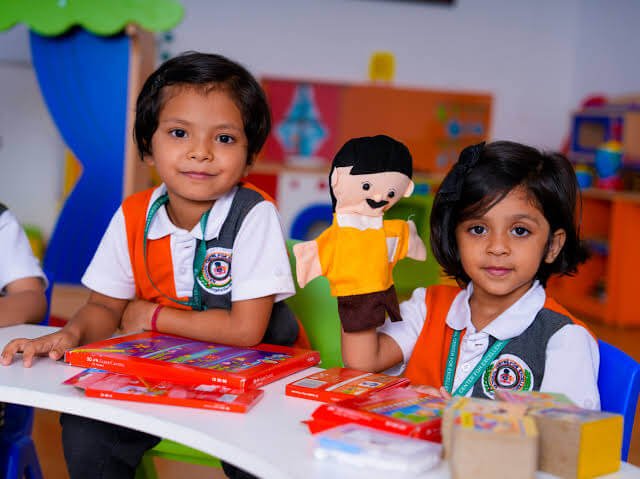
A child’s first classroom experiences often influence how they approach learning in later years. The excitement of discovering a new colour, solving a simple puzzle, or making a friend can create lasting positive associations with education.
A well-planned nursery school environment supports these experiences by combining purposeful activities with the freedom to explore.
For parents, understanding how nursery education contributes to development can make choosing the right learning environment easier.
The Role of Nursery Education in Child Development
Nursery education introduces children to a variety of experiences that encourage intellectual, physical, emotional, and social growth.
At this stage, learning should remain interactive and connected to children’s everyday experiences.
Activities involving stories, numbers, shapes, music, and movement can build foundational understanding without creating unnecessary academic expectations.
Learning Beyond Books and Worksheets
Young children do not need to rely exclusively on written exercises to develop important abilities.
Building structures with blocks introduces balance and spatial awareness.
Matching objects encourages observation.
Listening to stories strengthens comprehension and imagination.
These experiences demonstrate how learning can emerge naturally through play.
Developing Early Literacy Skills
Language development forms an important part of nursery education.
Children begin recognizing familiar sounds, identifying pictures, and understanding the relationship between spoken words and objects.
Storytelling as a Learning Tool
Stories encourage children to listen, imagine, remember, and communicate.
Educators can ask simple questions about characters and events to strengthen comprehension.
Picture books also introduce vocabulary and encourage children to express their interpretations.
Repeated exposure to stories can gradually develop interest in reading.
Introducing Mathematical Thinking
Early mathematics involves much more than recognizing numbers.
Children begin understanding quantities, patterns, comparisons, and relationships through everyday activities.
Sorting objects by size, arranging shapes, and counting familiar items help establish mathematical awareness.
Making Numbers Meaningful
Counting toys or comparing groups of objects connects mathematical ideas to real experiences.
This practical approach allows children to understand concepts before moving toward more abstract learning.
Encouraging Creativity and Imagination
Creative activities offer opportunities for self-expression.
Drawing, painting, music, movement, and pretend play allow children to communicate ideas in different ways.
A supportive environment values exploration rather than expecting identical results.
Children should feel comfortable experimenting with materials and expressing their individuality.
Why Emotional Development Deserves Attention
Nursery education also introduces children to new responsibilities and social expectations.
They learn to manage transitions, express feelings, and interact with peers.
Educators who respond patiently to emotional challenges help children develop security and trust.
Building Confidence Through Encouragement
Children benefit when adults recognize effort and progress.
Completing a task independently or participating in a group activity can strengthen confidence.
Supportive feedback encourages children to try again when something feels difficult.
Creating a Strong Connection Between Home and School
Learning becomes more meaningful when families and educators communicate regularly.
Parents can reinforce classroom experiences through conversations, storytelling, and everyday activities at home.
Consistency between environments helps children feel secure.
Families researching nursery education in Sholinganallur should ask how educators share developmental observations and involve parents in the learning journey.
Conclusion
A nurturing nursery school environment provides much more than an introduction to formal education.
It supports communication, creativity, early reasoning, independence, and emotional confidence.
When children experience learning through meaningful activities and positive relationships, they develop a strong foundation for future educational experiences.