Ketamine Therapy for Depression: What to Expect
Most people who struggle with depression have tried at least one antidepressant. Many have tried several. When those medications fail to bring relief after weeks or months of waiting, it can feel like there are no good options left. Ketamine therapy has changed that picture in a meaningful way, offering a path that works differently from anything that came before it. Understanding what ketamine therapy actually involves, who it tends to help, and what the science says can make the difference between dismissing it and making an informed decision.
How Ketamine Works Differently From Traditional Antidepressants
Standard antidepressants, including SSRIs and SNRIs, work primarily by adjusting levels of serotonin, norepinephrine, or dopamine. Those changes accumulate slowly, which is why most antidepressants take four to six weeks before a patient notices any real shift in mood. Ketamine takes a completely different approach at the neurochemical level.
Ketamine is an NMDA receptor antagonist. It blocks a specific type of glutamate receptor in the brain, and that blockade triggers a rapid increase in synaptic connections. Essentially, the brain begins forming new neural pathways very quickly. Researchers believe this process, sometimes called synaptogenesis, is responsible for the fast antidepressant effect that ketamine produces. Some patients report a noticeable lift in mood within hours of their first infusion. That kind of speed is almost unheard of in psychiatric medicine.
A 2019 review published in the journal Neuropsychopharmacology described ketamine as one of the most significant advances in depression treatment in the past 50 years, based on the consistency of rapid response across clinical trials. The glutamate system had been theorized as a target for decades, but ketamine was the first compound to demonstrate clinical results at scale.
Who Is a Candidate for Ketamine Therapy
Ketamine therapy is not typically the first treatment a clinician recommends. It is most commonly offered to people who meet the criteria for treatment-resistant depression, a term that generally means a patient has tried two or more adequate courses of antidepressant medication without sufficient improvement. That population is larger than many people realize.
According to data from the National Institute of Mental Health, roughly one third of people with major depressive disorder do not respond adequately to standard antidepressant treatment. That figure represents millions of individuals who are cycling through medications, adjusting doses, and still not getting well. Ketamine therapy was developed, in large part, for exactly this group.
Beyond treatment-resistant depression, ketamine has also been studied for bipolar depression, post-traumatic stress disorder, obsessive-compulsive disorder, and certain chronic pain conditions. Each of those indications involves a different clinical picture, and candidacy depends on a thorough evaluation. Contraindications include active or recent psychosis, uncontrolled high blood pressure, certain cardiovascular conditions, and a history of substance use disorders involving dissociatives. A qualified provider will screen for all of these before treatment begins.
What Happens During a Ketamine Infusion Session
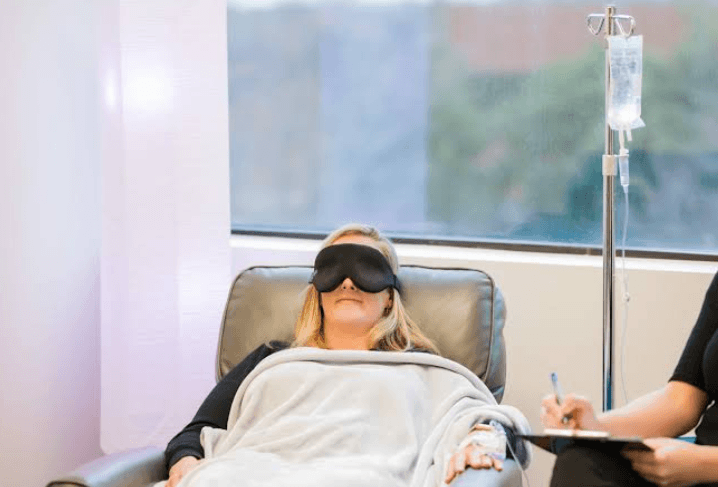
The most well-studied delivery method for depression treatment is intravenous infusion, though other forms such as intramuscular injection and intranasal esketamine (sold as Spravato) are also used in clinical settings. An IV infusion session typically lasts between 40 and 60 minutes. The patient reclines in a comfortable chair or bed, often with an eye mask and soft music, in a calm clinical environment.
The dose used for depression, usually around 0.5 milligrams per kilogram of body weight, is sub-anesthetic. It does not put the patient fully to sleep, but it does produce a dissociative state. Patients may experience altered perceptions of time and space, unusual visual sensations, and a feeling of detachment from the body. These effects are transient and resolve within an hour of the infusion ending.
Vital signs are monitored throughout the session. A clinical staff member remains present or nearby. Patients are not permitted to drive themselves home, so arranging a ride is a standard requirement. Most clinics recommend a series of six infusions over two to three weeks for an initial treatment course, as a single session rarely produces lasting results on its own.
The Role of Integration and Support
Some clinics offer structured psychological support alongside the infusion series. This is sometimes called ketamine-assisted psychotherapy, and it involves a therapist helping the patient process the experiences and insights that arise during or after sessions. Not every program includes this component, but many practitioners believe the therapeutic window opened by ketamine is an opportunity to reinforce healthier thought patterns. KWC (Kentucky Wellness Center) is one example of a provider that incorporates a clinical support framework around the infusion process, helping patients build on the neurological changes that ketamine initiates.
What the Research Actually Shows
The evidence base for ketamine in depression has grown substantially over the past two decades. Early studies were small and lacked control groups, but that has changed considerably. Multiple randomized controlled trials have now confirmed that a single subanesthetic dose of ketamine produces significant reductions in depressive symptoms within 24 hours in a majority of patients with treatment-resistant depression.
A landmark study published in JAMA Psychiatry in 2017 followed patients through a series of six infusions and found that roughly 70 percent experienced a meaningful response, with around 30 percent achieving full remission. Those numbers are striking compared to the response rates seen with a new antidepressant trial in treatment-resistant patients, which typically fall closer to 20 to 30 percent.
The main limitation of ketamine therapy is durability. The antidepressant effect tends to fade over time, often within two to four weeks after the initial series. Maintenance infusions, spaced at longer intervals, are used to sustain the benefit. Researchers are actively studying how to extend the duration of ketamine’s effects, including through combination with psychotherapy, behavioral activation, and emerging pharmacological agents.
| Feature | Standard Antidepressants | Ketamine Therapy |
| Mechanism | Serotonin/norepinephrine modulation | NMDA receptor antagonism, synaptogenesis |
| Onset of effect | 4 to 6 weeks | Hours to days |
| Primary use case | First and second-line treatment | Treatment-resistant depression |
| Administration | Daily oral pill | IV infusion or intranasal (clinic-based) |
| Duration of effect | Ongoing with daily dosing | Weeks; may require maintenance sessions |
| FDA approval for depression | Yes (multiple agents) | Esketamine (Spravato) approved; IV ketamine is off-label |
Common Questions and Practical Considerations
People considering ketamine therapy often have similar questions before committing to a consultation. Below are some of the most frequently raised points, along with straightforward answers based on current clinical understanding.
- Is ketamine addictive? At the doses and frequencies used in clinical depression treatment, the risk of dependence is considered low, but it is not zero. Patients with a prior history of substance misuse require careful screening and monitoring.
- Does insurance cover it? IV ketamine for depression is generally not covered by most insurance plans because it remains an off-label use. Spravato (esketamine nasal spray) has FDA approval for treatment-resistant depression and is more likely to receive some insurance coverage depending on the plan.
- Can a patient stay on their current antidepressants? In most cases, yes. Many clinics continue existing medications during the ketamine series, though certain combinations require clinical review.
- How many sessions are needed? The standard initial course is six infusions over two to three weeks. Some patients respond after fewer sessions; others benefit from additional infusions or a maintenance schedule.
- What does it cost? A single IV ketamine infusion typically ranges from $400 to $800 in the United States, meaning a full initial series may cost between $2,400 and $4,800 out of pocket. Costs vary by clinic, location, and whether psychological support is included.
See also: Residential Mental Health Treatment: What to Expect
Finding a Qualified Provider
Because IV ketamine for depression is an off-label treatment, there is no single national certification body that governs ketamine clinics the way, for example, hospital accreditation bodies oversee surgical centers. That means the quality of care varies considerably from one clinic to the next. Knowing what to look for during the selection process matters.
A qualified ketamine provider should employ board-certified physicians or nurse anesthetists experienced in ketamine administration, conduct a thorough medical and psychiatric evaluation before any treatment begins, and have clear protocols for monitoring patients during infusions. Clinics that offer little to no pre-treatment screening, promise guaranteed outcomes, or heavily discount their services should raise concern.
It is also worth asking whether a provider integrates mental health support into the program. Ketamine opens a window of neuroplasticity, but without any behavioral or psychological reinforcement, the long-term gains can be harder to sustain. A clinic that views ketamine as one component of a broader treatment plan rather than a standalone fix is generally taking a more complete approach to care.
Ketamine therapy represents a genuine shift in what is possible for people who have not found relief through conventional depression treatment. It is not a cure, and it is not right for everyone. But for a meaningful portion of patients who have exhausted other options, it offers something that was previously out of reach: rapid relief, renewed hope, and a biological foothold from which to begin rebuilding. Understanding the science, the process, and the realistic expectations around it is the first step toward making a decision that is grounded in knowledge rather than either hype or fear.