Hospital Cubicle Curtains and Infection Control: What Healthcare Facilities Should Know
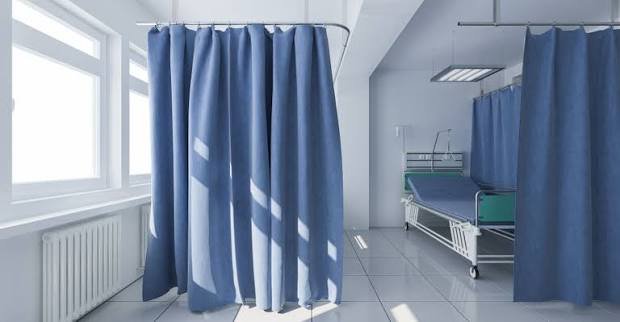
A hospital room should feel clean and safe. It should also give patients a sense of privacy. That is why hospital cubicle curtains matter more than they may seem. They divide patient areas, support privacy, and help create a more comfortable care environment.
But there is another side to them. Curtains are touched often. Patients touch them. Caregivers touch them. Staff move them throughout the day. Over time, that repeated contact can make privacy curtains part of a facility’s infection prevention routine.
The real question is not only which curtain looks best. It is how easily the curtain can be changed, how often it can be changed, and how well the process fits into everyday hospital operations.
Why Hospital Cubicle Curtains Deserve Attention
Privacy curtains are used in many healthcare settings. You can find them in patient rooms, emergency departments, recovery areas, ICUs, outpatient facilities, nursing homes, and other care environments.
Their main job is simple. They create a private space around the patient. But they also become part of the patient environment.
On The Right Track points to research showing contamination on hospital cubicle curtains, including VRE, MRSA, and C. difficile. These organisms can spread through contact, which makes regular curtain management an important consideration for healthcare facilities.
This does not mean every curtain is automatically unsafe. It means curtain management should not be overlooked.
Privacy and Infection Control Work Together
Patient privacy and infection prevention are often discussed separately. They should not be. A privacy curtain needs to do its basic job well. It should provide appropriate separation while also being practical for cleaning, replacement, and maintenance.
If changing a curtain takes too much time, staff may delay the task. If a curtain is difficult to remove, it can become another maintenance problem.
This is where the design of the curtain system matters. A healthcare facility needs a solution that supports both patient needs and staff workflows.
The Problem With Traditional Curtain Changeouts
Traditional curtain systems can create several challenges. Hooks can become difficult to handle. Chains can jam. Some systems require ladders. A curtain may also need to be taken down, transported, laundered, returned, and installed again.
Each step takes time. It also takes staff. On The Right Track notes that traditional systems can involve ladders, hooks, chains, laundry costs, backstock, and lengthy changeout processes. Its website says traditional curtain exchanges can take 10–20 minutes of labor, depending on the system.
That time can add up quickly in a large healthcare facility. Imagine changing curtains across dozens or hundreds of patient spaces. A process that seems small in one room can become a major operational task across an entire hospital.
Faster Changeouts Can Support Better Infection Control
One of the biggest challenges is simple. A curtain cannot be replaced if the process is too difficult. A faster changeout process makes more frequent replacement easier to manage.
On The Right Track’s patented Hookless® track system is designed to allow curtain changes without a ladder. The company states that its curtains can be exchanged in under a minute using its system.
That changes the workflow. Staff do not need to spend the same amount of time dealing with hooks or climbing to reach the track.
The curtain can be exchanged while the process stays simple. For infection prevention teams, that can make routine curtain management easier to build into daily operations.
Staff Safety Matters Too
Infection control is not the only concern. Staff safety matters. If employees regularly need ladders to reach high curtain tracks, the changeout process can introduce another workplace risk.
A ground-level process can make the task easier. The Hookless® system from On The Right Track is designed for ladder-free curtain exchange. Its Grabber® tool allows staff to remove and replace curtains while standing on the floor.
That may sound like a small design change. In a busy healthcare facility, it can make a real difference. Less equipment is needed. The task can be easier to repeat. Staff can spend less time setting up for each curtain change.
Textile or Disposable: Which Makes Sense?
There is no single solution for every facility. Some healthcare organizations prefer textile curtains. Others may benefit from disposable recyclable curtains.
Textile curtains can provide a familiar, durable option. On The Right Track offers textile curtains designed to work with its Hookless® track system and patented rings.
Disposable curtains offer a different approach. Instead of sending a used curtain through a laundry process, the facility can replace it with a new curtain according to its infection-control policy.
On The Right Track offers disposable curtains made from recyclable polypropylene materials and describes them as chemical-free. The company says its disposable curtains can be recycled with other #5 polypropylene products.
The right choice depends on the facility. Patient population matters. So does workflow. So do infection-control goals, staffing, laundry costs, sustainability targets, and available storage.
A Curtain Changeout Policy Should Be Practical
A policy is only useful when staff can follow it. Healthcare facilities should consider their own infection-control procedures when deciding when curtains need to be cleaned, changed, or replaced.
The process should be clear. Staff should know:
- When a curtain needs attention
- Who is responsible for the change
- Where replacement curtains are stored
- How the old curtain is handled
- How the change is recorded
- What to do after patient discharge
- When additional replacement may be needed
The exact schedule should follow the facility’s infection-control policy and applicable healthcare guidance. The important point is consistency. A curtain should not remain in place simply because changing it is difficult.
Tracking Changes Can Remove Guesswork
Another common problem is knowing when a curtain was last changed. Paper records can be missed. Spreadsheets can become outdated. Staff may not remember which room was serviced and when. Digital tracking can make this easier.
On The Right Track offers the Changeout® Curtain Tracker, which uses QR codes printed on curtain panels. The company says the cloud-based system provides real-time curtain status and reporting. It can also track changes by location, user, and time.
That gives facility teams a clearer record. Instead of asking, “Was this curtain changed?” They can check the system. That is useful for day-to-day management and compliance documentation.
Better Curtain Management Can Improve Workflow
Curtain management is often treated as a housekeeping task. It is more connected to hospital operations than that. A slow changeout can take staff away from other work. A difficult system can create delays.
A shortage of replacement curtains can create another problem. A simple system can reduce these friction points.
On The Right Track says its system is designed to improve operational efficiency, support patient throughput, and make curtain exchanges faster. Its case studies also describe facilities using the system to reduce changeout time and simplify tracking.
The benefit is not only about saving minutes. It is about making the entire process easier to manage.
Patient Experience Still Matters
Patients notice their surroundings. A clean and organized room can feel more comfortable. Privacy also matters during examinations, procedures, recovery, and everyday care.
A curtain that moves quietly can be helpful too. On The Right Track’s Hookless® system is designed so curtains slide along the track without the noise associated with traditional hooks and chains.
That may be especially useful in rooms where patients are resting. Small details can shape the overall hospital experience.
What Should Healthcare Facilities Look For?
Choosing hospital cubicle curtains should involve more than color and size. Healthcare teams should look at the complete system.
Consider:
- How quickly can curtains be changed?
- Does the process require a ladder?
- How are curtains cleaned or replaced?
- Can staff track changeout history?
- Are replacement curtains easy to access?
- Does the system fit existing infrastructure?
- What are the laundry and staffing costs?
- Does the solution support infection-control goals?
- Is the system suitable for the facility’s patient population?
- Can the curtains support a clean and professional patient environment?
On The Right Track says its Hookless® track can retrofit over existing systems and adapt to different ceiling heights and construction types.
That can be useful for facilities that want to improve their curtain system without completely redesigning patient rooms.
A Better Approach to Curtain Management
There is no single product that solves every healthcare challenge. But the right system can remove unnecessary problems. A well-designed curtain solution should make replacement easier.
It should support privacy. It should fit infection-control practices. It should protect staff from avoidable risks. And it should work with the way a healthcare facility actually operates. That is where thoughtful curtain management becomes valuable.
Conclusion
Hospital cubicle curtains are a small part of a much bigger healthcare environment. They support patient privacy. They affect room appearance. They are also touched frequently and need a practical management process.
For healthcare facilities, the goal should not be to simply have curtains in every room. The goal should be to manage them properly.
A system that makes curtain changes faster can support better routines. A ladder-free design can make the task safer for staff. Recyclable options can support sustainability goals. Digital tracking can make records easier to manage.
On The Right Track brings these ideas together through its Hookless® track systems, textile and recyclable disposable curtains, full-service changeout options, and Changeout® Curtain Tracker.
When privacy, infection prevention, staff safety, and efficiency are considered together, curtain management becomes much more than a housekeeping task. It becomes part of a smarter healthcare environment.
FAQs
1. Why are hospital cubicle curtains important?
Hospital cubicle curtains provide patient privacy and help divide clinical spaces. Because they are frequently touched, they should also be included in a facility’s cleaning and changeout procedures.
2. How often should hospital privacy curtains be changed?
There is no single schedule for every facility. Change frequency should follow the healthcare facility’s infection-control policy and applicable guidance. Curtains may also need attention after specific events, such as patient discharge or visible contamination.
3. Can cubicle curtains help with infection control?
They can support an infection-control program when they are properly managed. Regular cleaning or replacement helps address contamination concerns. The overall process should always follow the facility’s infection-prevention policy.
4. What are the benefits of a Hookless® curtain system?
A Hookless® system can make curtain changes easier and faster. On The Right Track states that its system allows ladder-free curtain exchange in under a minute and eliminates the need to work with traditional hooks and chains.
5. Are disposable hospital curtains recyclable?
Some are. On The Right Track offers disposable cubicle curtains made from recyclable polypropylene and states that they can be recycled with other #5 polypropylene products. Facilities should still follow their own waste and recycling procedures.