From Milliliters to Grams: Why Volume and Weight Are Not the Same
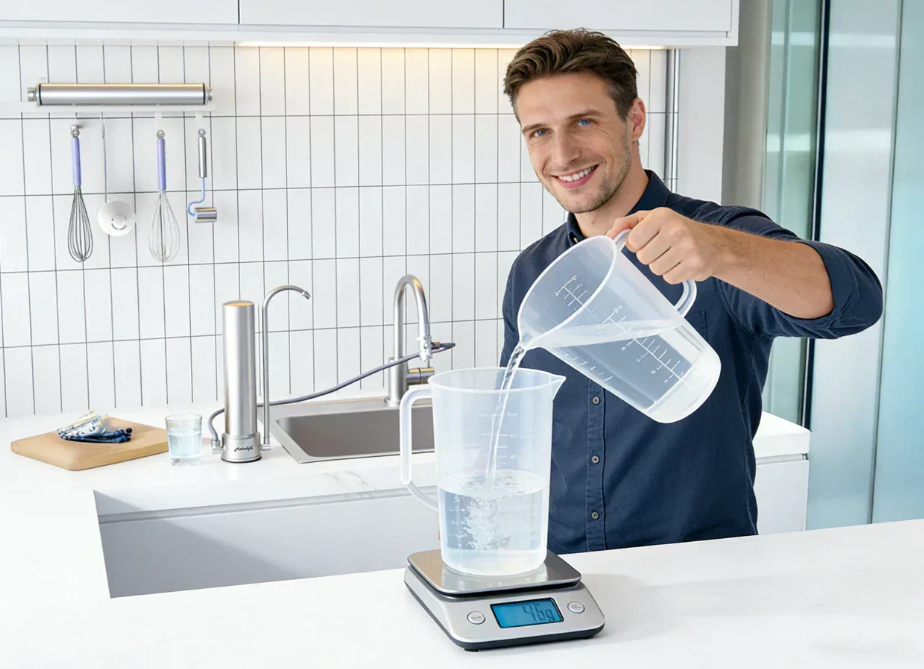
Recipes, laboratory instructions, craft projects, and product labels often mix measurements of volume and weight. That can make a simple conversion look easier than it really is. Milliliters measure volume, while grams measure mass, so there is no single universal number that converts one into the other for every substance.
The missing piece is density. Once you understand that relationship, converting between milliliters and grams becomes much more reliable.
Volume Versus Mass
A milliliter tells you how much space a substance occupies. A gram tells you how much mass it has. Two substances can fill the same 100 milliliter container while weighing very different amounts.
Water is the classic example because its density is close to one gram per milliliter under common conditions. That is why 100 milliliters of water is roughly 100 grams. But the same shortcut does not work for oil, flour, honey, alcohol, or many other materials.
See also: Key Benefits of Modern Smart Pedestrian Crossing Technology
Density Is the Conversion Key
The basic relationship is simple: mass equals volume multiplied by density. If you know the density of a substance in grams per milliliter, you can multiply that number by the volume in milliliters to estimate the mass in grams.
Suppose a liquid has a density of 0.8 grams per milliliter. A 250 milliliter portion would weigh about 200 grams. A denser liquid with a density of 1.2 grams per milliliter would weigh about 300 grams for the same volume.
Why Ingredient Conversions Can Be Tricky
Cooking is one of the most common places people run into this problem. Liquids are often measured by volume, while baking ingredients are frequently more accurate when weighed.
The difficulty is that dry ingredients can pack differently. A cup or milliliter measure of flour may contain more or less material depending on how it is scooped, sifted, or compressed. That means density tables for food ingredients are often approximate rather than absolute.
When a Converter Is Useful
If you already know the substance you are working with, a ml to grams converter can make the arithmetic much faster by applying the appropriate relationship for you. It is especially handy when scaling recipes, checking ingredient quantities, or moving between metric measurements used by different sources.
You should still confirm that the converter is using the correct density for the substance. A tool can only produce a meaningful result when the material itself is identified correctly.
Examples Beyond the Kitchen
The same principle appears in science and manufacturing. Laboratories may need to convert a measured liquid volume into mass for preparation or documentation. Product developers may compare packaging volume with material weight. Shipping teams may need to understand whether a container’s capacity corresponds to a practical mass limit.
In all of these situations, density bridges the gap between volume and mass.
Temperature Can Affect Density
For everyday conversions, temperature differences are often small enough to ignore. In more precise work, however, temperature can change density. Liquids expand or contract as temperature changes, which means the mass contained in a fixed volume can shift slightly.
This is why scientific and industrial density values are often reported at a specified temperature.
Why Water Based Shortcuts Cause Errors
A common mistake is to assume that one milliliter always equals one gram. That is only a convenient approximation for water and a limited number of water-like substances.
For oil, one milliliter typically weighs less than one gram because oil is less dense than water. For syrup or honey, one milliliter generally weighs more than one gram because those substances are denser.
The lesson is simple: never use the water shortcut unless you know the substance behaves similarly to water.
Choosing the Right Measurement Method
If accuracy matters, weighing an ingredient directly is usually better than converting from volume. A digital scale removes many of the uncertainties caused by packing, container shape, or reading a liquid meniscus.
Conversions are most useful when you need to adapt existing instructions rather than when you can measure the mass directly.
A Simple Rule to Remember
Milliliters and grams describe different physical properties, so conversion always depends on what is being measured. Identify the substance, find a reliable density, and then apply the mass equals volume times density relationship.
Once that idea is clear, metric conversions become much less confusing. Whether you are cooking, experimenting, or planning a product, the key is to treat volume and mass as connected through density rather than as interchangeable units.