Portable Fiber Laser Marking Machine: Marking Metal, Plastic and More
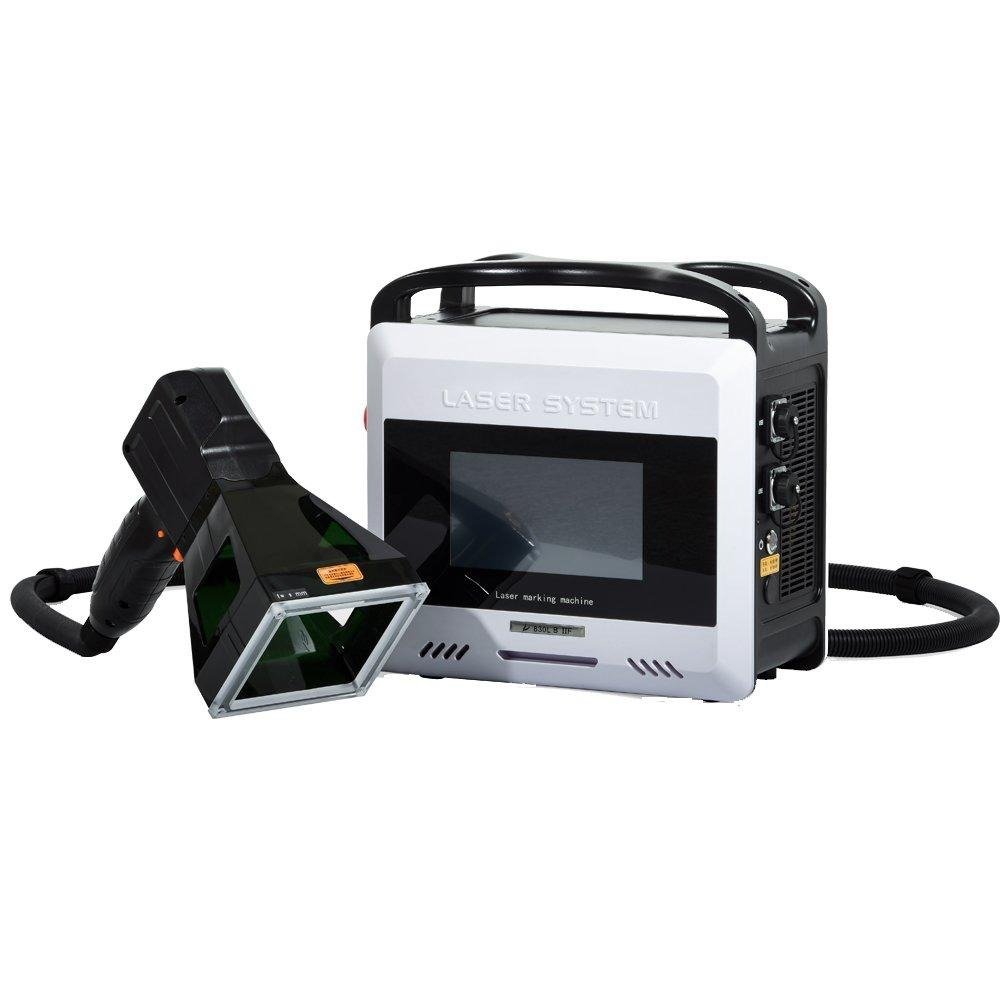
One machine, many materials. That is the promise of a portable fiber laser marking machine, and it is the reason so many workshops rely on one. The same compact unit that engraves a serial number on a steel tool can mark a logo on a plastic housing, a batch code on a ceramic tile or a barcode on an anodised aluminium plate. This guide explains how the machine handles each material, and how to get a clear, lasting mark on all of them.
How the Mark Changes With the Material
A laser mark is not a single process. On metal, the beam typically removes a thin surface layer or changes the surface structure to create a dark, high-contrast mark. On plastic, the beam heats the material just enough to change its colour, producing a light or dark mark depending on the plastic type. On anodised aluminium, the beam strips the coloured anodic layer to reveal the bright metal underneath.
A portable fiber laser marking machine adjusts to each of these cases through its settings: power, marking speed, pulse frequency and the number of passes. Getting the settings right for each material is the key skill in laser marking, and most operators keep a library of proven settings for the materials they use most.
Marking Metals
Steel is the most commonly marked metal, and it responds well to fibre laser marking. Stainless steel produces a dark, crisp mark that is easy to read and highly resistant to corrosion. Carbon steel marks clearly too, though the mark may need a protective coating if the part will be exposed to moisture.
Aluminium, brass and copper also mark well, though each behaves slightly differently. Anodised aluminium gives one of the sharpest results of any material, since the contrast between the coloured coating and the bare metal is very strong. Titanium, used in medical and aerospace parts, marks cleanly and is often chosen precisely because laser marking leaves no residue that could affect the part.
Marking Plastics
Plastics are more varied than metals, and results depend on the type. Engineering plastics such as ABS, polycarbonate and polyamide generally mark well, producing a clear colour change. Some plastics mark better with special laser-sensitive additives, which are mixed into the material during manufacturing to improve the contrast.
A portable fiber laser marking machine is useful here because the operator can test settings on a sample part and adjust quickly. A short test mark tells you whether the contrast is good enough, and the settings can be fine-tuned in minutes. For products such as housings, switches and connectors, this flexibility is a real advantage.
Marking Ceramics, Glass and Coated Surfaces
Ceramics mark well with a fibre laser, producing a permanent mark that survives heat and cleaning. This suits tiles, electronic substrates and ceramic components in industrial equipment. Glass is more challenging, since the laser can cause micro-cracks if the settings are too aggressive, but with careful adjustment, light surface marks are possible.
Coated surfaces, including painted metal and powder-coated parts, mark by removing the coating to reveal the metal below. This is a common requirement for nameplates and control panels, where the mark must be readable for the life of the product.
5 Tips for a Clear Mark on Any Material
- Test first: always run a sample mark before marking a batch of parts.
- Clean the surface: oil, dust and fingerprints reduce mark quality.
- Adjust one setting at a time: change power, speed or frequency separately to learn what works.
- Save proven settings: build a library of settings for each material you mark.
- Check readability: make sure text and barcodes scan reliably before committing to a full run.
Depth, Contrast and Durability
Not every mark needs the same depth. A light surface mark is enough for identification on parts that will not be handled roughly, while a deeper engraving is better for parts exposed to abrasion, weather or repeated cleaning. Deeper marks take longer, so there is a trade-off between speed and durability that the operator judges for each job.
Contrast matters as much as depth. A mark that is technically present but hard to read is a failed mark. Adjusting the settings to maximise contrast, and checking the result under normal lighting, is part of every good marking routine.
Getting the Best Results From a Portable Fiber Laser Marking Machine
The difference between an acceptable mark and an excellent one usually comes down to setup. A portable fiber laser marking machine works best when the surface is clean, the focus is correct and the settings match the material. Operators who take a few minutes to test on a sample part almost always get better results than those who start straight on the finished product. Keeping a record of proven settings for each material saves time on repeat jobs, and a clean lens makes a surprising difference to mark quality. With these simple habits, the machine produces sharp, readable marks on metal, plastic and coated surfaces alike, job after job.
See also: RegTech AML: Modernising Financial Crime Compliance
Frequently Asked Questions
Which metals mark best with a fibre laser?
Stainless steel and anodised aluminium give the sharpest results, but steel, brass, copper and titanium all mark well with the right settings.
Can a portable fiber laser marking machine mark curved parts?
Yes, within limits. The beam stays focused over a small depth range, so gentle curves are fine, while steeply curved surfaces may need to be marked in sections.
Does laser marking damage the part?
No, when the settings are correct. The mark affects only a thin surface layer, and the structural strength of the part is unchanged.
Final Thoughts
A portable fiber laser marking machine earns its place in a workshop by handling so many materials with one compact unit. Steel, aluminium, plastics, ceramics and coated surfaces can all be marked clearly and permanently, provided the settings match the material. With a little testing and a library of proven settings, the machine becomes a reliable tool for product identification, branding and traceability across almost any material you work with.