How to Judge Marble Carving Temple Suppliers by a Single Carved Panel
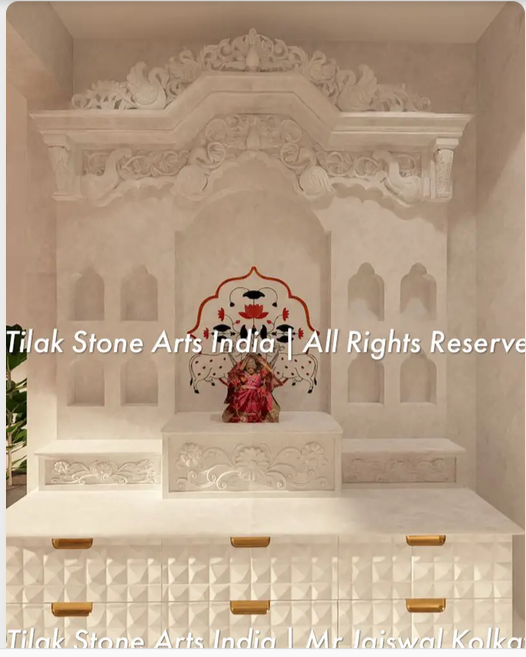
Most families spend weeks scrolling through mandir photos before they ever speak to a workshop, and those photos hide more than they show. Soft studio lights blur rough cuts, and a clever camera angle can make shallow carving look deep. If a marble temple is going into the room where your family prays every morning, ask marble carving temple suppliers for one real carved panel. Study it closely before you sign anything.
That small slab tells you how a workshop treats grain, depth, edges and polish. It also reveals whether marble carving temple suppliers stand behind the stone they name. A carved temple is rarely a small purchase, and perhaps you will buy only one in your life. Twenty minutes with a sample costs nothing and can spare you years of quiet regret every time you light a diya.
Why One Carved Panel Beats a Glossy Temple Catalogue
A catalogue shows a supplier’s finest angle on its finest day, but a panel cannot pose. You can turn it, tilt it toward a window and check the back, which rarely appears in any photo. Ask for a panel cut from the same stone and, ideally, in a motif close to the one you want. Here is why daylight matters more than showroom spotlights: your mandir will spend decades in ordinary light, and that is where you should judge it.
Check the Stone Grade in a White Vietnam Marble Panel
Start with the stone itself, before the carving distracts you. According to the US Geological Survey, marble forms from calcite crystals locked tightly together. Coloured streaks in it usually come from other minerals trapped inside the stone.
Ask the supplier to name the stone plainly. Workshops call White Vietnam marble by a few names, including Swiss white marble, super fine white Vietnam marble or simply Vietnam marble. A supplier who hesitates, or switches names halfway through the conversation, is another matter.
After that, look for faint orange or rust-coloured dots. Stone care guides list iron as a common reason white marble turns yellow, since tiny iron deposits rust once water and air reach them. One speck may mean nothing. A cluster along a vein deserves a question. Also ask whether your full temple will come from the same lot as the sample. A pillar in a slightly different tone is hard to ignore when the temple stands in your home.
See also: Building a Mental Wellness Plan for Illinois Life
Read Carving Depth, Edges and Undercuts on the Panel
Marble sits at three on the Mohs hardness scale, which makes it easy to carve, according to Geology.com. That softness helps a patient carver pull fine petals from the block, while a rushed one leaves chipped tips and rounded edges.
Turn the panel sideways and study the relief. Good carving has undercuts, where the carver removes stone behind a leaf or petal so it seems to lift off the background. Shallow work looks flat from this angle, no matter how neat it seems from the front.
Now compare two repeated motifs, perhaps two lotus petals or two temple bells. Hand carving rarely makes them identical, and honestly, you wouldn’t want it to. Even so, the proportions should hold steady from one motif to the next. If one petal looks noticeably fatter, or the spacing drifts, picture that drift repeated across a full temple.
The Torch and Fingertip Test for a Carved Marble Panel
Switch on your phone torch and hold it low, almost flat against the surface. Raking light picks up ripples, tool marks and sanding scratches that straight-on light hides. Geology.com notes that marble takes a high polish after sanding with progressively finer abrasives, so skipped steps tend to show.
With the torch off, run a fingertip into the deepest recesses. The polish should reach inside them, and rough, chalky pockets suggest the finishing stopped where the eye usually stops.
Watch for small glassy patches too. Workshops sometimes plug pits with resin, and stone suppliers warn that resin fillers in cheaper stone can turn amber over time. One more point may sound obvious, but never test the sample with lemon or vinegar. The US General Services Administration notes that acids dissolve part of a marble surface and leave a dull mark.
Questions to Ask Marble Carving Temple Suppliers About the Sample
A good panel deserves good answers. Ask these before you leave:
- Which marble is this (by name), and will your temple come from the same lot?
- Did the same team carve this panel, and will they carve your temple?
- Will you see a drawing or 3D view of the full design before carving begins?
- Who handles packing, delivery and installation, including orders abroad?
Vague replies are not always a bad sign, because some carvers would rather show their work than explain it. Still, you deserve clear answers on stone and schedule.
Next Steps Before You Choose Marble Carving Temple Suppliers
Book a visit, ask for a panel in White Vietnam marble and bring your phone torch along. Spend real time with the stone, perhaps longer than feels polite. Which detail will you check first when that panel finally sits in your hands?