Frequent Flyers Are Building Brands. Your Email Address Should Match That.
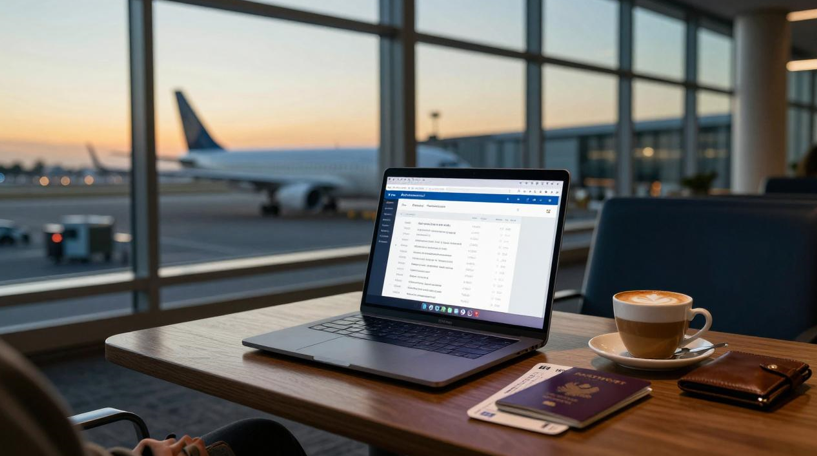
Between flights, the brand runs from the inbox.
For a subset of travelers, flying stopped being transportation years ago and became a lifestyle. The routes are optimized not just for speed but for credit card points. The lounges are researched for their shower facilities and cocktail menus. The seating chart is studied for the best lie-flat configuration. And yes, people tweet about flight paths like they’re sports scores.
Travel hacking communities have grown into genuine economies. People earn full-time income from flights they never personally take, through points arbitrage and mileage brokerage. Others curate travel guides that pull in six-figure audiences. The casual hobbyist becomes a content creator, the creator becomes a consultant, and suddenly you’re running a small travel business from an airport lounge.
But while the whole ecosystem evolved into professional operations, the email addresses stayed stuck in the past. Check a dozen prominent travel hackers, points bloggers, or airline influencers: half are still using personal Gmail accounts for business inquiries, sponsorship deals, and customer service, the same address holding their vacation photos and family group chats.
Why the travel influencer’s inbox is different
The travel content economy creates a peculiar workload for an inbox:
- Airline and hotel partnerships. Sponsored trip invitations, rate negotiations, review copy requests, press trip coordination. These are high-value, time-sensitive communications that need to look legitimate on both sides.
- Customer support volume. For anyone selling travel guides, booking services, or consulting packages, the support inbox fills fast. “How do I redeem this?” “Why wasn’t my booking confirmed?” “Can you help me with this award ticket?”, hundreds of messages from real people who paid you for help.
- Vendor relations. Credit card issuers, hotel loyalty programs, flight status APIs, photography vendors, gear reviewers, all communicate by email, often with sensitive account details attached.
- Travel alerts and notifications. Flight changes, gate switches, cancellation notices, loyalty status confirmations, all of which customers forward to the guide’s inbox because they trust that source more than the airline’s automated system.
Now imagine all of that flowing through a free consumer account whose provider scans the message contents for advertising profiling. Customer credit card information, booking confirmations, partnership contracts, and private travel itineraries are all fair game for commercial analysis by the mail provider itself.
For people who built a business on trust within a community, that feels wrong, and it’s objectively a security vulnerability.
The credibility gap is real
Here’s something every travel blogger discovers when they pitch for sponsored trips: the airline’s corporate communications team reviews you before they say yes. They check your reach, your engagement, and, less officially, your professionalism. An email address from a brand domain signals that you operate as a business. A Gmail address signals that you’re a hobbyist with a blog.
The difference matters for deal terms. Brands allocate sponsorship budgets differently to businesses versus individuals. Contract language differs. Payment processing changes. A branded email address is the simplest visible signal that you’re ready for the professional tier of partnerships.
The same logic applies to the other side: when a traveler pays for your premium guide or consultation package and sends their itinerary to your inbox, they’re trusting you with personal data. That trust is more easily justified when the receiving address matches your brand. A @gmail.com address doesn’t inspire the same confidence that a branded address does, even though the actual security might be identical.
A custom email domain solves both problems
Setting up a professional email address on a custom email domain for your travel brand, bookings@yourtravelname.com, partnerships@, support@, does three things simultaneously:
- Signals professionalism to airlines, hotels, and sponsors before the first paragraph is read.
- Compartmentalizes your business mail from personal life, so nothing important gets buried under vacation photo sharing or family announcements.
- Protects customer data when paired with an encrypted provider, so those sensitive itineraries and booking details aren’t being analyzed by an advertising company.
The migration, timed around a layover
This isn’t a heavy lift, it’s the kind of setup you can complete during a long connection at Heathrow or Dubai:
- Claim the domain that matches your brand or channel name. If you’ve been operating under a name for any time, secure it now.
- Create three addresses minimum: a main correspondence address, a support address for customers, and a partnerships address for vendor outreach.
- Update your high-stakes accounts first, airline loyalty accounts, hotel profiles, credit card travel portals, affiliate networks. These are where account hijacking causes the most damage.
- Move the public-facing channels next, your website contact form, social media bio links, press kit downloads, booking inquiry forms.
- Set up aliases for sign-ups, every newsletter, service registration, and third-party platform gets its own alias so you can trace any leak back to its source.
- Forward the old inbox for at least three months. Travel correspondence has a long tail, people who booked trips six months ago might still need support.
Cost: less than one upgrade to economy plus on a domestic flight. Time: one afternoon of focused work. Impact: every future partnership and customer interaction benefits.
See also: Business Acquisition Financing Canada: Funding a Successful Business Purchase
The professional minimum for a travel business
The travel hacking economy rewards attention to detail. You study fare rules, compare routing algorithms, and optimize layover times. You’ve invested hours into making your travel smarter and cheaper.
The email you use to run your business deserves the same attention. Because every partnership invitation, customer inquiry, and vendor contract arrives at that inbox. Every one of those messages represents trust from the sender, and that trust is more easily given, and better protected, when your correspondence lives in an inbox built for the work.
The best travelers don’t leave anything to chance. Your email shouldn’t either.