Richard Berti: How a Retired CPA Found a New Craft Behind the Camera
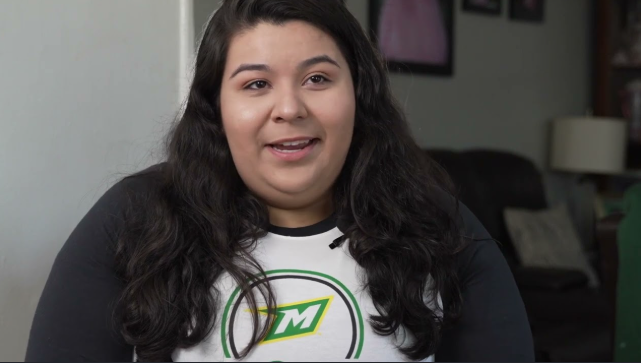
Richard Berti spent more than two decades as a certified public accountant, founding Richard A. Berti, CPAs and providing financial reporting, tax planning, and auditing services to businesses and individuals throughout Santa Barbara, California. Beyond his accounting practice, he dedicated years to education and community service, teaching accounting courses at Santa Barbara City College and Westmont College while introducing financial literacy lessons at El Puente School. His volunteer efforts extended to organizations such as the Council on Alcoholism and Drug Abuse and the Endowment for Youth, work that earned him honors including the Los Padres Council BSA Legacy Award. After retiring from his accounting practice, he pursued a longtime interest in visual storytelling, studying photography at the Brooks Institute of Photography and later teaching the craft to students at the Westside Boys and Girls Club, alongside pursuits in woodworking and pottery.
Using a camera for the first time can be overwhelming. Luckily, nearly every technical decision in photography comes down to a handful of core concepts, and understanding these fundamentals separates deliberately made images from those captured by guesswork.
Photography, at its most basic level, comes down to mastering the exposure triangle: aperture, shutter speed, and ISO. These three settings control how much light reaches the camera’s sensor. Adjusting any one of them requires a compensating change in at least one of the others to get the desired image exposure.
Aperture is the size of the opening in the lens that lets light through, measured in f-stops. The lower the f-stop number, the wider the opening, meaning more light. A wider aperture lets in more light and also produces a shallower depth of field, which is why portrait photographers often shoot at a wide aperture to blur the background behind their subject.
See also: The Impact of Artificial Intelligence on Everyday Life
Shutter speed refers to how long the camera’s sensor is exposed to light. A fast shutter speed freezes motion, eliminating blur caused by moving objects, such as birds. A slower shutter speed lets in more light but blurs images. A blur may come in handy for smoothing out flowing water.
ISO controls the camera’s sensitivity to light. A low ISO, such as 100, is ideal in bright conditions and produces cleaner images. A higher ISO allows shooting in dim settings but tends to introduce visible grain noise into the photo. Because of the trade-off, start by reducing the ISO to as low a number as the lighting allows, then tweak the aperture or shutter speed.
With a good grasp of exposure, next up is composition. The most widely taught composition technique is the rule of thirds. It entails mentally dividing the frame into a 3×3 grid and placing the main subject along one of the grid lines or at an intersection point, rather than dead center.
The reasoning behind the rule of thirds is that centered subjects tend to look boring. Off-center placement makes for a more dynamic, engaging image. According to National Geographic photographers, placing a subject at one of the intersection points of the 3×3 grid helps avoid the drab look of a centered composition. Having a foreground object, like tree branches, can add a further sense of depth.
The rule of thirds is a starting point, not a fixed law. Experienced photographers frequently break it deliberately. Picture a photographer standing at dawn on the shore of a still alpine lake, mountains reflected on the water.
The rule of thirds may require they nudge the horizon line up or down, off-center. But that would break the illusion. By splitting the frame exactly in half so the real peaks above and their reflection below carry equal visual weight, the photographer sharpens the sense of symmetry and stillness.
All the different, seemingly counteracting settings may seem daunting to master. That’s why most camera manufacturers recommend beginners start with a semi-automatic mode before going full manual. In a semi-auto mode, you set one variable, such as aperture. The camera then selects the shutter speed to match your setting. Without the settings to worry about, you can focus on other creative decisions.
Another limitation that trips up many beginners stems from handholding the camera. Camera shake may blur the images. If shooting with longer or zoom lenses, consider using a tripod.
Mastering the fundamentals may not make you a pro, but it gives you solid ground on which to build your photography skills. The fastest path to improvement is typically to step out of full auto mode, experiment deliberately with one variable at a time, and note the effect of each setting on the resulting image.
About Richard Berti
Richard Berti is a certified public accountant who founded Richard A. Berti, CPAs and built a career spanning more than two decades in financial reporting, tax planning, and auditing. He taught accounting at Santa Barbara City College, Westmont College, and El Puente School, and supported community organizations including the Council on Alcoholism and Drug Abuse. Now retired from practice, he studies photography at the Brooks Institute of Photography and enjoys woodworking and pottery in Santa Barbara, California.