Five Things Every New Owner-Operator Should Know About Truck Breakdowns Before They Happen
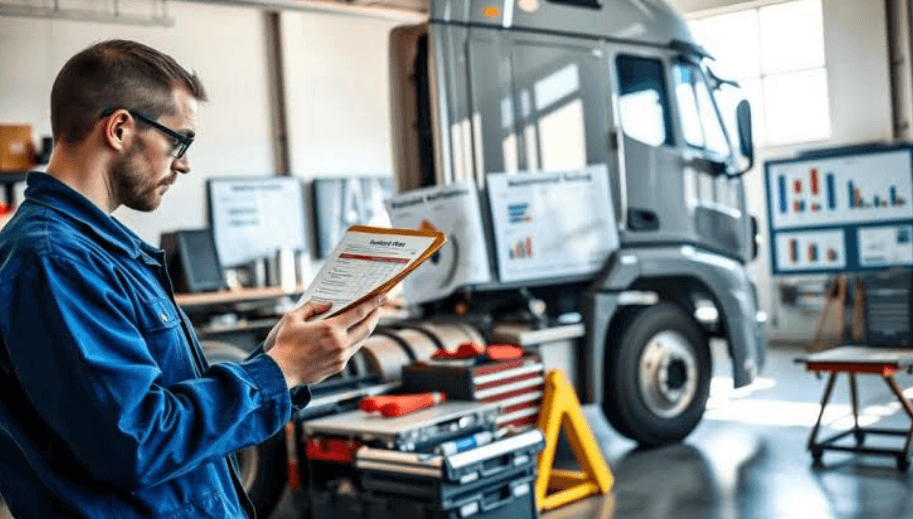
The transition from company driver to owner-operator changes the financial relationship with a breakdown completely. As a company driver, a breakdown is an inconvenience and a delay. As an owner-operator, it’s an event with a direct cost that comes out of your margin: the tow, the repair, the days off the road, the load you couldn’t deliver, and sometimes the customer relationship that absorbed a late shipment and won’t tolerate another one.
Most new owner-operators know this intellectually before they experience it. Knowing it intellectually doesn’t translate automatically into the preparation that makes breakdown events less costly. That preparation requires specific decisions made during normal operating periods, before anything goes wrong. Here are five things that tend to separate owner-operators who handle breakdowns efficiently from those who don’t.
1. Save the Right Numbers Before You’re on the Shoulder
The contacts you need during a breakdown are the ones you don’t have time to research during one. A heavy recovery operator who can actually handle a Class 8 load, a shop with commercial diesel capability, your insurance carrier’s roadside line, and your broker or dispatcher’s direct number — those four contacts should be in your phone before you leave the yard. The driver who’s searching for a towing number from the breakdown lane on I-84 at 10pm is already behind.
For operators running the Hudson Valley and tri-state corridor, NYS Heavy Repair covers heavy recovery and commercial repair from Port Jervis. Their number is 845-734-1300 and they run 24/7. Adding it to the contacts list now costs 30 seconds and saves significant scramble time later.
2. Understand What Your Breakdown Coverage Actually Includes
Commercial roadside assistance programs vary considerably in what they cover and how they respond. Some dispatch to whoever is available rather than whoever has the right equipment; some cap towing distances that don’t cover the distance from a rural breakdown to the nearest qualified shop; some require pre-authorization that adds time during an already stressful event. Reading the policy before you need it — not during the breakdown — is the move that prevents surprises.
The gaps in coverage programs are where personal vendor relationships fill in. An owner-operator who knows their primary recovery contact doesn’t need the program to work perfectly — they need it to work for the straightforward cases while the personal contact handles the complex ones.
3. Know the Difference Between a Breakdown and a Recovery
Not every disabled truck is the same towing job. A truck that’s stopped in a legal position with a mechanical failure is a breakdown tow — typically straightforward for an operator with appropriate equipment. A truck that’s off the road, on its side, or partially blocking traffic is a recovery — a more complex operation requiring assessment, rigging planning, and potentially law enforcement coordination before anything moves.
Calling a tow operator who handles breakdowns but not recoveries to a recovery scene wastes time and may make the situation worse. Knowing in advance whether your vendor can handle both categories eliminates that risk. NYS Heavy Repair operates on both ends of the spectrum — standard breakdown tows and complex recovery operations — with equipment and trained operators for each.
4. Heavy Duty Truck Repair: Build the Shop Relationship Before You Need It
Heavy duty truck repair at the owner-operator level works better when the shop knows the truck before the emergency. A technician who has changed the oil on your specific truck twice already knows what it sounds like when it’s running correctly, has the service history on file, and can identify deviations from that baseline faster than a shop seeing the vehicle for the first time. That diagnostic speed translates directly into faster repair completion and faster return to service.
Establishing a primary shop relationship doesn’t require committing to anything — it means bringing your truck in for routine services consistently enough that the shop develops familiarity with it. NYS Heavy Repair handles preventive maintenance alongside breakdown repair. For owner-operators in the Hudson Valley and tri-state area, a routine PM appointment is also the opportunity to introduce the truck and start building the relationship that pays dividends during the next unplanned event.
5. Semi Truck Towing: Pre-Qualify Your Recovery Operator for Your Load Type
Owner-operators who haul specialized freight — oversize loads, heavy machinery, refrigerated trailers, flatbeds with unusual weight distributions — need to verify that their recovery operator can handle their specific configuration before a breakdown happens rather than after. Semi truck towing for a standard 53-foot dry van is a different operation than recovering a lowboy with construction equipment still loaded on it. Equipment ratings, rigging approach, and the operator’s experience with non-standard configurations all vary, and the moment to discover a gap isn’t while standing on the shoulder with a loaded trailer and nowhere to go.
NYS Heavy Repair handles the range of commercial recovery configurations that run through the tri-state corridor. The conversation about your specific load type and route is worth having with them before you add their number to your contacts — five minutes on the phone confirming they can handle your configuration is the preparation that pays off when you actually need to make the call.
See also: Key Considerations for Launching a Business in 2026
The Pattern That Holds Across All Five
The common thread across all five points is that the decisions that determine how a breakdown goes are made before the breakdown, not during it. The driver who’s calm during a breakdown event is almost always the one who prepared for it during a period when they had time and attention to spare. The driver who’s scrambling is the one who assumed it wouldn’t happen to them, or that they’d figure it out when it did.
The trucking industry has gotten better at optimizing the revenue side of operations. The operators who also optimize the cost-of-breakdown side tend to run more profitably than the ones who treat it as an uncontrollable variable. NYS Heavy Repair is part of that optimization for owner-operators in the Hudson Valley and tri-state region. Reach them at 845-734-1300.