How do HVAC Contractors Evaluate System Cycling Frequency Before It Becomes a Performance Problem?
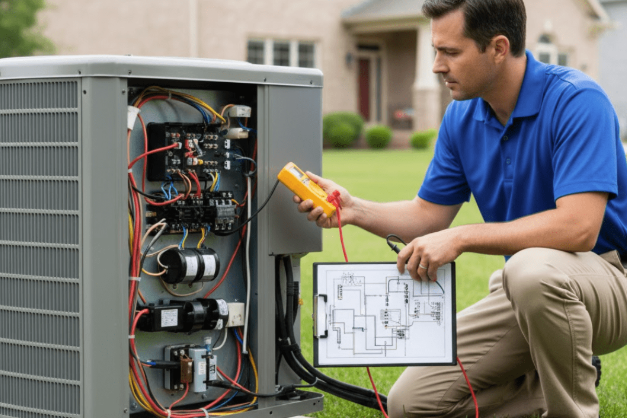
An HVAC system that turns on and off often is not automatically failing. But treating frequent cycling as normal without checking the pattern is one of the quickest ways to miss a deeper issue. What looks like a thermostat quirk can actually signal airflow restrictions, control problems, capacity mismatch, or operating conditions that are slowly wearing the equipment down.
For property managers, facility managers, and building owners, cycling frequency matters because it affects comfort, energy use, component life, and maintenance costs. HVAC contractors evaluate cycling behavior as an operating pattern, not a one-time symptom. They examine runtime, shutdown triggers, load conditions, and the system’s response to determine whether the equipment is cycling appropriately for the building it serves.
Why cycling patterns matter in diagnosis
Cycling patterns reveal how systems behave.
Contractors start by defining what kind of cycling they are seeing. A system that runs in short bursts every few minutes presents a different concern than one that runs continuously, then shuts down and restarts too quickly under moderate load. The first step is not guessing the cause. It is measuring the pattern clearly and separating normal operation from disruptive cycling.
In practical service work, contractors often compare current runtime behavior with known site conditions and prior service notes, and firms familiar with systems like those serviced through https://veteransheatingandcooling.com often emphasize that good cycle evaluation begins with observation before adjustment. That approach keeps technicians from changing settings too early and masking the real cause of unstable operation.
Runtime data matters more than complaints.
Occupant complaints are useful, but they are not enough to diagnose cycling frequency. One tenant may report that the system runs constantly, while another says it shuts off too often; both may be reacting to comfort swings rather than actual cycle timing. Contractors verify runtime behavior with direct measurement, thermostat call history, control board data, or on-site observation over a meaningful period.
They also note the context of the complaint. Cycling behavior during a mild morning may be perfectly normal, while the same pattern during peak afternoon heat or a cold overnight recovery may indicate a problem. Contractors evaluate frequency relative to load. Without that context, a system can be labeled inefficient when it is simply responding to changing demand.
Thermostat settings can distort cycle patterns.
Thermostat programming and placement play a major role in cycling frequency. Contractors check whether setback schedules, recovery periods, deadband settings, or anticipator behavior are causing unnecessary starts and stops. A thermostat mounted near supply air, direct sunlight, or heat-producing equipment may trigger too quickly and shut down the system before the rest of the zone is conditioned.
This is especially common in mixed-use and commercial spaces where occupancy patterns shift throughout the day. A conference room that suddenly fills up may trigger sharp temperature swings, while a nearby office stays stable. Contractors evaluate whether the thermostat is reading representative space conditions and whether the control logic is causing short cycling that appears mechanical but is actually control-related.
Equipment sizing affects frequency and wear.
Cycling frequency often points to a capacity mismatch. Oversized equipment tends to satisfy the thermostat quickly, then shut off before humidity control and steady comfort are achieved. That repeated starting and stopping increases wear on motors, contactors, compressors, and ignition components. Contractors assess system capacity against the building load to determine whether short cycling is tied to oversizing.
Undersized systems create a different pattern. They may run for long periods with fewer off cycles and still struggle to maintain setpoint under peak conditions. Contractors do not judge cycling in isolation; they compare cycle length, recovery time, and indoor comfort stability. The goal is to determine whether the equipment is cycling due to healthy load tracking or because the system capacity and building demand are out of balance.
Airflow problems change cycle behavior fast.
Restricted airflow can make cycling frequency look like a control problem when it is actually a delivery problem. Dirty filters, closed dampers, blocked returns, failing blower motors, or duct restrictions can cause temperature limits to trip or reduce heat transfer performance. The system starts, quickly enters an abnormal condition, shuts down, and then restarts after a delay. To occupants, it appears as random cycling.
Contractors verify airflow before making major control or equipment recommendations. They inspect filters, fan performance, duct conditions, and static pressure to see whether the system is moving air as designed. In heating mode, poor airflow can trigger a limit-related shutdown. In cooling mode, it can contribute to coil issues and unstable runtime. Either way, airflow problems often distort cycle frequency long before a complete failure happens.
See also: Top Architectural Trends Shaping the Future of Home Design
Better cycle evaluation protects equipment life.
HVAC contractors evaluate system cycling frequency because runtime behavior reveals how a system functions under real conditions. Frequent starts and stops can signal control errors, airflow restrictions, safety trips, sensor problems, or capacity mismatch, and each cause carries different implications for cost and reliability. The pattern matters as much as the symptom.
For facility teams and building owners, that evaluation protects more than comfort. It reduces repeat service calls, extends component life, and helps avoid premature or delayed replacement decisions. A system that cycles poorly is already communicating. The contractor’s job is to read that operating pattern correctly, identify what is driving it, and restore stable performance before wear and downtime spread further.