Georgia Beyond the Postcard: A Traveler’s Guide to the Caucasus’ Most Welcoming Country
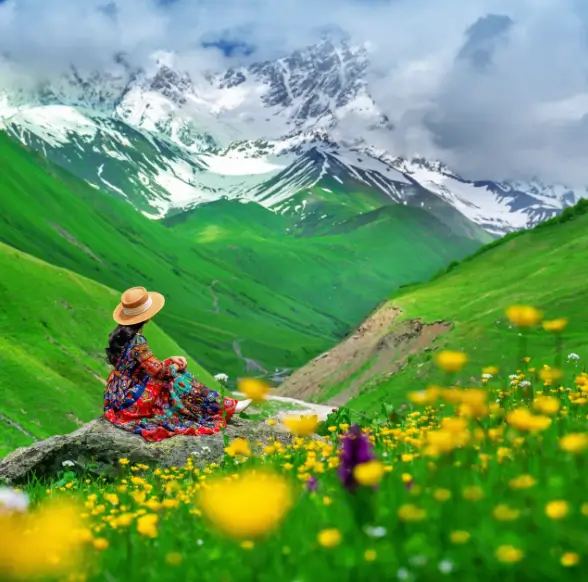
Georgia has a way of ruining other trips for you. You arrive expecting a few nice churches and a decent glass of wine, and you leave wondering why nobody told you the whole country feels like a secret that’s finally getting out.
It’s small, roughly the size of Ireland, yet it packs in snow-capped Caucasus peaks, subtropical coastline, desert monasteries, and one of the oldest winemaking traditions on the planet. Add a food culture built around sharing, and hosts who will happily pour you a third glass before you’ve finished your first, and it’s easy to see why more travelers are putting it on their lists.
This guide walks through the places worth your time, when to go, and how to decide between doing it all yourself and letting someone else handle the details. It’s written for the curious traveler who wants more than a checklist.
Tbilisi: Start Where the Country Starts
Most people begin in the capital, and honestly, that’s the right call. Tbilisi isn’t polished, and that’s exactly its charm. Wooden balconies lean over crooked lanes, Soviet blocks sit beside glass bridges, and a fortress watches over all of it from the hill.
Wander the old town on foot. Cross the Bridge of Peace at dusk, ride the cable car up to Narikala, then come back down through the neighborhood of Abanotubani, where the domed roofs of the sulfur bathhouses steam gently in the cold. Booking a private bath room is one of those slightly odd, deeply satisfying things you’ll talk about for months.
Eat Like You Mean It
Food here deserves its own itinerary. Order khachapuri, the cheese-filled bread boat that arrives with a pat of butter and a raw egg for you to stir in. Try khinkali, the twisted dumplings you pick up by the knob and eat with your hands, never with a fork. Leave the knob on the plate. Locals count them.
When the evening winds down, head to the converted-factory crowd at Fabrika or the bars around Vera. Tbilisi’s nightlife is relaxed, creative, and surprisingly affordable.
Into the Mountains: Kazbegi and Svaneti
Leave the city behind and the landscape changes fast. The Georgian Military Highway climbs north from Tbilisi, past the fortress-monastery of Ananuri and the ski slopes of Gudauri, toward the village of Stepantsminda, also called Kazbegi.
The postcard shot here is Gergeti Trinity Church, a small stone chapel perched high on a ridge with Mount Kazbek looming behind it. You can hike up in a couple of hours or take a 4×4. Either way, go early. By midday the clouds often roll in and the view disappears.
Svaneti: Towers and Silence
If Kazbegi is dramatic, Svaneti is almost otherworldly. This remote region in the northwest is dotted with medieval stone defense towers that rise from the villages like chess pieces. Mestia makes a comfortable base, while Ushguli, one of the highest continuously inhabited settlements in Europe, feels like the end of the road in the best sense.
The drive is long and the roads can be rough, so give yourself time. Svaneti rewards slowness. Plan at least two nights, bring layers, and don’t skip the Svan salt and the hearty kubdari, a meat-filled bread that fuels every trek.
Kakheti: Where Wine Began
Georgians will tell you, with complete confidence, that wine was invented here. Archaeologists aren’t far off: evidence of winemaking in the region goes back some 8,000 years. In Kakheti, the country’s eastern wine heartland, that history is still alive in the glass.
The traditional method uses the qvevri, a large clay vessel buried in the ground where the grapes ferment with their skins. The result, often an amber or “orange” wine, tastes nothing like what you’ll find in most supermarkets. The technique is recognized by UNESCO, and visiting a family cellar where it’s still practiced is a highlight for many travelers.
Base yourself in Sighnaghi, a hilltop town with red-roofed houses and wide views over the Alazani Valley, or in Telavi for easy access to larger estates like Tsinandali. Most family wineries pour generously, serve food alongside, and treat you more like a guest than a customer.
A small tip: arrange a driver before you start tasting. The distances are short, but the pours are not.
Kutaisi and the Black Sea Coast
Western Georgia feels greener, wetter, and a little more laid-back. Kutaisi, the former capital, is a great hub for day trips. Nearby you’ll find the medieval Gelati Monastery, the underground chambers of Prometheus Cave, and Martvili Canyon, where you can glide through a gorge by boat.
From there, the coast is a few hours away. Batumi is the country’s seaside showpiece, a mix of pebble beaches, botanical gardens, and a skyline that looks a bit like Las Vegas decided to move to the Caucasus. It’s not for everyone, but it’s lively, and after a week of mountain roads, a sunset stroll along the boulevard hits the spot.
If you have spare days, consider the semi-desert landscapes of David Gareja too. The cave monasteries sit right on the border with Azerbaijan, and the hills glow rust and gold in the late afternoon.
When to Go
Georgia works year-round, but each season has a personality.
- Spring (April to June): Green hills, mild temperatures, and fewer crowds. Mountain passes may still hold snow early on.
- Summer (July and August): The best time for high-altitude hiking in Svaneti and Kazbegi. Tbilisi gets properly hot, so plan city days for mornings and evenings.
- Autumn (September and October): Many people’s favorite. The grape harvest, known as rtveli, fills Kakheti with music, food, and family gatherings.
- Winter (December to March): Gudauri and Bakuriani bring skiing at a fraction of Alpine prices, and Tbilisi’s baths feel even better.
If you can only pick one window, early autumn is hard to beat.
Going Solo or Going Guided?
Here’s the honest dilemma. Georgia is easy to love, but it’s not always easy to navigate. Public transport between regions relies on minibuses that leave when they fill up. Mountain roads change with the weather. Signage outside the cities can be thin, and some of the most memorable places, from remote wineries to Svan villages, are hard to reach without local knowledge.
Independent travel absolutely works if you have time, flexibility, and a high tolerance for improvisation. But if your trip is a week or two and you’d rather spend it tasting, hiking, and exploring than comparing bus schedules, a structured itinerary can change everything. Browsing curated georgia country tours is a good way to see how different routes combine the capital, the mountains, and wine country into something that actually flows.
A good guided trip doesn’t mean being herded around. The best ones leave room for long lunches, spontaneous detours, and the kind of invitations that only come when your driver or guide happens to know the family running the cellar. Look for small groups, local guides, and itineraries that give you time to breathe rather than ticking off ten stops a day.
Practical Tips Before You Go
- Visas: Many nationalities can enter visa-free for an extended stay, but rules change, so confirm with the official government source before booking.
- Money: The local currency is the lari (GEL). Cards work in cities, while cash is handy in villages and at markets.
- Tipping: Around 10 percent in restaurants is appreciated. Check whether service is already included.
- Toasts: If you’re invited to a supra, a traditional feast, a toastmaster called the tamada leads the drinking. Wait for the toast, and never rush the wine.
- Dress: Cover shoulders and knees at monasteries, and keep a scarf handy for women.
- Getting around: Taxi apps work well in Tbilisi and Batumi. For regions, hire a driver or join a tour.
- Pace: Georgia’s distances look small on a map but feel longer on winding roads. Budget extra time.
Final Thoughts
Georgia doesn’t try to impress you with polish. It wins you over with generosity: the stranger who insists you taste their homemade wine, the guesthouse host who sends you off with a bag of walnuts and churchkhela, the mountain view that stops a conversation mid-sentence.
Go with an open schedule, an empty stomach, and a willingness to say yes. Whether you plan every day yourself or let a local team shape the route, the country has a way of exceeding whatever expectations you packed. And once you’ve been, you’ll probably find yourself telling friends the same thing everyone does: go, and go hungry.