Dynamic Speed Display Signs for Construction Zones and Temporary Work Sites
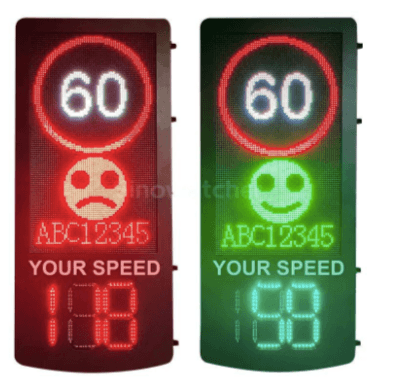
Construction zones change the rules of the road overnight. Lane widths shrink, shoulders disappear, and workers stand metres from live traffic. Drivers who know the route often miss it. A dynamic speed display sign turns the abstract limit into immediate, personal feedback: your actual speed, shown in large digits as you approach the work area.
A dynamic speed display sign measures approaching traffic with Doppler radar and shows the reading on a bright LED panel. Green digits mean the driver is within the limit; red digits flag overspeeding. The message is simple and arrives when it matters most.
Why Temporary Work Zones Need Visible Speed Feedback
A construction zone is one of the most dangerous places on the road network. Traffic is compressed into narrower lanes and workers stand close to vehicles that cannot stop quickly. Static signs state the limit but never tell drivers how fast they are actually travelling. A speed awareness sign closes that gap by making speed visible at the point of risk.
Research backs the approach. The FHWA national demonstration project on dynamic speed feedback signs, run at 22 rural two-lane curve sites in seven US states, found mean speed decreases of up to 10.9 mph, with the share of vehicles exceeding the posted speed falling 35 to 70 percent at most sites. Visible speed feedback protects a work zone in several ways:
- Drivers correct their speed the moment they see red digits.
- Workers can focus on the job instead of watching traffic.
- Fewer speeding vehicles mean fewer sudden braking events.
- The sign works around the clock without a flagger in traffic.
Portable Deployment for Short-Term Projects
Temporary work sites are defined by short life spans. A resurfacing crew may hold a road for a few days, a utility team for a week, an emergency crew for a single night. A portable radar speed sign suits this rhythm: quick setup, quick relocation, and no permanent infrastructure. A sound portable deployment covers these basics:
- Position the sign with a clear line of sight for drivers.
- Mount it high enough to be seen above barriers.
- Set the speed threshold to the temporary posted limit.
- Check the battery or solar charge before each shift.
Solar Power for Sites Without Mains Access
Many construction zones sit far from any power supply. Rural roadworks, highway maintenance stretches, and new-build access roads may have no mains connection within reach. A solar radar speed sign solves this by running from a solar panel with battery storage, removing the need for cabling or a generator.
Solar models use panels of 60 W, 80 W, or 100 W with DC 12 or 24 V systems, and they can run 7 to 10 days on battery through rainy weather. Where mains power is available, an AC 85 to 265 V option is offered. Solar power suits temporary installations because:
- No trenching, cabling, or electrical permits are needed.
- The unit deploys on any road, however remote.
- Battery backup keeps the display running through cloudy spells.
- Weekday and weekend scheduling saves power outside working hours.
Protecting Road Workers with Real-Time Feedback
Road workers are the people most exposed to speeding traffic in a work zone. They cannot step aside quickly, and they rely on drivers to respect the reduced limit. A speed display sign gives those drivers a clear reason to slow down: their own speed, shown back to them as they approach the crew. Real-time feedback protects workers because:
- Speeds drop before vehicles reach the crew, not after.
- Drivers who slow early create a safer gap behind them.
- The sign supplements flaggers rather than replacing them.
- Consistent feedback keeps compliance high across long shifts.
Rotating Signs Between Active Sites
Large contractors often run several work zones at once, with crews moving between sites as phases complete. A dedicated sign for every location is not always practical, so rotation makes sense. A mobile radar speed sign can be collected from a finished site in the morning and installed at a new one by midday. A smooth rotation routine follows a few rules:
- Keep a central register of every unit and its current site.
- Move the sign as soon as a phase finishes.
- Reconfigure the speed threshold for the new site’s limit.
- Record speeds before and after to show the sign’s impact.
Placing the Sign for Maximum Effect
Placement decides how well a sign performs. A unit hidden behind barriers, or parked where drivers have already committed to their speed, will achieve little. The most effective position is on the approach to the work zone, where drivers still have time to slow down gradually. Good placement follows these principles:
- Site the sign on the approach, not inside the work zone.
- Face the display squarely toward oncoming traffic.
- Keep the view clear of cones, barriers, and parked plant.
- Match the 100-metre detection distance to the approach speed.
See also: Online Business Loan Edmonton: A Convenient Way to Explore Business Financing
Frequently Asked Questions
How long does it take to set up a dynamic speed display sign on a construction site?
Most portable units are operational within minutes of arrival. Mounting the unit, setting the speed threshold, and checking the display takes one person under half an hour, with no groundwork or cabling needed for solar models.
Will a solar-powered sign keep working during cloudy or rainy weather?
Yes. Solar models with battery storage can run 7 to 10 days through rainy weather, and weekday and weekend scheduling reduces power use outside working hours. For sites with mains access, an AC power option is also available.
What speed range can these signs detect?
Radar units in this class detect vehicle speeds from 10 to 250 km/h using 24 GHz Doppler radar, with a standard detection distance of 100 metres and longer options of 150 and 200 metres.
Final Thoughts
Construction zones are temporary, but the risk they carry is real and immediate. A dynamic speed display sign gives drivers the one piece of information most likely to change their behaviour: their own speed, shown at the exact moment it matters. Portable, solar-powered, and easy to rotate between sites, it fits the way short-term roadworks actually run.