Drywall Taping Knife – How to Choose and Use the Right Blade
Drywall Taping Knife: A Complete Guide to Cleaner Joints and Smoother Walls
Finishing drywall requires attention to small details that can dramatically influence the appearance of a completed room. A perfectly installed drywall panel may still show visible seams when joint compound is applied unevenly.
One of the most important tools in this process is the drywall taping knife. Its blade spreads, smooths, and feathers joint compound to create seamless transitions between drywall panels.
Choosing the appropriate knife and understanding proper application techniques can help both beginners and experienced workers achieve cleaner results.
What Is a Drywall Taping Knife?
A drywall taping knife is a flat-bladed hand tool used to apply and smooth joint compound.
Unlike tools designed primarily for scraping, its blade is intended to distribute compound across drywall surfaces with controlled pressure.
The blade’s width, flexibility, and edge condition influence how smoothly material spreads.
Why Blade Design Matters
A well-designed blade allows compound to move evenly across the surface.
Flexible blades can help feather edges, while firmer blades provide greater control during certain application tasks.
A comfortable handle also matters, particularly during extended finishing sessions.
The right combination of blade characteristics supports precision and reduces unnecessary hand strain.
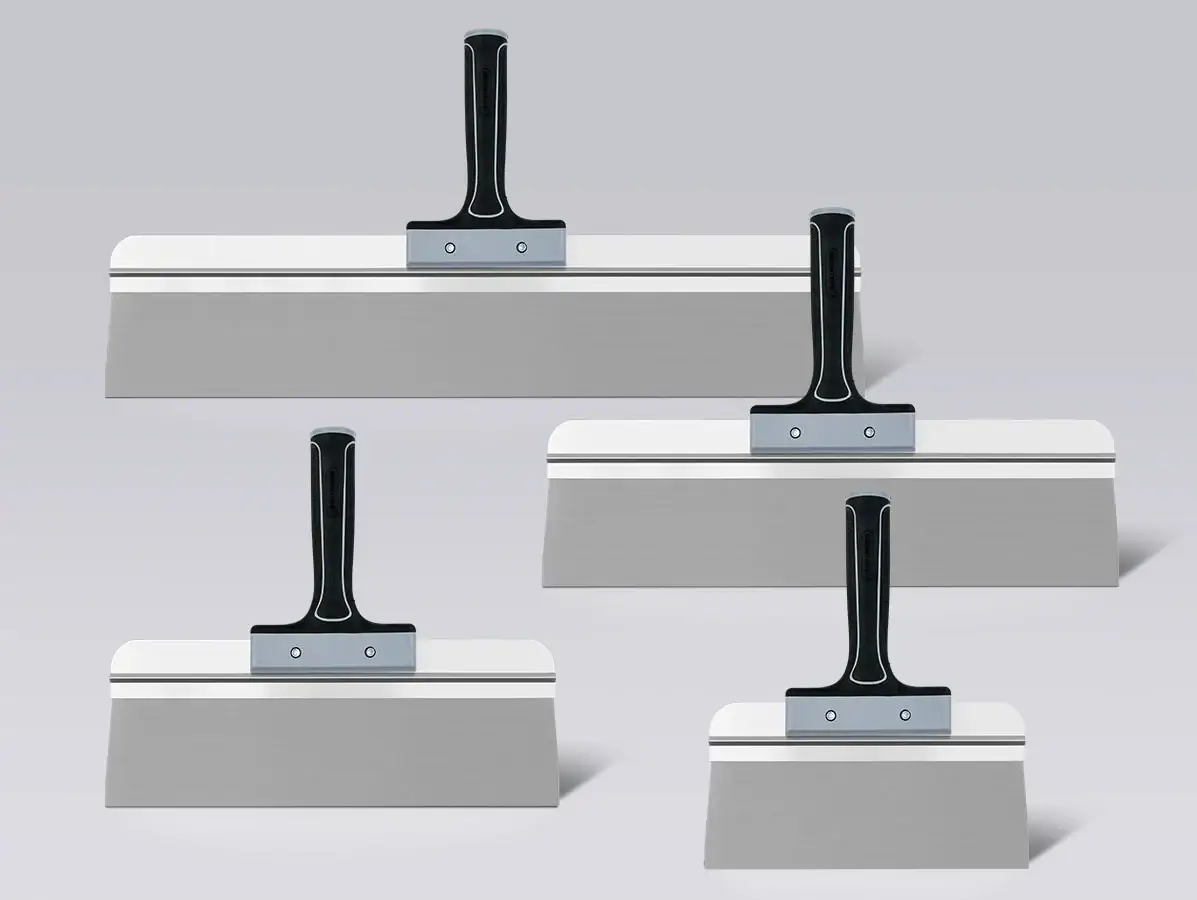
Choosing the Correct Knife Width
Different finishing stages benefit from different blade widths.
Selecting a drywall taping knife based on the task can make application easier and more consistent.
Narrow Blades for Initial Applications
Narrow knives are commonly used for filling fastener depressions, applying compound to smaller joints, and embedding tape.
Their compact design offers control in confined spaces.
They are particularly useful when accuracy matters more than broad surface coverage.
Medium Blades for Building Joint Layers
Medium-width knives help spread compound beyond the initial seam.
They allow workers to gradually widen the finished area while maintaining control over compound thickness.
This stage helps create a smoother transition between the joint and surrounding drywall.
Wide Blades for Final Feathering
Wide blades are commonly used during later finishing coats.
Their greater coverage helps distribute compound over a broader surface, reducing visible ridges.
A properly handled wide drywall taping knife can create subtle transitions that become difficult to notice after painting.
How to Use a Drywall Taping Knife Effectively
Technique is just as important as blade selection.
Small adjustments in pressure, angle, and movement can significantly influence the finished surface.
Maintain a Consistent Blade Angle
Hold the knife at a controlled angle against the drywall.
A steeper angle generally removes more compound, while a flatter angle tends to leave more material behind.
Adjust the angle according to the amount of compound required.
Apply Even Pressure
Uneven pressure can create ridges or remove too much compound from one side of a joint.
Use smooth, deliberate strokes and avoid repeatedly working over material that has started to set.
Feather the Edges Carefully
Feathering involves thinning the compound toward the outer edges of the joint.
This technique helps blend the finished area into the surrounding drywall.
A wider blade often makes feathering easier during final applications.
Maintaining Your Knife for Better Performance
A drywall taping knife should be cleaned after each use.
Allowing compound to harden on the blade can interfere with smooth application and make cleaning more difficult.
Remove residue, dry the blade thoroughly, and store it where the edge will remain protected.
Inspect the blade regularly for damage, corrosion, or unwanted bends.
Workers reviewing drywall joint finishing techniques should also understand how blade condition affects application quality.
Avoiding Common Application Problems
Visible lines often appear when dried compound collects along the blade edge.
Uneven joints may result from excessive material or inconsistent pressure.
Another common mistake involves applying subsequent coats before earlier layers have dried sufficiently.
Following recommended drying intervals and using thin, controlled applications helps reduce these problems.
Conclusion
A drywall taping knife is an essential tool for producing smooth joints and professional-looking drywall surfaces.
Choosing the right blade width, maintaining consistent pressure, and applying compound in controlled layers can significantly improve finishing results.
Regular maintenance and careful technique further support reliable performance.
With practice and attention to detail, this simple tool can help transform visible drywall seams into smooth surfaces ready for final decoration.
Top of Form
Bottom of Form