Key Benefits of Modern Smart Pedestrian Crossing Technology
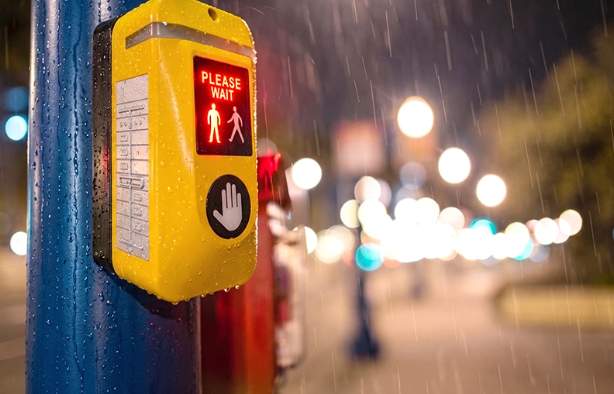
Pedestrian crossings are a basic but essential part of urban infrastructure. They provide designated routes for people to move across busy roads, but traditional crossing technology does not always respond to changing conditions.
Modern systems are designed to make crossings more intelligent and responsive.
A smart pedestrian crossing system can combine pedestrian detection, contactless controls, signal integration, and monitoring capabilities to support safer and more efficient road environments.
1. Better Pedestrian Convenience
One of the most immediate benefits is convenience.
Pedestrians should be able to request a crossing without unnecessary steps.
Contactless detection can simplify this interaction by reducing the need to physically touch a button.
2. Responsive Traffic Control
Smart systems can respond to actual pedestrian demand.
Instead of relying entirely on fixed schedules, intelligent controls can process crossing requests and operate according to programmed conditions.
This can help balance pedestrian and vehicle movement.
3. Reduced Physical Contact
Contactless operation reduces the need for people to touch shared public surfaces.
This can be particularly useful at busy intersections where many people interact with the same infrastructure.
4. Accessibility
Modern crossing technology can support more inclusive infrastructure.
Depending on the design, systems can provide visual and audible information and support appropriate crossing times.
Accessibility should be considered from the beginning of the project.
5. Useful Traffic Data
Connected systems may provide information about pedestrian demand.
Transportation authorities can potentially use this information to understand busy periods and identify locations where infrastructure improvements may be needed.
6. Better Use of Existing Infrastructure
Smart technology can sometimes be integrated into existing traffic systems.
This may allow cities to modernize selected intersections without replacing their entire traffic-control network.
Compatibility should be assessed before implementation.
7. Support for Busy Locations
Some areas experience unusually high pedestrian volumes.
Transport hubs, shopping streets, schools, hospitals, and tourist destinations can all benefit from infrastructure that responds to changing pedestrian demand.
8. Improved Urban Mobility
Walking is a fundamental part of urban transportation.
A well-designed crossing helps connect neighborhoods, businesses, public transportation, and community facilities.
Smart crossings can become part of a larger connected mobility strategy.
9. Operational Monitoring
Intelligent systems may allow operators to monitor equipment status remotely.
This can make it easier to identify technical problems and schedule maintenance.
The exact monitoring capabilities depend on the system architecture.
10. Potential Energy Efficiency
Smart controls can help avoid unnecessary operation when pedestrian demand is absent.
Combined with efficient electronic components and LED indicators, intelligent infrastructure may support more efficient energy use.
Actual performance depends on the installation.
11. Adaptability
Pedestrian demand changes throughout the day.
A crossing near a school may have different requirements in the morning and afternoon compared with late evening.
Smart technology provides an opportunity to create more responsive operating patterns.
12. Integration With Smart-City Systems
Cities are increasingly connecting transportation infrastructure.
A smart pedestrian crossing can potentially communicate with traffic-management platforms and other connected systems.
This creates opportunities for more coordinated urban mobility.
Installation Considerations
Despite the benefits, smart technology should not be treated as a simple replacement for traditional crossing equipment.
Before installation, authorities should consider road layout, pedestrian behavior, traffic speeds, weather conditions, accessibility, power requirements, communication infrastructure, and maintenance.
Importance of Reliable Detection
Detection accuracy is critical.
If pedestrians are not detected correctly, the system may not respond as intended.
Sensor placement, calibration, environmental conditions, and regular maintenance can all influence performance.
Maintenance Requirements
Smart infrastructure requires ongoing attention.
Equipment should be inspected, sensors maintained, and software or communication systems updated when required.
A maintenance plan should be established before deployment.
Choosing a Technology Provider
When evaluating a smart pedestrian crossing system, authorities should compare reliability, detection technology, environmental durability, integration capabilities, support services, and long-term maintenance requirements.
The supplier should be able to explain how its technology fits the specific application.
A Long-Term Investment
Road infrastructure is expected to remain operational for many years.
Therefore, decision-makers should consider future compatibility as well as immediate requirements.
A system that can adapt to future transportation technologies may provide greater long-term value.
Conclusion
Smart pedestrian crossings can provide several practical benefits, including improved convenience, contactless operation, responsive traffic management, accessibility support, and better infrastructure monitoring.
The most effective projects combine technology with appropriate road design and professional traffic management.
As urban transportation becomes increasingly connected, a smart pedestrian crossing system can serve as an important component of modern infrastructure, helping cities create more responsive streets for pedestrians and vehicles alike.