What to Consider When Automating Shisha Cartoning Operations
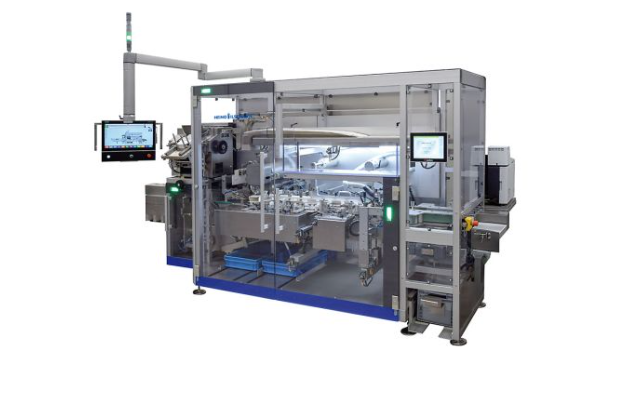
Automation has become an important consideration for manufacturers that want to increase production capacity while maintaining consistent packaging quality. In shisha manufacturing, the cartoning stage can involve several repetitive processes that require accuracy and coordination.
Moving from manual or semi-automatic packaging to a fully automated solution can change how a production line operates.
An 80–120 PPM Shisha Cartoning Machine can be considered by manufacturers looking for higher packaging throughput and a more standardized carton-packing process.
Assess Current Production
Before investing in packaging equipment, manufacturers should examine their existing workflow.
How many products are being packaged each hour? Where do delays occur? How much manual labor is required? How frequently are cartons rejected?
Answers to these questions help identify whether automation can solve an actual production problem.
Identify the Packaging Format
Different products may require different carton dimensions and packaging arrangements.
The machine must be compatible with the carton format and product configuration being used.
Manufacturers should provide accurate product and packaging specifications when discussing equipment with suppliers.
Production Speed
The 80–120 PPM range can be suitable for businesses with relatively high packaging requirements.
However, the practical output of a machine depends on more than its nominal speed.
Product feeding, carton availability, machine adjustments, stoppages, inspection, and operator intervention can all affect actual throughput.
Balancing Speed and Reliability
Higher speed is useful only when the machine can operate reliably.
Frequent interruptions can reduce the benefits of a high-speed system.
Manufacturers should therefore evaluate reliability and ease of operation alongside maximum production capacity.
Automated Carton Formation
Carton preparation is one of the repetitive tasks that can be automated.
A properly designed system can form cartons consistently before products are inserted.
This reduces the amount of manual carton preparation required on the production floor.
Product Loading
Once cartons are prepared, products need to be positioned correctly.
Automated feeding mechanisms can coordinate product movement with the cartoning cycle.
Correct synchronization is important because poorly timed feeding can cause stoppages.
Carton Closing
The final closing process should also be consistent.
Depending on the packaging design, cartons may use different closing methods.
The machine should be configured to match the specific carton style and closure requirements.
Reducing Human Error
Manual packaging can introduce errors when workers perform repetitive tasks for long periods.
Examples may include incorrect product orientation, missing products, poorly closed cartons, or inconsistent placement.
Automation can reduce some of these errors through controlled mechanical processes.
Improving Workplace Efficiency
Automating repetitive packaging tasks can change how employees are used.
Instead of continuously performing the same physical actions, workers can monitor equipment, replenish materials, perform quality checks, and manage other production responsibilities.
This can create a more structured workflow.
Importance of Sensors
Modern packaging equipment can use sensors to monitor product and carton movement.
Sensors can help identify missing materials or incorrect positions and may trigger appropriate machine responses.
Their effectiveness depends on correct installation, calibration, and maintenance.
Integration With Production Lines
Manufacturers should consider how the cartoner will connect with upstream and downstream equipment.
A packaging line may include conveyors, feeders, inspection equipment, coding systems, and case-packing equipment.
Smooth integration can reduce manual transfers between stages.
Floor Space
Factory space is another consideration.
Before installation, manufacturers should evaluate machine dimensions, operator access, material storage, maintenance space, and product flow.
A high-capacity machine that does not fit efficiently into the production area can create operational difficulties.
Energy and Operating Costs
The purchase price is only part of the investment.
Businesses should also consider energy consumption, spare parts, maintenance, labor requirements, and technical support.
A complete cost analysis provides a more realistic picture of long-term value.
Maintenance Planning
Preventive maintenance helps keep packaging equipment operating reliably.
Maintenance schedules should cover moving parts, sensors, feeding mechanisms, electrical systems, and other components according to manufacturer recommendations.
Operator Training
Operators need to understand normal operation and basic troubleshooting.
Training should cover machine controls, safety procedures, product changeovers, cleaning, and response to common alarms.
Well-trained operators can help reduce avoidable downtime.
Changeover Flexibility
Businesses producing multiple carton formats should examine changeover requirements carefully.
Long changeovers can reduce effective production capacity.
Equipment that allows efficient adjustments can be valuable for manufacturers handling different packaging formats.
Quality Control
Automation should be combined with appropriate quality checks.
Finished cartons should be inspected for correct formation, product placement, closure, labeling, and overall presentation.
Quality control helps identify issues before products leave the facility.
Selecting a Supplier
When evaluating an 80–120 PPM Shisha Cartoning Machine, manufacturers should review technical specifications, compatibility, installation support, spare-parts availability, training, maintenance requirements, and after-sales service.
A supplier should understand the actual packaging application rather than offering a machine based solely on speed.
Planning the Investment
Automation is a long-term production decision.
Manufacturers should consider current output as well as expected future demand.
Selecting equipment with appropriate capacity and flexibility can prevent the need for premature replacement as production grows.
Conclusion
Automating the shisha cartoning process can improve production consistency, reduce repetitive manual work, and support higher packaging volumes.
An 80–120 PPM Shisha Cartoning Machine may be appropriate for manufacturers seeking a high-throughput packaging solution, but successful implementation depends on much more than machine speed.
Product compatibility, carton quality, feeding, integration, maintenance, operator training, changeover time, and long-term support should all be evaluated before making a purchasing decision.
A carefully planned automation strategy can help manufacturers build a packaging process that is more organized, predictable, and scalable.