A Year On From the Disposable Ban: What UK Vapers Switched To, and What It Costs Now
Prefilled pod kits quietly won the post-ban market. Here is how the format works, what a month actually costs, the mistakes people make switching over — and where the Hayati Pro Max Plus fits. For adults 18+.
On 1 June 2025 the UK made it illegal to sell single-use vapes. Plenty of people predicted chaos: a black market boom, ex-smokers drifting back to cigarettes, shops shuttering. What happened instead was less dramatic and more interesting. The market simply reorganised itself around one format, and most vapers barely noticed the transition.
That format is the prefilled pod kit. Rechargeable body, sealed pod, click and go. If you have not looked at what is on UK shelves since the ban, this is a guide to what changed, what it costs, and what to watch for before October’s price rise.
Why the ban did not do what people expected
The reason the switch was painless comes down to a design detail. What made a disposable a disposable was not the prefilled liquid — it was the throwaway battery. Take that one part and make it rechargeable, keep everything else identical, and you have a legal device that behaves exactly like the thing it replaced.
So the user experience survived intact. Draw to activate, no buttons, no settings, no filling. The only new step is that once every week or two you pull a spent pod out and click a fresh one in, and every day or two you plug in a USB-C cable. For anyone who already charges a phone, that is not a learning curve.
What did change is the maths, and this is the part worth understanding before you buy anything.
Three formats, honestly compared
There are broadly three ways to vape legally in the UK now. None is objectively best — they trade convenience against cost.
| Disposable bar | Prefilled pod kit | Refillable kit | |
| Legal status now | Banned since Jun 2025 | Legal | Legal |
| What you throw away | Whole device | Small pod only | Coil only |
| Setup needed | None | None | Fill, prime, wait |
| Cost per ml | Highest | Middle | Lowest |
| Flavour switching | New device | Swap the pod | Rinse and refill |
Refillable kits are the cheapest way to vape and always have been. The catch is friction: you keep bottles around, you prime coils, you wait for wicking, you occasionally get liquid on your hands. Some people enjoy that. Most people who came to vaping from smoking do not, which is precisely why disposables sold so well in the first place.
Prefilled pod kits sit in between, and that middle ground is where most of the post-ban market landed.
What a month actually costs
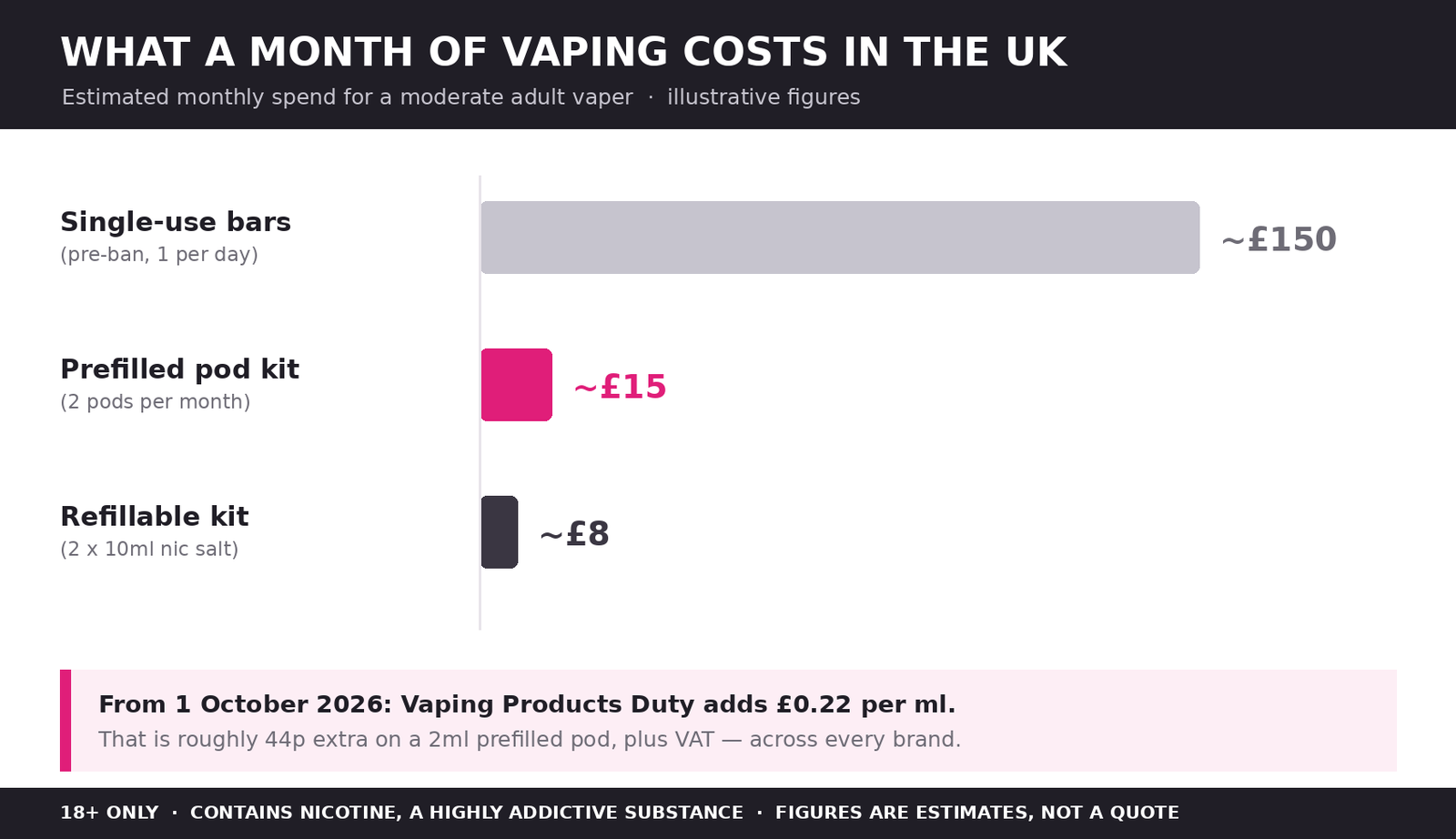
Estimated monthly cost by format for a moderate adult vaper. Figures are illustrative.
A daily 600-puff bar habit at four or five pounds a time worked out somewhere around £120 to £150 a month. That number is why the ban had a smaller effect on people’s wallets than expected — almost anything that replaced it was cheaper.
A prefilled pod kit at roughly two pods a month lands nearer £15. A refillable kit running two 10ml bottles of nic salt comes in under a tenner, plus a one-off spend on the device and occasional coils. Your own numbers will differ depending on how heavily you vape, but the ranking holds.
One date to plan around: the Vaping Products Duty starts on 1 October 2026 at £0.22 per ml, plus VAT. On a 2ml prefilled pod that is roughly 44p extra. On a 10ml bottle of nic salt it is £2.20 — proportionally a much heavier hit on the cheapest format. It applies to every nicotine-containing e-liquid sold in the UK, so no brand escapes it.
Where the Hayati Pro Max Plus fits
Among prefilled pod kits, the Hayati Pro Max Plus has become one of the reference points — the device people compare others against. It is worth understanding why, because the reasons are unglamorous.
It runs around 6,000 puffs per pod at 10mg or 20mg nicotine salt in a 50/50 base, charges over USB-C, uses an integrated mesh coil, and shows battery and liquid level on a small screen. Nothing there is unique. What is unusual is the flavour catalogue, which runs to 65 options — wider than almost anything else at the same price.
That matters more than it sounds. Flavour fatigue is the most common reason people drift back to cigarettes after switching, and the cheapest defence against it is variety. A range this large means you can rotate two or three pods without ever repeating yourself, and the multibuy pricing makes rotating the default behaviour rather than an indulgence.
The trade-off is the same one every prefilled format carries: sealed pods cannot be refilled, so you pay more per millilitre than someone running a bottle of nic salt. You are buying convenience, and it is priced accordingly. That is a fair deal, but it should be a conscious one.
Five mistakes people make coming off disposables
1. Vaping a fresh pod immediately
The wick inside a new pod needs a minute to absorb liquid. Draw on it straight away and you get a dry, scorched first hit that people often mistake for a faulty pod. Fit it, put it down, count to sixty.
2. Running the battery flat every time
With a disposable it did not matter — the battery died with the device. With a kit you are keeping for a year or more, repeatedly draining to zero shortens its usable life. Top up when the display drops low rather than when it stops working.
3. Chain vaping the way you would a bar
Small mesh coils need a couple of seconds between draws to re-wick. Ten rapid puffs in a row will produce a burnt note that lingers for the rest of the pod. Spacing draws out is the single biggest quality difference between two people using the same device.
4. Staying on 20mg out of habit
Twenty milligrams per millilitre is the UK legal maximum and the right starting point for many people leaving a heavy smoking habit. It is not meant to be permanent. If you have been off cigarettes for months and 20mg now feels harsh, 10mg is the obvious next step down.
5. Leaving pods in the heat
A car dashboard, a windowsill, a jacket on a radiator — heat thins the e-liquid, which is the most common cause of leaking around the pod connection. Cool, dry, upright. That is genuinely the whole storage guide.
Disposing of pods and devices properly
This part gets skipped in most buying guides, and it is the reason the ban existed in the first place.
- Spent pods contain electronic components. They should go to a vape recycling point or an electrical waste bin, not household rubbish.
- The battery body should never go in general waste at end of life. Retailers selling electricals are generally required to take back old equipment, and local recycling centres accept small electricals.
- Never put a lithium device in a kerbside recycling bin. Crushed lithium cells are a genuine fire risk in collection vehicles and sorting facilities.
The environmental argument for pod kits is real but often overstated in marketing. One body across many pods is a large improvement on one battery per 600 puffs. It is not zero impact, and pretending otherwise does the format no favours.
What is coming next
A few things worth having on your radar if you are buying now.
- The Tobacco and Vapes Act passed into law on 29 April 2026. It hands ministers powers over flavours, packaging, displays, advertising and retailer licensing — but powers are not the same as rules, and most still need separate regulations before anything changes.
- A consultation on plain packaging, device appearance and flavour naming opened on 10 July 2026 and closes on 2 October 2026. It proposes renaming flavours in plainer terms and standardising packaging. It does not propose banning any flavour.
- Even if those proposals proceed in full, the notice periods being discussed mean shelf changes are unlikely before 2028.
- From 29 October 2026 the 18+ age restriction extends to all nicotine and vaping products, including zero-nicotine devices and nicotine pouches.
- A ban on prefilled pods has been floated but is not law and was not part of the July consultation. Worth watching, not worth panicking about.
Anyone quoting you a firm date for a flavour ban is guessing. The consultation documents are public on GOV.UK, and responses from actual vapers carry weight in that process.
Choosing your first pod kit
If you are making the switch now, a short checklist:
- Confirm it is TPD compliant: 2ml pod, nicotine at or below 20mg/ml, correct warnings on the box. Anything advertising 30mg or a 5ml pod is not legal UK stock.
- Check the flavour range before the puff count. Puff numbers are lab ceilings and largely interchangeable between brands; flavour choice is what you will actually live with.
- Prefer USB-C over anything proprietary, so you are not tied to one cable.
- Buy from a retailer with real age verification and official distribution. Counterfeit big-puff devices are common and you are inhaling the contents.
- Buy pods in a multibuy rather than singly — that is where the running cost drops.
For a UK-stocked example of the format, Pink Vape Store online carries the full prefilled pod kit range including all 65 Pro Max Plus flavours, with tracked delivery and 18+ checks at checkout.
Common questions
Are prefilled pod kits going to be banned too?
Not currently. A prefilled pod ban has been raised as a possible future measure but is not law and was not included in the July 2026 consultation. As things stand they remain fully legal to buy and sell.
Can I still buy disposables anywhere legally?
No. Selling single-use vapes has been illegal across the UK since 1 June 2025. Anything still being offered as a disposable is either non-compliant stock or a rechargeable device being described loosely.
Is a pod kit worth it if I only vape occasionally?
Arguably more so. Light vapers used to waste most of a disposable’s battery. With a pod kit the body persists, so occasional use costs proportionally less rather than more.
Does the October duty apply to zero-nicotine liquid?
The Vaping Products Duty as legislated applies to e-liquid for use in vaping devices; check current HMRC guidance for how zero-nicotine products are treated, as the detail matters and has been the subject of ongoing clarification.
How do I know a device is genuine?
Buy from an established UK retailer sourcing through official distributors. Genuine stock carries correct TPD labelling, proper batch information and warnings in English. Unusually low prices on marketplace listings are the clearest warning sign.
See also: Navigating the Evolving Landscape of Injury Law
The short version
The disposable ban removed a product, not a habit. What replaced it is cheaper to run, produces less waste and works almost identically in the hand — which is why the transition was so quiet. Prefilled pod kits are the pragmatic middle: not the cheapest way to vape, but by some distance the easiest one that is still legal.
If you are choosing between them, weigh flavour range and genuine stock above headline puff counts. The Hayati Pro Max Plus is a reasonable benchmark for what the format offers at £7.99, and the wider range at Pink Vape Store online is a fair place to compare before October’s duty change moves every price in the category.
18+ ONLY. Contains nicotine, a highly addictive substance. Not for sale to under-18s. Vaping products are intended for adult smokers and existing vapers, not for non-smokers, pregnant or breastfeeding women, or anyone with a heart condition. Keep out of reach of children and pets.
Regulatory and pricing details reflect UK guidance as at August 2026 and are subject to change. Verify current rules on GOV.UK and current prices with the retailer before relying on them.